What are bicycle cameras?
Bicycle cameras are compact, bike-mounted video recording devices used to capture on-ride footage for safety evidence, incident documentation, training analysis, navigation review, and content creation, emerging in the late 2000s–2010s in North America and Europe as action-camera technology matured through brands like GoPro and later Insta360. Over time they evolved from simple forward-facing recorders into stabilized, wide-angle and 360° systems with GPS, loop recording, and app connectivity, and today they play a key role across road bikes, mountain bikes, commuter bikes, gravel bikes, touring setups, cargo bikes, and e-bikes by improving rider safety, accountability, skills review, and shareable ride experiences in modern connected cycling.
How do bicycle cameras work?
Bicycle cameras work by using a lens, image sensor, processor, and onboard storage to continuously record video while mounted on bike parts such as the handlebar, helmet, seatpost, rear rack, or frame, capturing the rider’s surroundings from a stable perspective. Most models use wide-angle lenses, electronic or optical image stabilization, loop recording, GPS, microphones, and rechargeable batteries, allowing them to document traffic interactions, trail riding, or commutes in real time and store footage automatically—adding safety value through incident evidence, training value through ride and technique review, and practical reliability through weather-sealed housings designed to withstand vibration, rain, and long hours of cycling.
Is it worthwhile to get a camera for a bicycle?
Yes, it is worthwhile if you ride regularly on roads or trails, because bicycle cameras provide objective video evidence, increase personal safety, support incident documentation, and allow training or skills review. They add long-term value for commuters, road cyclists, and mountain bikers by recording unpredictable interactions and improving accountability without affecting riding performance.
Do I legally need a camera to ride on the road?
No, you do not legally need a camera to ride on public roads in most countries, because cycling laws generally require lights, reflectors, and helmets (in some regions) rather than recording devices. Cameras are optional safety tools, not mandatory equipment, and their use is based on personal preference rather than legal obligation.
Are there specific cameras designed for cycling, or can any action camera be used?
Yes, there are cameras specifically designed for cycling, but any action camera can be used if it has sufficient stabilization, battery life, weather resistance, and secure mounting. Cycling-specific cameras often add value through loop recording, rear-facing options, radar integration, and bike-optimized mounts, while general action cameras focus more on video quality and versatility.
Are there any legal considerations or regulations regarding the use of cycling cameras?
Yes, there can be legal considerations depending on where you ride, because laws may regulate audio recording, privacy, data protection, and public video use, especially when sharing footage online. In most regions, recording video in public spaces is legal, but publishing identifiable faces, license plates, or audio without consent may require caution to avoid privacy or data-protection violations.
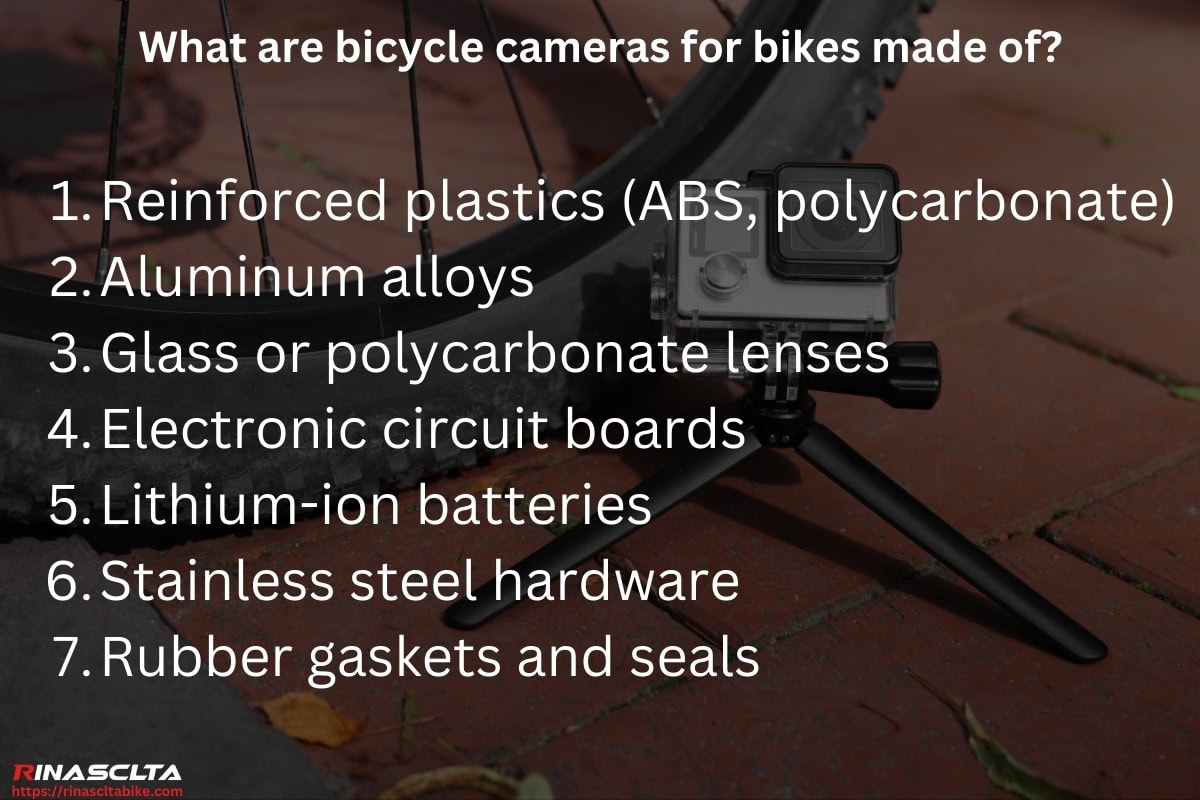
What are bicycle cameras for bikes made of?
Bicycle cameras for bikes are made of reinforced plastics, aluminum alloys, glass or polycarbonate lenses, electronic circuit boards, lithium-ion batteries, stainless steel hardware, rubber gaskets, and vibration-damping materials, because these components must withstand vibration, weather exposure, impacts, and long recording sessions while remaining lightweight and reliable on a moving bicycle.
- Reinforced plastics (ABS, polycarbonate): Form the main housing to keep the camera lightweight, impact-resistant, and weatherproof.
- Aluminum alloys: Used in premium housings or mounts to improve heat dissipation, rigidity, and durability.
- Glass or polycarbonate lenses: Protect the camera sensor while delivering clear, wide-angle image capture with scratch resistance.
- Electronic circuit boards: Contain the image processor, storage controller, GPS, and connectivity chips that manage video recording and data.
- Lithium-ion batteries: Provide compact, rechargeable power for continuous recording during rides.
- Stainless steel hardware: Secures mounts and fasteners, resisting rust and mechanical fatigue from vibration.
- Rubber gaskets and seals: Create waterproof barriers that protect internal electronics from rain, dust, and mud.
- Vibration-damping materials: Reduce image shake and protect internal components when riding on rough roads or trails.

What are the types of bicycle cameras?
Bicycle cameras can be classified by mount type (clip-on and fixed mount-on cameras) and by mounting location (front-facing, rear-facing, helmet-mounted, headlight-integrated, handlebar-mounted, and frame-mounted), because where and how a camera is attached directly affects field of view, stability, safety coverage, and ease of use. These categories exist to match different riding needs—such as traffic evidence, rear-approach monitoring, trail recording, or hands-free commuting—helping cyclists choose a camera setup that delivers the most practical safety and recording value for their riding style.
Bicycle camera types based on mount type
Bicycle cameras by mount type include clip-on cameras, fixed mount-on cameras, magnetic mount cameras, and integrated mount cameras, because different mounting systems balance ease of installation, stability, vibration resistance, and flexibility depending on riding conditions and camera purpose.
- Clip-on cameras: Attach quickly to clothing, helmets, bags, or straps, offering portability and convenience for commuting and casual riding.
- Fixed mount-on cameras: Use rigid brackets or clamps on handlebars, seatposts, frames, or helmets to provide maximum stability and consistent recording angles.
- Magnetic mount cameras: Allow fast attachment and removal while maintaining alignment, useful for riders who frequently detach the camera for charging or security.
- Integrated mount cameras: Are built into bike components such as headlights or rear lights, combining visibility and recording functions with a clean, low-profile setup.
Bicycle camera types based on location
Bicycle cameras by mounting location include front-facing cameras, rear-facing cameras, helmet-mounted cameras, headlight-integrated cameras, handlebar-mounted cameras, frame-mounted cameras, and seatpost-mounted cameras, because camera position determines field of view, incident coverage, video stability, and safety relevance during different types of riding.
- Front-facing cameras: Record the road or trail ahead to document traffic interactions, hazards, and navigation context.
- Rear-facing cameras: Capture approaching vehicles or riders from behind, adding strong safety and evidence value for road cycling and commuting.
- Helmet-mounted cameras: Provide a rider’s eye-level perspective and follow head movement, useful for situational documentation and content creation.
- Headlight-integrated cameras: Combine forward lighting and recording in one unit, improving visibility while maintaining a clean cockpit setup.
- Handlebar-mounted cameras: Offer stable, centered footage with easy access to controls and consistent framing of the road ahead.
- Frame-mounted cameras: Provide a low, discreet mounting option that reduces wind resistance and minimizes visual clutter.
- Seatpost-mounted cameras: Are commonly used for rear recording, offering a clear view of traffic behind with minimal interference from the rider.
Should I get a front or rear camera for cycling?
You should get a rear camera first if you ride on public roads or commute in traffic, because most cycling incidents involve vehicles approaching from behind, and rear cameras provide the highest safety and evidence value by recording overtakes, close passes, and collisions. But if you ride on trails, unfamiliar routes, or want navigation and hazard context, a front camera adds value by capturing road conditions and forward-facing incidents—while the best overall protection comes from using both front and rear cameras together.
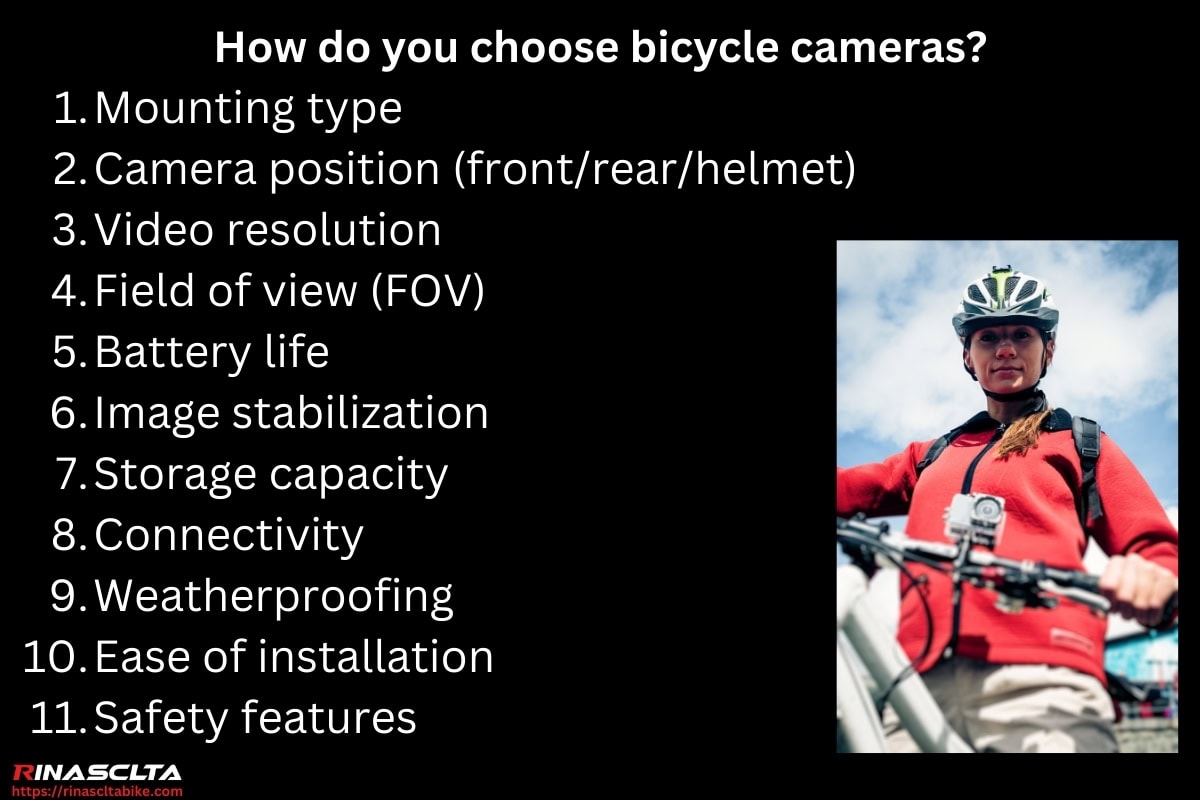
How do you choose bicycle cameras?
You choose bicycle cameras by evaluating mounting type, camera position, video resolution, field of view, battery life, stabilization, storage, connectivity, weatherproofing, ease of installation, and safety features, because these factors determine how reliably the camera records incidents, fits your bike, and performs in real riding conditions.
- Mounting type: Choose clip-on, fixed, magnetic, or integrated mounts based on how often you remove the camera and how stable you need the footage to be.
- Camera position (front/rear/helmet): Select placement based on whether you want to record traffic ahead, vehicles behind, or a rider’s-eye perspective.
- Video resolution: Higher resolution (e.g., 1080p or 4K) improves clarity of license plates, road details, and incidents.
- Field of view (FOV): Wide-angle lenses capture more surroundings but may distort edges; balanced FOV improves evidence usability.
- Battery life: Longer battery life is essential for commuting, long rides, or continuous loop recording without mid-ride charging.
- Image stabilization: Electronic or optical stabilization reduces vibration blur from rough roads or trails.
- Storage capacity: Support for large or expandable storage enables longer recordings and loop recording without manual file management.
- Connectivity: Bluetooth or Wi-Fi allows quick video transfer, settings control, and app integration.
- Weatherproofing: IP-rated housings protect the camera from rain, dust, and road spray.
- Ease of installation: Tool-free or quick-release systems save time and ensure correct alignment.
- Safety features: Options like loop recording, emergency lock, GPS tagging, or light integration add extra protection and evidence value.
Where should I mount the camera on a bike?
You should mount a bicycle camera on the handlebars, helmet, seatpost, rear rack, frame, or integrated light position, because each mounting location offers a different field of view, stability level, and safety value depending on what you want to record and how you ride.
- Handlebar: Provides a stable, centered forward view of the road or trail, ideal for traffic evidence and navigation context.
- Helmet: Captures a rider’s eye-level perspective that follows head movement, useful for documenting where you look and react.
- Seatpost: Offers the clearest rear-facing angle to record approaching vehicles, close passes, and rear collisions.
- Rear rack: Creates a high, unobstructed rear view with good stability for commuting and touring bikes.
- Frame (down tube or top tube): Delivers a discreet, low-profile mount that reduces wind drag and visual clutter while still capturing surroundings.
- Integrated light mount (headlight or taillight): Combines visibility and recording in one position, improving safety while keeping the bike setup clean and simple.
How to mount an action camera on a bicycle helmet?
You can mount an action camera on a bicycle helmet by using a curved adhesive mount or vented strap mount, positioning it centrally on top or at the front of the helmet, and securing it with a safety tether, because this provides a stable, eye-level perspective without interfering with ventilation or helmet safety. Proper mounting ensures clear footage, reduces vibration, and prevents camera loss during sudden movements or crashes.
How to mount a camera on a bicycle helmet?
You can mount a camera on a bicycle helmet by selecting a helmet-compatible mount, cleaning the surface, attaching the mount firmly, adjusting the camera angle before riding, and testing stability, ensuring the camera does not compromise helmet structure or fit. This method delivers hands-free recording that captures where the rider is looking, adding strong evidence and situational awareness value.
How to carry a camera on a bicycle?
You can carrt a camera on a bicycle by using bike-specific mounts, frame bags, handlebar bags, jersey pockets, or quick-release mounts, depending on whether you need constant recording or occasional access. Secure carrying protects the camera from vibration and weather while allowing fast deployment when needed, balancing safety, convenience, and equipment protection.
Do bike cameras connect wirelessly?
Yes, bike cameras connect wirelessly because most modern models use Wi-Fi and Bluetooth to transfer footage, change settings, preview video, and sync with smartphones without removing the camera from the bike.
Do bike cameras require an app?
No, bike cameras do not require an app because they can record independently using onboard controls and storage, but companion apps add value by enabling easy setup, live preview, firmware updates, and fast video downloads.
Do bike cameras have built-in editing software?
No, bike cameras do not have full built-in editing software because video editing requires significant processing power and screen interaction, but some cameras offer basic trimming, clip locking, or highlight tagging through their apps.
Does a better picture quality mean less recording time?
Yes, better picture quality means less recording time because higher resolutions and frame rates (such as 4K or high-bitrate 1080p) consume more battery power and storage space per minute of footage.
What video quality do I need for a bicycle camera?
You need at least 1080p (Full HD) video quality at 30–60 fps for a bicycle camera, because this level reliably captures license plates, road signs, traffic behavior, and trail details while balancing battery life, storage use, and heat management. Higher bitrates and good dynamic range matter as much as resolution, since cycling footage often involves fast motion, vibration, changing light, and weather, and clear evidence value depends on readable details rather than raw pixel count alone.
What is the best resolution for capturing cycling footage?
The best resolution for most cyclists is 1080p at 60 fps or 1440p at 30 fps, as this provides smooth motion, sharp detail, and longer recording time for commuting, safety, and everyday riding. 4K resolution is best if you prioritize maximum detail for evidence or content creation, but it reduces recording time, increases battery drain, and requires more storage, making it most suitable for shorter rides or riders who actively manage files and power.
Do I need image stabilisation for a bicycle camera?
Yes, you need image stabilisation because cycling involves constant vibration and movement, and electronic or optical stabilisation greatly improves video clarity, readability of details, and overall evidence quality.
Can I show police footage from a bicycle camera?
Yes, you can show police footage because video recorded in public spaces is generally accepted as supporting evidence for traffic incidents, close passes, or collisions, adding objective documentation to witness reports.
Do police bicycles have speed cameras?
No, police bicycles do not have speed cameras because speed enforcement is typically handled by vehicles, fixed cameras, or handheld devices, although police cyclists may use cameras for situational awareness, safety, or evidence recording rather than speed measurement.
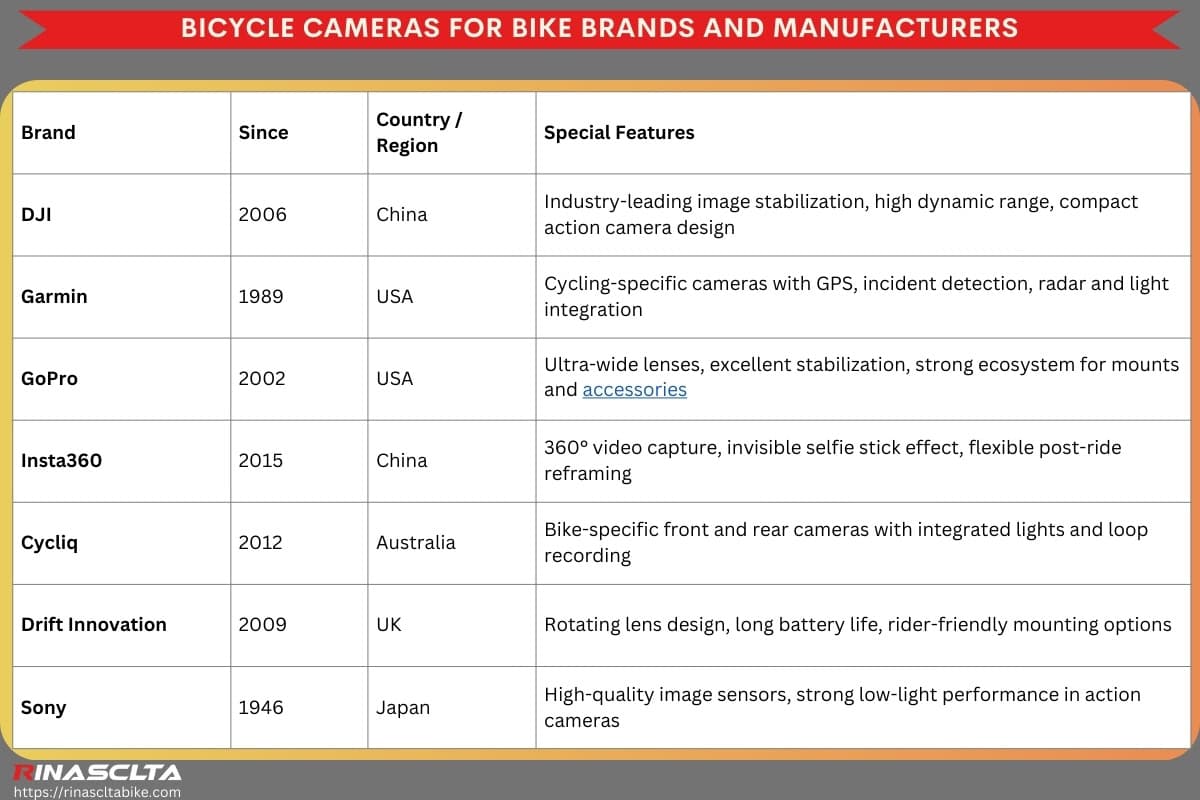
Bicycle cameras for bike brands and manufacturers
The bicycle camera industry has developed alongside advances in action cameras, imaging sensors, battery technology, and wireless connectivity, evolving from simple ride-recording tools into purpose-built safety, evidence, and content-creation devices. Today, both brands and manufacturers focus on improving video stabilization, resolution, battery efficiency, cycling-specific mounts, GPS data, and incident detection, serving commuters, road cyclists, mountain bikers, and touring riders in an increasingly safety-conscious cycling environment.
| Brand | Since | Country / Region | Special Features |
| DJI | 2006 | China | Industry-leading image stabilization, high dynamic range, compact action camera design |
| Garmin | 1989 | USA | Cycling-specific cameras with GPS, incident detection, radar and light integration |
| GoPro | 2002 | USA | Ultra-wide lenses, excellent stabilization, strong ecosystem for mounts and accessories |
| Insta360 | 2015 | China | 360° video capture, invisible selfie stick effect, flexible post-ride reframing |
| Cycliq | 2012 | Australia | Bike-specific front and rear cameras with integrated lights and loop recording |
| Drift Innovation | 2009 | UK | Rotating lens design, long battery life, rider-friendly mounting options |
| Sony | 1946 | Japan | High-quality image sensors, strong low-light performance in action cameras |