What is a bike mirror?
A bike mirror is a small rear-view mirror designed to give cyclists visibility of traffic and surroundings behind them without needing to turn their heads, improving safety and awareness while riding. The earliest versions appeared in the early 20th century in Europe and the United States, inspired by rear-view mirrors first used on motorcycles and automobiles. Invented by safety-focused cycling enthusiasts and manufacturers, these mirrors were initially handlebar-mounted metal designs, later evolving into lightweight plastic, glass, and acrylic versions that could be attached to handlebars, bar-ends, helmets, or glasses. Over time, bike mirrors have developed into more adjustable, aerodynamic, and vibration-resistant models, with some using convex lenses for a wider field of view. Today, they are widely recognized as essential safety accessories, particularly for commuting, road cycling, and urban riding, valued for reducing blind spots and increasing rider confidence in traffic.
How does a bike mirror work?
A bike mirror works by using a reflective convex or flat lens mounted on the handlebar, bar-end, helmet, or glasses to project a clear view of what is behind the rider, reducing the need to physically turn the head. The convex shape is often preferred because it provides a wider field of view, though flat mirrors offer more accurate distance perception. Its structure includes an adjustable arm or swivel joint to fine-tune the angle, while the position—whether on the left or right side depending on traffic flow—ensures maximum visibility. This mechanism enhances safety by minimizing blind spots, improving reaction time, and reducing rider distraction, making bike mirrors vital for urban commuting, road cycling, and group rides.
How does a bike helmet mirror work?
A bike helmet mirror works by attaching a small reflective lens to the side or front of a helmet via a clip, adhesive pad, or adjustable arm, positioning the mirror just within the rider’s peripheral vision. The mechanism relies on precise alignment so the rider can glance with only a slight eye movement, keeping the head forward while still checking behind. Its lightweight structure often uses a convex lens for a wider field of view, and the adjustable arm allows fine-tuning for different head shapes and riding positions. This design enhances safety by reducing blind spots and eliminating the need for large head turns, making it especially useful in urban commuting and road cycling where constant rear awareness is critical.
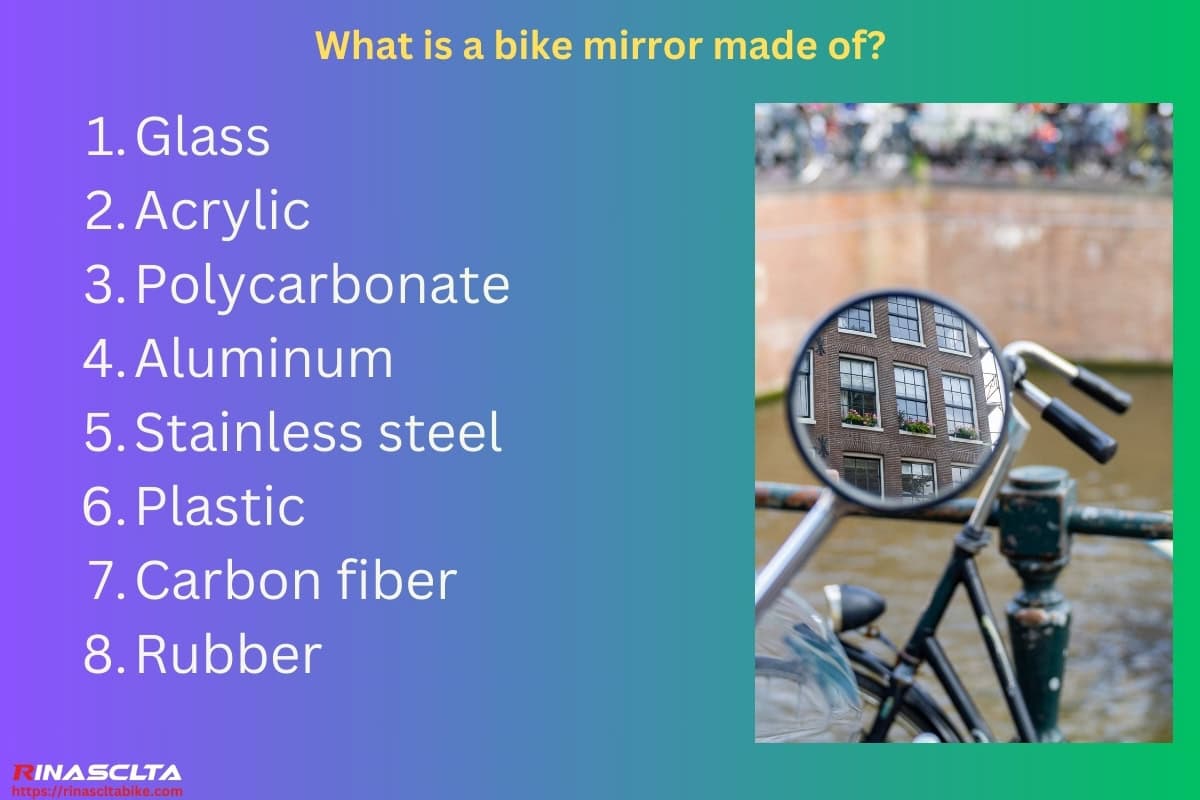
What is a bike mirror made of?
A bike mirror is typically made of glass, acrylic, polycarbonate, aluminum, stainless steel, plastic, carbon fiber, and rubber, because each material contributes to clarity, durability, weight reduction, adjustability, and vibration resistance. These combinations ensure the mirror is both lightweight and safe while providing a clear rear view.
- Glass: Provides the clearest reflection, but can be heavier and more fragile.
- Acrylic: Lightweight and shatter-resistant, offering a balance of clarity and safety.
- Polycarbonate: Extremely durable and impact-resistant, ideal for off-road cycling.
- Aluminum: Used in frames and mounts for strength and corrosion resistance.
- Stainless steel: Adds durability to mounts and screws, preventing rust in wet conditions.
- Plastic: Keeps the structure lightweight and affordable, commonly used for mirror housing.
- Carbon fiber: Offers high strength-to-weight ratio, used in premium lightweight mirrors.
- Rubber: Applied in joints or grips to absorb vibration and improve adjustability.
How is a bike mirror made?
A bike mirror is made from materials like glass, acrylic, polycarbonate, aluminum, stainless steel, plastic, carbon fiber, and rubber, because these provide the right balance of clarity, strength, weight, adjustability, and vibration resistance. The production process combines these materials into a lightweight, durable structure that ensures safety and usability.
- Mold creation: Forms the mirror housing from plastic, polycarbonate, or carbon fiber.
- Lens shaping: Cuts and treats glass, acrylic, or polycarbonate for clear rear visibility.
- Frame manufacturing: Uses aluminum or stainless steel for strength and corrosion resistance.
- Mounting system design: Adds brackets made of plastic or metal for handlebars, helmets, or glasses.
- Joint or swivel installation: Incorporates rubber or plastic to allow adjustment and absorb vibration.
- Final assembly: Combines mirror, housing, mount, and joints into a complete unit.
- Quality control: Tests the mirror for clarity, durability, and stability in cycling conditions.
What are the different types of bike mirrors?
Bike mirror types can be grouped by design (bar-end, handlebar, helmet-mounted) and by bike type (road, MTB, commuting, bikepacking, e-bike), because each setup reflects how the mirror is positioned and what riding style or environment it serves. These categories exist to balance safety, visibility, vibration resistance, and compatibility, ensuring riders can choose the mirror that best fits their bike and conditions.
Bike mirror types based on design
Bike mirror types based on design include bar-end mirrors, handlebar mirrors, and helmet-mounted mirrors, because each offers a different position, field of view, and level of stability depending on the rider’s bike setup and preference. These designs exist to improve rear visibility, safety, and comfort without requiring head turns.
- Bar-end mirror: Installed inside the handlebar end, providing a low, stable view of the road behind.
- Handlebar mirror: Mounted on the handlebar itself, offering higher visibility and easy angle adjustment.
- Helmet-mounted mirror: Attached to the rider’s helmet or glasses, giving a head-aligned rear view that moves with the rider’s vision.
Bike mirror types based on bike type
Bike mirror types based on bike type include road bike mirrors, MTB mirrors, commuting mirrors, bikepacking mirrors, and e-bike mirrors, because each riding style demands a different balance of durability, vibration resistance, field of view, and mounting style. This classification ensures that mirrors are adapted to the unique conditions and environments of each type of cycling.
- Road bike mirror: Lightweight and aerodynamic, designed to minimize drag while providing clear rear visibility.
- MTB mirror: Built tough with shatter-resistant materials to withstand vibrations and impacts on rough trails.
- Commuting mirror: Prioritizes wide-angle visibility and stability in urban traffic for daily riders.
- Bikepacking mirror: Compact and durable, offering long-ride comfort and adaptability for loaded bikes.
- E-bike mirror: Larger and sturdier, often similar to motorcycle mirrors, to match higher speeds and heavier frames.
How do you choose a bike mirror?
You can choose a bike mirror by considering mirror size, mirror mount position, adjustability, compatibility, left or right-sided use, and budget, because each factor affects visibility, safety, and how well the mirror fits your bike and riding style. These features ensure that the mirror enhances awareness without interfering with comfort or performance.
- Mirror size: Larger mirrors provide a wider field of view, while smaller ones are lighter and more aerodynamic.
- Mirror mount position: Bar-end, handlebar, or helmet mounts change how stable and accessible the rear view is.
- Adjustability: Swivel arms and tilt functions allow fine-tuning for the best angle and minimal blind spots.
- Compatibility: Ensures the mirror fits your bike’s handlebar diameter, helmet, or e-bike setup.
- Left and right-sided mirrors: Choice depends on traffic direction and whether you ride in right-hand or left-hand traffic regions.
- Budget: Options range from affordable plastic models to premium vibration-resistant carbon or alloy designs.
Are bike mirrors worth it?
Yes, bike mirrors are worth it if you ride in traffic, urban areas, or group rides, because they improve rear visibility, awareness, and safety, reducing the need for frequent head turns. Related terms: field of view, blind spots, reaction time, commuting safety.
Do all bikes have mirrors?
No, not all bikes have mirrors because they are not standard equipment like on motorcycles; instead, they are aftermarket accessories chosen by riders based on need. Related terms: optional accessory, handlebar setup, customization.
Do bikes need mirrors?
Yes, bikes need mirrors if they are used in high-traffic roads or at higher speeds, because mirrors reduce blind spots and increase rider confidence. But casual riders on low-traffic trails may not require them. Related terms: commuting safety, situational awareness, visibility.
Is it illegal to ride a bike without mirrors?
No, it is not illegal to ride a bike without mirrors because most cycling laws do not require them, unlike motor vehicles. But some local regulations for e-bikes or speed pedelecs may mandate mirrors. Related terms: cycling law, road safety standards, traffic regulations.
Can you ride a bike without mirrors?
Yes, you can ride a bike without mirrors if you rely on shoulder checks and road awareness, which most cyclists do. But mirrors add extra safety in busy environments. Related terms: rear visibility, shoulder check, riding safety.
Does a handlebar mount bike mirror fit all handlebars?
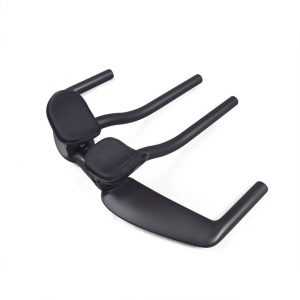
No, a handlebar mount bike mirror does not fit all handlebars because sizes vary (standard 22.2 mm, 25.4 mm, 31.8 mm, 35 mm) and some aero or integrated bars lack space. But many mirrors include shims, adjustable clamps, or universal mounts for wider compatibility. Related terms: handlebar diameter, clamp system, universal fit, adjustability.
Why rectangular mirror needed on a bike?
A rectangular mirror is needed on a bike because it provides a wider horizontal field of view, allowing the rider to see more of the road and traffic behind with fewer blind spots. Unlike small round mirrors, rectangular designs maximize rear coverage, distance perception, and stability, making them especially useful for commuting, road cycling, and e-bikes where constant traffic awareness is crucial. Related terms include field of view, blind spot reduction, traffic monitoring, and safety visibility. The value lies in giving cyclists greater confidence, faster reaction times, and improved protection in busy riding environments.
What is the safest bike mirror?
The safest bike mirror is a convex, shatter-resistant mirror with a stable mount (bar-end or handlebar) that provides a wide field of view and resists vibration on rough roads. Convex lenses increase rear visibility and blind spot coverage, while materials like polycarbonate or acrylic prevent shattering in case of impact. A secure mounting system ensures the mirror doesn’t shift while riding, and adjustability allows the rider to fine-tune the angle for maximum clarity. Related terms include field of view, vibration resistance, blind spot reduction, durability, and stability. The value is in offering cyclists consistent rear awareness, faster reaction times, and improved safety in traffic and group riding.
What are the bike mirror alternatives?
The bike mirror alternatives include helmet or glasses-mounted mirrors, electronic rear-view cameras, handlebar radar systems, and relying on shoulder checks, because each provides a way to monitor what’s behind without a traditional mirror. Helmet and glasses mirrors move with your head for flexible vision, electronic cameras project the rear view onto a screen or smartphone, and radar systems like Garmin Varia alert riders to approaching vehicles. Shoulder checks remain the simplest alternative, though they require turning the head. Related terms include rear-view visibility, blind spot awareness, radar detection, and cycling safety tech. The value of these alternatives is giving cyclists more customized and high-tech options for situational awareness, depending on budget, riding style, and safety needs.
How to install a bike mirror?
You can install a bike mirror by selecting the right mount, preparing the handlebar or helmet, attaching the mirror securely, adjusting the angle, tightening the hardware, and testing visibility, because each step ensures the mirror stays stable, provides a clear rear view, and enhances safety while riding.
- Select the right mount: Choose a bar-end, handlebar, or helmet-mounted mirror depending on your bike and riding style.
- Prepare the handlebar or helmet: Remove bar-end plugs or clean the mounting area to ensure a secure fit.
- Attach the mirror securely: Insert the bar-end mirror or clamp the handlebar/helmet mirror using the included bracket or adhesive.
- Adjust the angle: Set the mirror so you can see directly behind without major head movements.
- Tighten the hardware: Use the supplied screws, clamps, or Allen keys to lock the mirror in place.
- Test visibility: Sit on the bike, look into the mirror, and make final adjustments for a wide and clear field of view.
How to adjust the bike mirror?
You can adjust a bike mirror by loosening its swivel joint or clamp, then tilting or rotating it until the rear view shows the lane or path directly behind you with minimal blind spots. Once aligned, tighten the hardware securely to prevent vibration, ensuring the mirror stays stable while riding on both smooth roads and rough terrain.
How to position a mirror on a bike helmet?
You can position a mirror on a bike helmet by attaching it to the helmet shell or visor edge so the mirror sits just outside your peripheral vision, allowing quick glances without turning your head. Adjust the arm and angle so the mirror aligns with the road behind, then secure it firmly to prevent vibration or shifting while riding.
How to adjust a bike helmet mirror?
You can adjust a bike helmet mirror by loosening its swivel or flexible arm, then aligning it so that a slight eye movement gives a clear rear view without moving your head. Once the angle is correct, tighten or lock the arm to keep the mirror stable and minimize vibration during your ride.
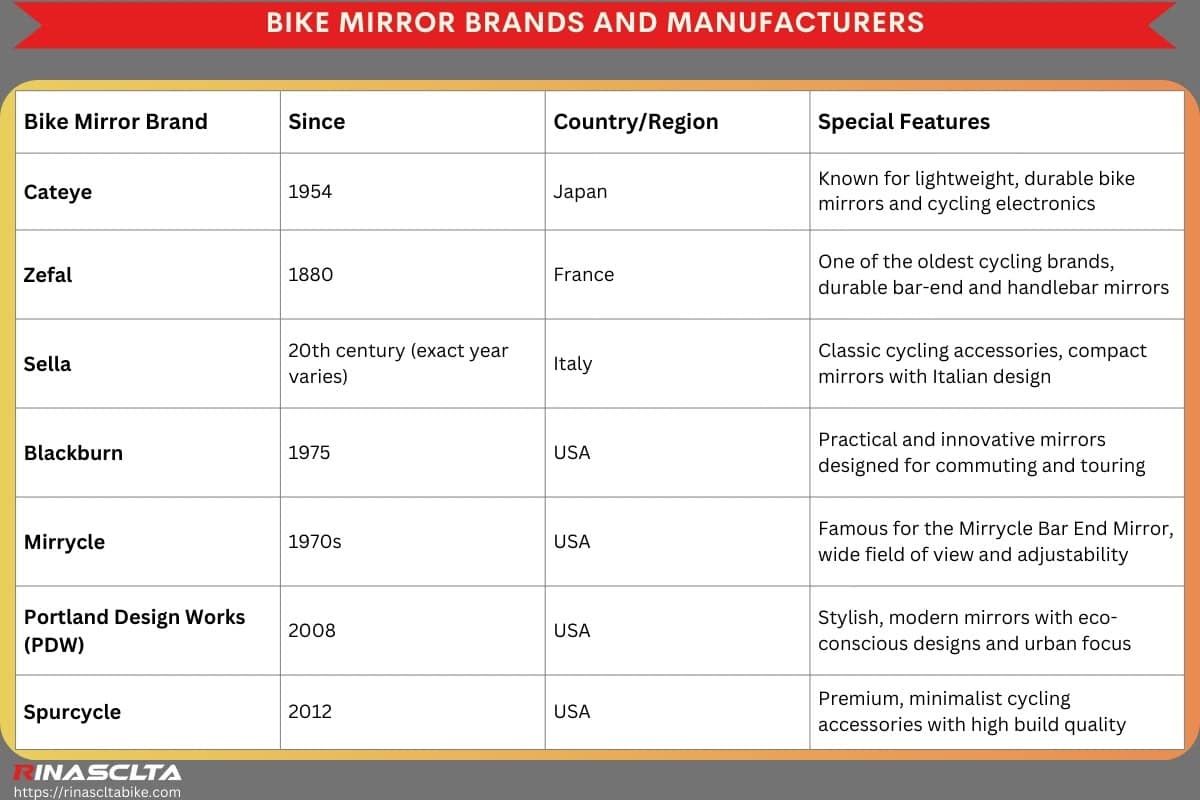
Bike mirror brands and manufacturers
Bike mirror brands and manufacturers play an important role in cycling safety, as trusted names ensure durability, clarity, and compatibility across different bike setups. Established brands like Cateye, Zefal, and Blackburn have decades of experience designing mirrors and accessories, while newer companies such as Portland Design Works and Spurcycle focus on innovative, stylish, and high-quality options. Choosing the right brand matters because it guarantees reliability, vibration resistance, and wide field of view, all of which are essential for confident and safe riding.
| Bike Mirror Brand | Since | Country/Region | Special Features |
| Cateye | 1954 | Japan | Known for lightweight, durable bike mirrors and cycling electronics |
| Zefal | 1880 | France | One of the oldest cycling brands, durable bar-end and handlebar mirrors |
| Sella | 20th century (exact year varies) | Italy | Classic cycling accessories, compact mirrors with Italian design |
| Blackburn | 1975 | USA | Practical and innovative mirrors designed for commuting and touring |
| Mirrycle | 1970s | USA | Famous for the Mirrycle Bar End Mirror, wide field of view and adjustability |
| Portland Design Works (PDW) | 2008 | USA | Stylish, modern mirrors with eco-conscious designs and urban focus |
| Spurcycle | 2012 | USA | Premium, minimalist cycling accessories with high build quality |