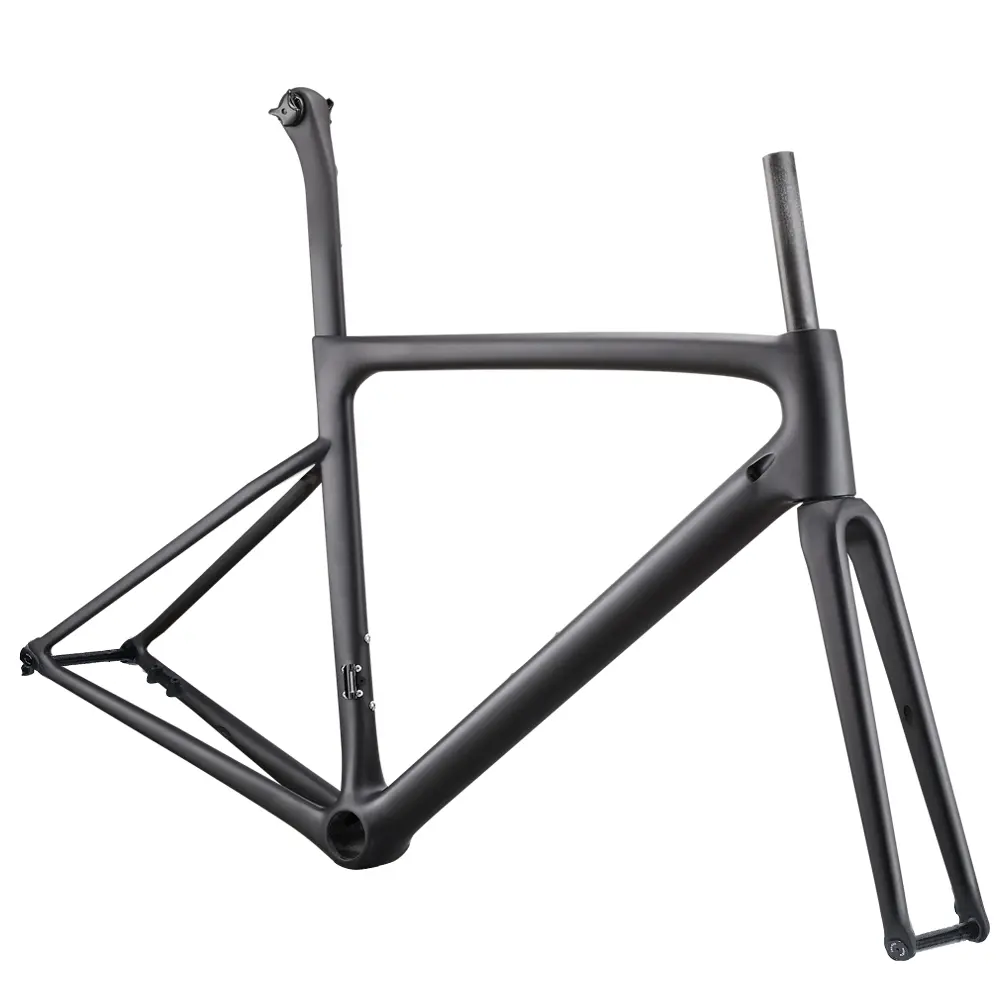
Why Paint & Finish Matter in Carbon Bike Manufacturing?
Paint and finish matter in carbon bike manufacturing because they directly affect not only the bicycle’s appearance and brand identity, but also its surface protection, durability, transport resistance, weather resistance, UV stability, corrosion prevention, resale value, and long-term structural reliability. Unlike metal frames that may tolerate small cosmetic damage more visibly, carbon composite frames rely heavily on stable surface sealing and controlled finishing layers to protect the laminate structure from moisture intrusion, UV degradation, stone chips, abrasion, road debris, sweat, cleaning chemicals, and environmental contamination, especially around sensitive areas such as bonded inserts, bottom bracket interfaces, headset bearings, and exposed carbon edges.
For manufacturers and OEM brands, paint and finish quality are also major factors in consumer perception, product positioning, and marketing value, because riders often associate smooth coatings, precise graphics, uniform gloss levels, and clean transitions with premium engineering and higher manufacturing quality. Modern carbon bikes therefore use increasingly advanced systems such as multi-layer primers, lightweight paint schedules, UV-resistant clear coats, matte and gloss finishing, nano-coatings, water-transfer decals, laser masking, robotic spraying systems, and controlled curing ovens to balance aesthetics with performance while minimizing unnecessary paint weight.
Paint and finish are also critical during transportation and daily use because bicycles experience repeated exposure to vibration, packaging pressure, chain slap, cable rub, rock strikes, sweat, mud, rain, salt, heat, cold temperatures, and sunlight, all of which can damage poorly applied coatings and eventually expose the underlying composite laminate. High-quality finishing systems help reduce cosmetic defects such as paint cracking, peeling, bubbling, orange peel, fading, clear-coat delamination, and decal lifting, while improving long-term durability and reducing warranty claims related to surface damage and coating failure.
In modern OEM carbon bike production, paint and finish quality are closely connected to overall manufacturing standards because coating defects may also indicate deeper process problems such as poor surface preparation, resin instability, sanding damage, contamination, improper curing, or laminate inconsistency. For this reason, advanced factories implement strict QC procedures including surface inspection, adhesion testing, gloss measurement, paint-thickness verification, environmental control systems, humidity monitoring, and cosmetic defect classification standards to ensure every frameset meets both structural and aesthetic expectations before shipment to global bicycle brands and distributors.
Brand identity and visual differentiation
Brand identity and visual differentiation are extremely important in carbon bike manufacturing because modern bicycle markets are highly competitive, and many framesets may share similar geometry, materials, or manufacturing origins while relying on paint design, finish quality, graphics, color schemes, and visual presentation to create a unique market identity. In OEM and ODM carbon bike production, paint and finish systems therefore function not only as protective coatings, but also as powerful branding tools that help bicycle companies communicate their performance philosophy, product category, target rider group, pricing position, racing heritage, technological image, and premium value perception to consumers.
Common visual differentiation elements include:
- Signature brand colors
- Matte and gloss contrast finishes
- Exposed carbon weave sections
- Metallic or pearl coatings
- Water-transfer decals
- Team replica graphics
- Minimalist or aggressive styling
- Hidden or tonal logos
- Aerodynamic paint transitions
- Custom OEM paint schemes
| Visual Differentiation Element | Main Purpose | Manufacturing / Marketing Value | Related Terms |
| Signature colors | Improve instant brand recognition | Strengthens consumer memory and showroom visibility | Brand identity, OEM paint |
| Matte/gloss finishes | Create premium visual contrast | Enhances perceived quality and modern styling | Clear coat, surface texture |
| Exposed carbon weave | Highlight carbon construction | Communicates lightweight and performance image | UD carbon, woven carbon |
| Metallic / pearl paint | Increase visual depth and luxury feel | Improves premium product positioning | Multi-layer coating |
| Team replica graphics | Connect products to racing success | Strengthens professional performance image | Race livery, WorldTour |
| Minimalist graphics | Create clean modern appearance | Appeals to premium and lifestyle markets | Stealth finish, tonal decals |
| Custom OEM paint schemes | Differentiate private-label products | Helps brands avoid visual similarity | ODM/OEM customization |
| High-quality clear coat | Protect graphics and improve finish durability | Improves long-term cosmetic quality | UV resistance, anti-scratch |
| Precise decal alignment | Maintain cosmetic consistency | Reflects strong manufacturing QC | Cosmetic inspection |
| Lightweight paint systems | Reduce unnecessary frame weight | Balances aesthetics with performance | Paint thickness, weight optimization |

For premium bicycle brands, visual identity through paint and finish is not only cosmetic, but also a major factor influencing consumer trust, marketing value, resale value, social-media visibility, and brand positioning in the modern carbon bicycle industry.
Paint quality and perceived product value
Paint quality strongly affects perceived product value in carbon bike manufacturing because riders often judge a bicycle’s overall quality, engineering level, and price category within seconds based on its surface finish, color consistency, gloss level, decal precision, coating smoothness, and visual detailing. Even when two carbon frames use similar materials or manufacturing methods, the frame with cleaner paint transitions, more consistent coating thickness, sharper graphics, smoother clear coat, and better cosmetic finishing is usually perceived as more premium, more technologically advanced, and more trustworthy by consumers, retailers, and distributors.
Low-quality paint systems often show defects such as:
- Orange peel texture
- Paint runs or sagging
- Uneven gloss levels
- Visible sanding marks
- Dust contamination
- Decal misalignment
- Paint bubbling or pinholes
- Peeling clear coat
- Color inconsistency
- Thick or heavy paint buildup
These problems reduce perceived value because they suggest weak manufacturing control, poor finishing processes, or lower OEM standards, even if the carbon structure itself is mechanically acceptable. Poor paint quality can also reduce long-term durability by increasing the risk of UV degradation, moisture intrusion, surface cracking, transport damage, cable rub wear, stone-chip exposure, and corrosion around metal inserts or bonded interfaces.
High-quality paint systems, on the other hand, typically feature:
| Paint Quality Feature | Effect on Product Value | Manufacturing Meaning |
| Smooth clear coat | Creates premium visual appearance | Controlled spraying and curing process |
| Uniform gloss or matte finish | Improves visual consistency | Stable coating thickness and QC |
| Sharp decal alignment | Increases brand professionalism | Precise masking and graphic control |
| Lightweight paint application | Enhances performance perception | Advanced weight optimization |
| UV-resistant coating | Improves long-term appearance retention | Better chemical and coating systems |
| Strong paint adhesion | Reduces peeling and warranty issues | Proper surface preparation |
| Consistent color matching | Strengthens brand identity | Controlled mixing and application systems |
| Clean tube transitions | Improves aerodynamic and premium appearance | Skilled finishing and sanding process |
| Durable anti-chip finish | Improves transport and road durability | Higher-quality coating materials |
| Exposed carbon detailing | Highlights carbon engineering image | Advanced cosmetic finishing capability |

In premium carbon bicycle markets, paint quality directly influences important commercial factors such as:
- Retail presentation
- Consumer trust
- Brand positioning
- Social-media visibility
- Product photography quality
- Resale value
- OEM reputation
- Warranty rates
- Distributor confidence
- Perceived engineering level
For this reason, advanced factories invest heavily in robotic paint systems, clean-room paint booths, infrared curing ovens, gloss meters, paint-thickness gauges, color-matching systems, and cosmetic QC inspection standards to ensure that the final finish reflects the premium performance image expected from modern high-end carbon bicycles.
Common concerns about carbon bike paint durability
Common concerns about carbon bike paint durability exist because carbon bicycles are regularly exposed to UV radiation, rain, mud, sweat, cleaning chemicals, road debris, vibration, transport handling, cable rub, chain slap, rock strikes, temperature changes, and long-term outdoor use, all of which can gradually damage the paint and clear-coat system if the finishing quality is poor. Since modern carbon bikes often use lightweight paint schedules, matte finishes, exposed carbon sections, complex graphics, and thin aerodynamic coatings, riders and OEM brands are highly concerned about issues such as paint chipping, scratching, fading, peeling, bubbling, cracking, decal lifting, and surface wear, because these defects reduce cosmetic quality, perceived value, resale value, and long-term protection of the underlying carbon laminate.
| Paint Durability Concern | Why It Happens | Effect on Bike | How Factories Reduce the Problem |
| Paint chipping | Road debris, rock strikes, transport impacts | Exposes primer or carbon surface | Use flexible primers, impact-resistant clear coats |
| Scratches and abrasion | Daily handling, cleaning, bike racks, shoe rub | Cosmetic wear and reduced resale value | Apply harder clear coats and anti-scratch finishes |
| UV fading | Long-term sunlight exposure | Color fading and gloss reduction | Use UV-resistant paint and clear-coat systems |
| Clear-coat peeling | Poor adhesion or curing inconsistency | Surface separation and cosmetic failure | Improve surface preparation and curing control |
| Paint cracking | Frame flex, thick paint layers, impact stress | Visible cosmetic damage | Optimize paint thickness and coating flexibility |
| Cable rub damage | Cable movement against frame surface | Paint wear and exposed base layer | Add frame protection film and wear-resistant coatings |
| Chain slap damage | Chain impact on chainstay during riding | Chipped paint and surface marks | Use rubber protectors and reinforced clear coat |
| Stone-chip impact damage | Gravel and road debris impact | Localized paint loss | Apply tougher primer and thicker protective layers |
| Sweat and chemical corrosion | Sweat salts and cleaning chemicals | Clear-coat staining and degradation | Use chemical-resistant coating systems |
| Decal lifting or bubbling | Moisture, heat, poor decal bonding | Cosmetic inconsistency | Improve decal application and curing process |
| Matte finish wear | Friction and polishing from repeated contact | Uneven surface appearance | Use durable matte clear-coat technology |
| Transport damage | Packaging pressure and vibration | Scratches and paint deformation | Use foam protection and reinforced packaging systems |

Because paint durability directly affects consumer satisfaction, warranty claims, brand reputation, and long-term cosmetic quality, premium bicycle brands and OEM factories now treat paint performance as an important part of overall carbon bike quality control rather than only a cosmetic finishing step.
The Carbon Bike Paint Process Explained
The carbon bike paint process is a multi-stage finishing system designed to provide not only visual appearance and brand identity, but also long-term surface protection, UV resistance, chemical resistance, chip resistance, moisture sealing, and cosmetic durability for carbon composite framesets. Because carbon bicycle frames have complex laminate surfaces, bonded inserts, aerodynamic tube shapes, and lightweight construction targets, modern factories use carefully controlled paint workflows involving surface preparation, primer systems, base coatings, graphics application, clear-coat finishing, and curing processes to ensure consistent finish quality while minimizing defects such as orange peel, bubbling, peeling, uneven gloss, decal lifting, and excessive paint weight.
| Paint Process Step | Main Purpose | What Happens in This Step | Related Terms / Value |
| Surface preparation | Prepare carbon surface for strong paint adhesion | Sanding, cleaning, defect repair, dust removal, surface leveling | Surface adhesion, sanding quality, contamination control |
| Primer and base coating | Create smooth coating foundation and color layer | Primer spraying, filler application, base color coating | Paint adhesion, UV resistance, coating thickness |
| Graphic and decal application | Add branding and visual identity elements | Water-transfer decals, logo alignment, masking, custom graphics | OEM branding, visual differentiation, cosmetic precision |
| Clear coat finishing | Protect paint and improve surface durability | Gloss or matte clear-coat spraying and sealing | UV protection, anti-scratch performance, gloss control |
| Final curing and inspection | Harden coating and verify finish quality | Thermal curing, paint inspection, defect checking, polishing | Cosmetic QC, durability validation, finish consistency |

The entire paint process must carefully balance aesthetic quality, coating durability, production efficiency, and total frame weight, especially for high-end carbon race bikes where even small increases in paint thickness can affect final product weight and premium performance positioning.
Surface preparation
Surface preparation is one of the most critical stages in the carbon bike paint process because it determines how well the primer, paint, decals, and clear coat will adhere to the carbon composite surface over long-term use. Since carbon frames are produced through processes such as molding, trimming, sanding, bonding, drilling, and machining, the raw frame surface may contain mold-release residue, sanding marks, resin-rich areas, dust, pinholes, surface waviness, flashing, adhesive residue, or small cosmetic imperfections that can negatively affect coating adhesion and finish quality if not properly treated before painting.
A properly prepared carbon bike surface improves paint adhesion strength, coating smoothness, gloss consistency, decal bonding quality, UV protection performance, long-term durability, scratch and chip resistance, cosmetic appearance, paint weight control, and overall defect prevention because the paint system can bond evenly and consistently to a clean, stable, and correctly textured composite substrate. High-quality surface preparation also helps factories achieve smoother clear-coat flow, sharper graphics, more uniform matte or gloss finishes, lighter coating weight, stronger resistance to road debris and weather exposure, and better long-term protection against moisture, sweat, cleaning chemicals, and UV degradation, all of which are critical for premium carbon bicycle performance and perceived product value.
Poor surface preparation can lead to defects such as paint peeling, bubbling, orange peel texture, fish eyes, uneven gloss, clear-coat delamination, visible sanding scratches, dust contamination, decal lifting, and premature coating failure because contaminants, unstable surfaces, incorrect sanding patterns, or weak adhesion layers prevent the coating system from curing and bonding properly. These defects not only reduce cosmetic quality and brand perception, but can also increase warranty claims, reduce resale value, expose the underlying carbon laminate to environmental damage, and create long-term durability problems during transport, storage, daily riding, gravel exposure, vibration, and changing weather conditions.
Because of this, premium carbon bike factories use strict preparation workflows combined with clean-room environments, controlled sanding procedures, compressed-air cleaning, anti-static systems, solvent wiping, and cosmetic QC inspection standards before any paint is applied.
| Surface Preparation Step | Main Purpose | Common Tools / Equipment | Things to Check |
| Initial frame inspection | Identify visible surface defects before finishing | LED inspection lights, visual QC station | Cracks, pinholes, sanding marks, resin defects |
| Flash and excess material removal | Remove molding residue and sharp edges | Rotary trimming tools, precision knives, sanding blocks | Smooth tube transitions and clean edges |
| Surface sanding | Create proper surface texture for paint adhesion | Sandpaper (various grit levels), orbital sanders | Uniform sanding pattern and no deep scratches |
| Pinhole and surface defect repair | Fill small cosmetic imperfections | Putty filler, micro-filler compounds | Smooth surface without voids or sink marks |
| Bond-line cleanup | Remove excess adhesive and rough bonding areas | Scrapers, fine sanding tools | Clean bonded interfaces and smooth transitions |
| Dust and particle removal | Prevent contamination during painting | Compressed air, tack cloths, anti-static blowers | Dust-free and lint-free surface |
| Degreasing and solvent cleaning | Remove oil, sweat, resin residue, and contamination | IPA solvent, degreasing cloths, cleaning solution | No fingerprints, grease, or chemical residue |
| Anti-static treatment | Reduce airborne dust attraction | Anti-static guns, ionized air systems | Stable static-free surface condition |
| Surface masking preparation | Protect threads and non-painted areas | Tape masking systems, silicone plugs | Clean masking lines and protected interfaces |
| Final pre-paint inspection | Verify complete readiness for coating | Inspection booth, gloss light systems | Surface smoothness, cleanliness, defect-free condition |

The quality of surface preparation directly affects the final appearance and durability of the carbon bike because every paint layer applied afterward depends on the consistency and cleanliness of the prepared substrate. In premium OEM production, surface preparation is therefore treated as both a cosmetic and structural-quality process, helping manufacturers achieve smoother finishes, lower defect rates, better paint adhesion, and stronger long-term durability under daily riding, transport, weather exposure, and environmental stress.
Primer and base coating
Primer and base coating are critical stages in the carbon bike paint process because they create the foundation for the bicycle’s color appearance, paint adhesion, surface smoothness, UV resistance, corrosion protection, and long-term cosmetic durability. After surface preparation, the raw carbon frame still contains microscopic surface texture, sanding marks, filler areas, and composite transitions that must be sealed and leveled before final graphics and clear coat are applied. The primer layer acts as an intermediate bonding layer between the carbon substrate and the paint system, while the base coating provides the main visual color, metallic effect, pearl finish, or exposed-carbon appearance used for OEM branding and product differentiation.
Because carbon bicycle frames are highly visible premium products, primer and base coating quality directly influence paint consistency, coating durability, aerodynamic smoothness, cosmetic appearance, scratch resistance, and perceived manufacturing quality. Factories therefore carefully control variables such as paint viscosity, spray pressure, coating thickness, booth humidity, flash-off time, curing temperature, and color consistency throughout the process.
Proper primer and base coating work improves paint adhesion, coating smoothness, gloss uniformity, color consistency, UV resistance, chip resistance, cosmetic precision, decal bonding quality, long-term durability, and lightweight finish optimization because the coating system cures evenly and bonds correctly to the carbon surface. High-quality primer systems also help seal the laminate structure, reduce visible sanding marks, stabilize surface texture, and create a more premium visual appearance with cleaner transitions and sharper graphics.
Poor primer and base coating work can lead to defects such as paint peeling, bubbling, orange peel texture, fisheyes, uneven color, poor metallic effect, visible sanding marks, weak adhesion, clear-coat separation, excessive paint weight, surface waviness, and premature fading or cracking because unstable coating thickness, contamination, incorrect curing, or poor spray technique disrupt the bonding and leveling behavior of the paint system. These problems reduce cosmetic quality, increase warranty risk, weaken long-term weather resistance, and negatively affect brand image and perceived product value.
| Primer & Base Coating Step | Main Purpose | Common Tools / Equipment | Things to Check |
| Surface cleaning before coating | Remove final dust and contamination | Tack cloths, compressed air, anti-static systems | Dust-free and oil-free surface |
| Primer mixing and preparation | Ensure stable coating chemistry and viscosity | Digital paint mixers, viscosity cups | Correct mixing ratio and consistency |
| Primer spraying | Create bonding and leveling layer | HVLP spray guns, robotic spray systems | Uniform coverage and coating thickness |
| Primer curing | Harden primer and stabilize surface | Infrared ovens, thermal curing systems | Proper curing temperature and adhesion |
| Primer sanding and leveling | Smooth surface before base coating | Fine-grit sandpaper, orbital sanders | Flat surface and no sanding defects |
| Base paint mixing | Prepare final color system | Digital color-matching systems | Accurate color consistency |
| Base coating application | Apply final visual color layer | Spray booths, HVLP guns, robotic sprayers | Uniform color distribution and smoothness |
| Metallic / pearl effect control | Maintain visual consistency in special coatings | Controlled spray angle systems | Even metallic or pearl appearance |
| Flash-off process | Allow solvents to evaporate between coats | Controlled ventilation systems | Stable drying and no solvent trapping |
| Intermediate inspection | Detect coating defects before clear coat | LED inspection lights, gloss meters | No runs, fisheyes, dust, or uneven color |

Overall, primer and base coating are essential not only for creating the bicycle’s final visual appearance, but also for ensuring stable coating adhesion, environmental resistance, long-term durability, and premium product presentation. In high-end carbon bike manufacturing, the quality of these coating layers strongly affects consumer perception, OEM brand positioning, resale value, and the long-term cosmetic reliability of the finished frameset.
Graphic and decal application
Graphic and decal application are important stages in the carbon bike paint process because they create the bicycle’s brand identity, model recognition, visual differentiation, racing image, OEM customization, and premium cosmetic appearance. Modern carbon bike graphics are no longer limited to simple stickers, but often involve advanced systems such as water-transfer decals, layered graphics, metallic logos, laser masking, hidden graphics, exposed-carbon detailing, gradient paint transitions, matte/gloss contrast finishes, and multi-layer OEM branding designs. Since carbon bicycles are highly visual products used in retail displays, racing events, photography, and social media, graphic precision directly affects consumer perception, brand value, resale value, and perceived manufacturing quality, making decal application one of the most closely inspected cosmetic processes in premium bicycle production.
Proper graphic and decal application improves brand recognition, visual consistency, logo sharpness, paint integration, decal durability, UV resistance, premium appearance, aerodynamic smoothness, OEM customization quality, and long-term cosmetic reliability because the graphics bond evenly to the painted surface and remain stable under weather exposure, cleaning chemicals, transport vibration, and daily riding conditions. High-quality decal work also creates cleaner transitions between paint layers and clear coat, helping the graphics appear integrated into the frame rather than sitting visibly on top of the coating system.
Poor graphic and decal application can lead to defects such as decal lifting, bubbling, wrinkles, silvering, misalignment, uneven spacing, trapped dust, weak adhesion, fading, peeling, visible edges, and inconsistent logo positioning because incorrect surface preparation, poor alignment, unstable curing, contamination, or low-quality decal materials prevent proper bonding and finishing. These defects reduce cosmetic quality, weaken OEM branding value, increase warranty complaints, and negatively affect the premium image of the carbon frameset.
| Graphic & Decal Process Step | Main Purpose | Common Tools / Equipment | Things to Check |
| Graphic layout preparation | Organize branding and decal positioning | CAD layout systems, alignment templates | Correct logo size and placement |
| Surface cleaning before decal application | Remove dust and contamination | Tack cloths, anti-static air systems | Clean and smooth surface |
| Masking and alignment setup | Ensure precise decal positioning | Laser guides, masking tape, positioning jigs | Straight alignment and symmetry |
| Water-transfer decal application | Apply graphics and logos onto frame | Water tanks, transfer films, soft applicators | No wrinkles, bubbles, or distortion |
| Air and moisture removal | Improve decal adhesion and smoothness | Squeegees, microfiber tools | No trapped air or water |
| Drying and stabilization | Allow decals to bond before clear coat | Drying racks, controlled airflow systems | Stable adhesion and no lifting |
| Graphic edge inspection | Verify decal integration quality | LED inspection lights, magnifiers | Clean edges and proper bonding |
| Multi-layer graphic application | Add layered branding or special effects | Precision masking systems | Consistent overlap and positioning |
| OEM custom logo verification | Confirm customer-specific branding accuracy | Reference samples, QC templates | Correct OEM branding details |
| Pre-clear-coat inspection | Detect cosmetic defects before sealing | Cosmetic QC booths, gloss lights | No dust, bubbles, lifting, or misalignment |
Overall, graphic and decal application are not only cosmetic decoration processes, but also major components of brand communication, OEM differentiation, premium product presentation, and long-term visual durability in modern carbon bicycle manufacturing. High-quality graphics help strengthen brand identity and consumer trust, while poor decal quality can quickly reduce perceived product value even if the carbon structure itself remains mechanically excellent.
Clear coat finishing
Clear coat finishing is the final protective coating stage in the carbon bike paint process, applied over the base paint and graphics to create a durable outer surface that improves UV resistance, scratch resistance, chemical resistance, gloss control, weather protection, surface smoothness, and long-term cosmetic durability. Modern carbon bike clear coats are highly engineered coating systems that may use polyurethane clear coats, UV-resistant resins, matte or gloss formulations, anti-scratch additives, nano-coating technology, and lightweight paint schedules to balance protection, appearance, and total frame weight. Since the clear coat is the outermost visible layer of the bicycle, its quality strongly influences the bike’s final premium appearance, color depth, gloss consistency, tactile feel, and resistance to daily riding damage, especially under exposure to sunlight, mud, gravel, sweat, cleaning chemicals, transport vibration, and road debris.
Proper clear coat finishing improves surface durability, UV stability, gloss consistency, scratch resistance, chip resistance, decal protection, moisture sealing, color depth, cosmetic smoothness, weather resistance, and long-term premium appearance because the coating forms a stable protective barrier over the paint and graphics while curing evenly across the frame surface. High-quality clear coat systems also improve visual depth, create smoother aerodynamic transitions, reduce surface contamination retention, and help maintain showroom-level appearance over years of riding and environmental exposure.
Poor clear coat finishing can lead to defects such as orange peel texture, bubbling, runs and sags, uneven gloss, clear-coat peeling, premature fading, cracking, fish eyes, dust contamination, soft coating surfaces, visible texture inconsistency, and weak decal protection because unstable spray parameters, incorrect curing, contamination, excessive coating thickness, or poor environmental control disrupt the leveling and hardening behavior of the coating system. These problems reduce cosmetic quality, weaken long-term durability, increase warranty claims, and negatively affect consumer trust and OEM brand image.
| Clear Coat Process Step | Main Purpose | Common Tools / Equipment | Things to Check |
| Surface cleaning before clear coat | Remove dust and contaminants before sealing | Tack cloths, anti-static systems, compressed air | Clean surface and no loose particles |
| Clear coat mixing and preparation | Stabilize coating chemistry and viscosity | Digital paint mixers, viscosity cups | Correct mix ratio and consistency |
| Clear coat spraying | Apply protective outer coating evenly | HVLP spray guns, robotic spray systems | Uniform thickness and smooth coverage |
| Matte or gloss finish control | Achieve desired surface appearance | Spray pattern control systems | Consistent gloss or matte level |
| Multi-layer clear coat application | Build protective coating structure | Multi-stage spray systems | Even layering and no excessive buildup |
| Flash-off process | Allow solvents to evaporate between layers | Ventilation and airflow systems | Proper drying without solvent trapping |
| Thermal or infrared curing | Harden clear coat for durability | Infrared ovens, thermal curing chambers | Correct curing temperature and timing |
| Surface polishing (if required) | Improve gloss smoothness and finish quality | Polishing compounds, buffing tools | No swirl marks or uneven finish |
| Paint thickness inspection | Verify coating weight and consistency | Paint-thickness gauges | Stable coating thickness |
| Final cosmetic inspection | Detect finish defects before shipment | LED inspection booths, gloss meters | No orange peel, runs, dust, peeling, or gloss inconsistency |

Overall, clear coat finishing is one of the most important stages in carbon bike manufacturing because it protects the underlying paint, graphics, and carbon surface while defining the final visual quality and long-term durability of the bicycle. A high-quality clear coat system helps premium carbon bikes maintain their appearance, brand value, weather resistance, and cosmetic reliability under years of transport, storage, racing, gravel riding, cleaning, and daily environmental exposure, making it both a protective engineering layer and a major contributor to perceived product quality.
Final curing and inspection
Final curing and inspection are the last major stages in the carbon bike paint and finish process, where the entire coating system is fully hardened, stabilized, and evaluated before the frameset is approved for packaging and shipment. During final curing, the primer, base paint, graphics, decals, and clear coat complete their chemical cross-linking process under controlled temperature, humidity, airflow, and curing-time conditions, allowing the coating system to achieve its intended hardness, adhesion strength, gloss consistency, UV resistance, scratch resistance, and long-term durability. After curing, factories perform detailed cosmetic and functional inspections because even small defects such as orange peel, dust contamination, paint runs, uneven gloss, decal misalignment, clear-coat peeling, pinholes, scratches, or color inconsistency can significantly reduce perceived product value, OEM brand quality, retail presentation, and customer satisfaction in the premium carbon bicycle market.
| Inspection Area | Main Purpose | Main Things to Check | Common Tools / Methods | Related Terms / Value |
| Clear coat curing inspection | Verify coating hardness and stability | Full curing, surface hardness, adhesion consistency | Thermal curing systems, hardness testing | Cross-linking, durability, adhesion |
| Gloss and matte consistency inspection | Ensure uniform finish appearance | Uneven gloss, cloudy finish, texture variation | Gloss meters, LED inspection lighting | Cosmetic consistency, premium appearance |
| Paint thickness inspection | Confirm controlled coating weight and protection | Excessive or uneven coating thickness | Paint-thickness gauges | Weight optimization, coating durability |
| Color consistency inspection | Maintain stable OEM branding appearance | Color mismatch, fading, uneven metallic effect | Spectrophotometers, color reference samples | Brand identity, visual quality |
| Surface defect inspection | Detect cosmetic imperfections | Orange peel, runs, fisheyes, pinholes, scratches | Visual QC booths, magnification lights | Cosmetic QC, defect prevention |
| Decal and graphic inspection | Verify logo quality and positioning | Misalignment, bubbling, peeling, visible edges | Alignment templates, visual inspection | OEM branding, visual precision |
| Edge and transition inspection | Check smoothness around tube junctions | Rough edges, paint buildup, sanding visibility | Touch inspection, LED lighting | Aerodynamic smoothness, finish quality |
| Adhesion inspection | Verify coating bond strength | Peeling, weak bonding, delamination | Cross-hatch adhesion testing | Long-term durability |
| UV and weather resistance verification | Evaluate coating protection capability | Surface stability under light and moisture | UV exposure testing, environmental chambers | Fade resistance, weather durability |
| Final cleanliness inspection | Ensure shipment-ready appearance | Dust, fingerprints, polishing residue | Anti-static cleaning systems | Retail presentation quality |
| Packaging preparation inspection | Prevent transport-related cosmetic damage | Surface protection and foam placement | Protective film systems, packaging QC | Shipping durability |

Modern premium factories often combine final curing and inspection with advanced technologies such as infrared curing ovens, humidity-controlled curing chambers, digital gloss meters, spectrophotometers, automated cosmetic QC systems, anti-static cleaning systems, and digital defect-tracking databases to maintain stable finish quality across large OEM production volumes. Since the final finish is the first thing consumers, retailers, distributors, and media reviewers see when evaluating a carbon bike, this stage plays a major role in protecting brand reputation, perceived engineering quality, resale value, and long-term cosmetic durability, making final curing and inspection one of the most important quality-control checkpoints in modern carbon bicycle manufacturing.
Common Carbon Bike Finish Options
Common carbon bike finish options include matte finish, gloss finish, raw carbon finish, and metallic or special-effect finishes, because different riders, bicycle brands, and OEM markets prioritize different combinations of visual appearance, premium positioning, surface texture, brand identity, weight optimization, maintenance requirements, and riding style image. Modern carbon bike finishes are not only cosmetic choices, but also part of the bicycle’s overall marketing strategy, product segmentation, perceived quality, durability performance, and visual differentiation, especially in high-end road, gravel, MTB, triathlon, and lifestyle bicycle categories.
| Finish Option | Main Appearance | Main Features | Typical Added Weight (Frame + Fork) | Main Advantages | Common Concerns |
| Matte finish | Low-gloss, stealth appearance | Soft reflection and modern texture | Approx. 80–200 g | Premium look, reduced glare, modern styling | Shows rub marks and fingerprints more easily |
| Gloss finish | High-gloss reflective surface | Deep color and smooth reflection | Approx. 100–250 g | Rich color depth, easier cleaning, strong showroom appeal | Shows scratches and swirl marks more easily |
| Raw carbon finish | Exposed carbon weave or UD texture | Minimal paint and technical appearance | Approx. 40–120 g | Lightweight look, engineering-focused image | Surface defects more visible |
| Metallic & special-effect finishes | Reflective, pearl, or color-shifting surface | Multi-layer premium visual effects | Approx. 150–350 g | Strong visual impact and OEM differentiation | Heavier, more complex, harder to repair |

Matte finish
A matte finish is a low-gloss carbon bike coating that reduces light reflection by using a matte clear coat, flattening agents, controlled surface texture, and sometimes satin or low-gloss polyurethane coating systems over the base paint, decals, or raw carbon surface. It works by scattering reflected light instead of reflecting it sharply like a gloss finish, giving the frame a stealth, premium, technical, and modern appearance often used on gravel bikes, aero road bikes, endurance bikes, MTB frames, and OEM custom models.
In general, a matte finish on a carbon frame and fork may add around 80–200 g depending on the paint system, number of coating layers, primer use, graphics, and clear coat thickness; lightweight raw matte or minimal-paint finishes can be lower, while complex multi-color matte designs with decals and heavy clear coat can be higher. The materials usually include primer, base coat, color pigment, matte clear coat, polyurethane resin, UV stabilizers, hardeners, flattening additives, and sometimes protective nano-coating, all designed to protect the carbon laminate from UV exposure, moisture, sweat, road salt, cleaning chemicals, stone chips, and cable rub.
A good-quality matte finish should look even, smooth, consistent, and well-sealed, with no patchy gloss variation, cloudy areas, sanding marks, dust particles, decal edges, orange peel, peeling, or uneven texture. A poor-quality matte finish often shows fingerprint staining, shiny rub marks, inconsistent sheen, weak clear-coat adhesion, bubbling, visible sanding scratches, color mismatch, or fast polishing wear, which reduces perceived product value and may increase warranty complaints.
| Matte Finish Factor | Good Quality | Bad Quality | Manufacturing Value |
| Gloss consistency | Uniform low-gloss surface across all tubes | Patchy matte/gloss variation | Shows stable spray and curing control |
| Surface texture | Smooth satin/matte feel without roughness | Grainy, cloudy, or uneven texture | Improves premium appearance |
| Clear coat protection | Durable matte clear coat with UV resistance | Weak coating that stains or rubs shiny | Improves long-term durability |
| Decal integration | Logos sealed cleanly under clear coat | Visible decal edges or bubbling | Improves OEM brand quality |
| Paint thickness | Controlled and lightweight | Excessively thick or heavy coating | Balances protection and frame weight |
| Scratch resistance | Resists normal cleaning and handling marks | Easily shows rub, fingerprints, or polish marks | Reduces warranty complaints |
| Surface preparation | No sanding marks or pinholes visible | Defects visible under matte layer | Reflects strong pre-paint QC |
| Maintenance | Easy to clean with matte-safe products | Becomes shiny after aggressive cleaning | Preserves long-term appearance |

The main advantage of a matte finish is its premium, understated appearance, but the main trade-off is that it can be more sensitive to oily fingerprints, polishing marks, cable rub, and uneven cleaning than gloss paint. For OEM production, matte finish quality depends heavily on surface preparation, coating thickness control, curing temperature, humidity control, spray technique, and final cosmetic inspection, making it a strong indicator of a factory’s paint-process discipline.
Gloss finish
A gloss finish is a high-reflection carbon bike coating that creates a smooth, shiny, deep-looking surface by using a gloss clear coat over the primer, base color, decals, or exposed carbon layer. It works by forming a very smooth outer coating that reflects light evenly, which makes colors look richer, graphics appear sharper, and the whole frameset feel more premium in retail photos, showroom lighting, and close-up customer inspection.
In general, a gloss finish on a carbon frame and fork may add around 100–250 g, depending on the number of paint layers, primer thickness, base coat, decals, clear coat depth, polishing work, and whether the design uses metallic or special-effect paint. The materials usually include primer, base coat, color pigment, polyurethane or acrylic clear coat, UV stabilizers, hardeners, leveling additives, and polishing compounds, designed to protect the carbon surface from UV exposure, rain, sweat, road salt, cleaning chemicals, stone chips, cable rub, and transport abrasion.
A good-quality gloss finish should look deep, smooth, reflective, and consistent, with clean logo edges, strong color depth, uniform gloss level, no visible sanding marks, no orange peel, no dust particles, and no clear-coat waviness. A poor-quality gloss finish often shows orange peel texture, paint runs, dust nibs, uneven reflection, weak color depth, visible decal edges, clear-coat peeling, bubbles, fisheyes, or heavy paint buildup, which makes the bike look cheaper and can increase warranty complaints.
| Gloss Finish Factor | Good Quality | Bad Quality | Manufacturing Value |
| Surface reflection | Smooth mirror-like reflection | Wavy or distorted reflection | Shows strong sanding, spraying, and curing control |
| Color depth | Rich and deep color appearance | Flat or dull color | Improves premium product perception |
| Clear coat smoothness | Even and well-leveled clear coat | Orange peel, runs, or sagging | Improves showroom and photo quality |
| Gloss consistency | Same shine across all frame areas | Patchy gloss or cloudy areas | Shows stable coating thickness and curing |
| Decal integration | Graphics sealed cleanly under clear coat | Raised edges, bubbles, or misalignment | Improves OEM branding quality |
| Paint thickness | Balanced protection without excess weight | Heavy coating or uneven buildup | Controls weight and finish durability |
| Scratch visibility | Easier to polish and restore | Fine scratches visible under strong light | Affects long-term cosmetic maintenance |
| UV protection | Strong clear coat resists fading | Color fades or yellows over time | Improves outdoor durability |
| Cleaning performance | Easy to clean and polish | Shows swirl marks if cleaned poorly | Improves daily-use practicality |

The main advantage of a gloss finish is its strong color depth, premium shine, easier cleaning, and better repairability through polishing, while the main trade-off is that it can show fingerprints, swirl marks, fine scratches, dust defects, and surface waviness more easily than matte paint. For OEM production, gloss finish quality depends heavily on surface preparation, spray technique, clear-coat leveling, dust control, curing temperature, polishing skill, and final LED-light inspection, making it one of the clearest visual indicators of a factory’s paint and finishing capability.
Raw carbon finish
A raw carbon finish is a carbon bike finish that leaves the carbon structure visually exposed under a protective clear coat, showing UD carbon, woven carbon, carbon layup texture, or natural composite patterns instead of covering the frame with full-color paint. It works by carefully sanding and preparing the molded carbon surface, then sealing it with a transparent gloss, matte, or satin clear coat so the frame keeps a lightweight, technical, high-performance appearance while still receiving protection against UV exposure, moisture, sweat, cleaning chemicals, scratches, and road debris.
In general, a raw carbon finish on a carbon frame and fork may add around 40–120 g, depending on whether it uses only a lightweight clear coat or includes tinted clear coat, decals, multiple sealing layers, or extra polishing work. It is usually lighter than full painted finishes because it avoids heavy primer, filler, and multiple color coats, but it requires better molding and surface quality because defects such as fiber wrinkles, resin pooling, sanding marks, pinholes, and uneven carbon texture are more visible.
A good-quality raw carbon finish should look clean, even, sealed, and intentional, with smooth clear coat, consistent carbon texture, no cloudy areas, no exposed dry fibers, no resin-rich patches, no visible sanding damage, and no uneven gloss or matte transitions. A poor-quality raw carbon finish often shows patchy carbon appearance, cloudy clear coat, exposed fibers, pinholes, uneven sanding, visible mold marks, poor decal sealing, yellowing, or weak UV protection, which can make the frame look unfinished rather than premium.
| Raw Carbon Finish Factor | Good Quality | Bad Quality | Manufacturing Value |
| Carbon appearance | Clean and consistent UD or woven carbon look | Patchy weave, uneven tone, or messy texture | Shows strong molding and layup control |
| Surface sealing | Fully protected with clear coat | Exposed fibers or poorly sealed areas | Protects laminate from moisture and UV |
| Weight control | Lightweight clear coat with minimal layers | Excessive clear coat or filler buildup | Maintains lightweight frame positioning |
| Clear coat quality | Smooth gloss, satin, or matte protection | Cloudy, yellowing, peeling, or uneven coating | Improves durability and premium appearance |
| Surface preparation | No sanding marks, pinholes, or resin defects | Visible scratches, waves, or mold marks | Reflects high pre-paint QC standards |
| Decal integration | Logos sealed cleanly under clear coat | Raised edges, bubbles, or weak adhesion | Improves OEM branding quality |
| UV resistance | Clear coat resists fading and yellowing | Carbon surface becomes dull or discolored | Supports long-term outdoor use |
| Repair visibility | Small repairs can be blended carefully | Repairs are obvious due to exposed carbon pattern | Affects resale and cosmetic value |

The main advantage of a raw carbon finish is its lighter weight, premium technical appearance, and direct visual connection to carbon fiber construction, making it popular on lightweight road frames, race bikes, custom frames, and high-end OEM models. The main trade-off is that it requires excellent carbon manufacturing quality and careful finishing control, because the clear coat reveals rather than hides the underlying composite surface, so raw carbon finish quality depends heavily on molding consistency, laminate cleanliness, sanding discipline, clear-coat protection, and final cosmetic inspection.
Metallic and special-effect finishes
A metallic or special-effect finish is a premium carbon bike coating that uses reflective pigments, pearl particles, color-shifting flakes, tinted clear coats, gradients, or multi-layer paint systems to create depth, sparkle, or changing color under different light angles. It works by layering primer, base coat, metallic or pearl pigment coat, effect layer, decals, and protective clear coat, allowing the surface to reflect and scatter light in a controlled way for a more eye-catching, high-end appearance.
In general, metallic and special-effect finishes add around 150–350 g to a carbon frame and fork, depending on the number of layers, pigment type, clear coat thickness, masking complexity, and whether the design includes gradients, chameleon paint, airbrushing, or multi-color graphics. These finishes usually add more weight than raw carbon or simple matte finishes because they require extra coating layers and more clear coat to protect the effect pigments and create visual depth.
Common materials include epoxy or polyurethane primer, solvent-based or water-based base coat, aluminum metallic flakes, mica pearl pigments, chameleon pigments, candy color layers, UV-resistant clear coat, hardeners, leveling additives, and sometimes protective ceramic or nano-coatings. These materials are chosen to create strong visual effects while protecting the carbon surface from UV exposure, moisture, road debris, sweat, cleaning chemicals, transport abrasion, and long-term color fading.
A good-quality metallic or special-effect finish should look deep, uniform, clean, and consistent from every viewing angle, with even pigment distribution, smooth clear coat, accurate color transition, sharp masking lines, no cloudy patches, no heavy paint buildup, and no visible dust or orange peel. A poor-quality finish often shows uneven flake direction, color mismatch, patchy sparkle, tiger-striping, cloudy clear coat, visible masking errors, excessive thickness, weak adhesion, peeling, bubbling, or difficult-to-match repair zones, which reduces perceived product value and makes the bike look poorly finished.
| Metallic / Special-Effect Finish Factor | Good Quality | Bad Quality | Manufacturing Value |
| Pigment distribution | Even metallic, pearl, or chameleon effect | Patchy sparkle, tiger-striping, uneven flake direction | Shows stable spray technique and paint mixing |
| Color depth | Rich, layered, premium appearance | Flat, cloudy, or inconsistent color | Improves showroom and marketing value |
| Color transition | Smooth gradient or controlled effect shift | Harsh, uneven, or mismatched transitions | Supports custom OEM design quality |
| Clear coat protection | Deep, smooth, UV-resistant clear coat | Peeling, yellowing, or cloudy surface | Protects pigments and graphics long term |
| Paint thickness | Controlled layers without unnecessary buildup | Heavy finish that adds excess weight | Balances appearance and performance |
| Masking precision | Sharp lines and clean graphic edges | Bleeding, overspray, or rough transitions | Reflects high cosmetic QC capability |
| Repairability | Formula and process are documented for color matching | Hard to repair or repaint consistently | Important for warranty and after-sales service |
| Durability | Resists fading, chips, and chemical damage | Fades, stains, or chips easily | Improves long-term consumer satisfaction |

The main advantage of metallic and special-effect finishes is their strong visual impact, premium product positioning, social-media appeal, and OEM brand differentiation, making them popular for flagship road bikes, custom gravel frames, limited editions, and high-end showroom models. The main trade-off is that they are heavier, more expensive, harder to repair, and more demanding to manufacture than simple matte, gloss, or raw carbon finishes, so factory quality depends heavily on paint mixing accuracy, spray angle control, booth cleanliness, curing stability, clear-coat quality, and final cosmetic inspection.
Matte vs Gloss Carbon Bike Finishes
Matte and gloss carbon bike finishes differ mainly in light reflection, surface texture, visual depth, scratch visibility, maintenance behavior, coating structure, and long-term cosmetic appearance, because each finish uses different clear-coat chemistry and surface-texture control to achieve a specific visual effect and market positioning. Matte finishes scatter light using flattening agents and textured low-gloss clear coats to create a stealth, modern appearance, while gloss finishes use smooth reflective clear coats to maximize color depth, reflection clarity, and showroom shine. These differences also affect durability perception, cleaning behavior, scratch visibility, fingerprint resistance, polishing capability, UV appearance retention, and cosmetic maintenance requirements, making the choice important for OEM branding, riding style image, and long-term user experience.
| Comparison Area | Matte Finish | Gloss Finish |
| Visual appearance | Low-reflection, stealth, satin-like surface | High-reflection, shiny, deep color surface |
| Light behavior | Scatters light to reduce glare | Reflects light sharply for mirror-like appearance |
| Surface texture | Slightly textured or soft-touch feel | Smooth and slick finish |
| Color depth | More muted and understated | Richer and visually deeper colors |
| Brand positioning | Modern, technical, minimalist image | Premium, race-focused, showroom-oriented image |
| Common bike categories | Gravel, MTB, endurance, lifestyle bikes | Road race, aero, triathlon, flagship bikes |
| Scratch visibility | Rub marks and polishing spots more noticeable | Fine scratches and swirl marks more visible |
| Fingerprint visibility | Oils and fingerprints more noticeable | Easier to wipe clean but shows smudges under light |
| Cleaning behavior | Requires matte-safe cleaners and gentle wiping | Easier to clean and polish |
| Repairability | Harder to polish or blend repairs invisibly | Easier to polish and restore surface |
| Polishing compatibility | Cannot be aggressively polished without changing sheen | Can be polished to restore gloss |
| UV appearance stability | Good if high-quality matte clear coat is used | Generally strong with quality gloss clear coat |
| Dust visibility | Dust less reflective but can cling visually | Dust more visible under direct light |
| Clear-coat structure | Matte/satin clear coat with flattening agents | Smooth gloss polyurethane clear coat |
| Weight difference | Similar, often approx. 80–200 g system weight | Similar, often approx. 100–250 g system weight |
| Durability perception | Looks rugged and modern but marks easier | Looks cleaner longer if maintained properly |
| Long-term maintenance | More sensitive to improper cleaning or rubbing | Easier long-term cosmetic maintenance |
| OEM manufacturing difficulty | Requires strict gloss-uniformity control | Requires strong leveling and reflection control |
| Common cosmetic defects | Uneven sheen, shiny rub spots | Orange peel, swirl marks, reflection waviness |
| Consumer appeal | Stealth, understated aesthetics | Premium shine and strong visual impact |

Custom Paint Options for OEM & ODM Brands
Custom paint options for OEM and ODM carbon bike brands commonly include custom color matching, matte or gloss finish selection, metallic and pearl coatings, exposed carbon sections, gradient paint transitions, team replica graphics, water-transfer decals, logo customization, private-label branding, chameleon and special-effect paint, laser masking, reflective graphics, textured finishes, serialized graphics, UV-reactive paint, and limited-edition artwork, because modern bicycle brands use paint and finish systems not only for aesthetics, but also for brand identity, market differentiation, product segmentation, racing image, social-media visibility, retail presentation, and premium value positioning. OEM and ODM factories therefore offer flexible paint customization services that allow brands to create unique visual identities while balancing factors such as paint weight, production cost, minimum order quantity (MOQ), lead time, durability, repairability, and manufacturing complexity, using technologies such as digital color matching, CAD graphic layout systems, robotic spraying, water-transfer decal application, multi-layer masking, and UV-resistant clear-coat systems to achieve consistent cosmetic quality across production batches.
Custom logos and branding
Custom logos and branding are important parts of OEM and ODM carbon bike manufacturing because they allow bicycle brands to create a unique market identity and visually separate their products from competitors, even when multiple brands may share similar frame platforms or manufacturing origins. Through custom branding systems such as water-transfer decals, painted logos, laser masking, embossed graphics, hidden logos, reflective branding, tonal graphics, serialized decals, and under-clear-coat branding integration, manufacturers help brands communicate their performance image, target rider category, product positioning, racing heritage, premium value, and visual philosophy directly through the frame appearance.
The main purpose of custom logos and branding is not only decoration, but also:
- Brand recognition
- OEM differentiation
- Product identification
- Marketing visibility
- Anti-counterfeit protection
- Team and race identity
- Consumer trust
- Retail presentation
- Social-media visibility
- Long-term brand loyalty
High-quality branding should feature sharp logo edges, accurate positioning, stable color consistency, smooth clear-coat integration, strong adhesion, and long-term UV durability, while poor-quality branding often results in misaligned decals, bubbling, visible edges, fading, peeling, inconsistent spacing, or weak logo clarity, which reduces perceived manufacturing quality and weakens brand image.
For OEM and ODM bicycle brands, strong custom branding adds significant value because it helps create a recognizable identity in crowded global markets, improves perceived product quality, supports premium pricing, strengthens customer attachment, and allows brands to maintain visual consistency across complete product lines including road bikes, gravel bikes, MTB, e-bikes, forks, wheels, and accessories.
Pantone color matching
Pantone color matching is a standardized color-control system used in carbon bike manufacturing to ensure that paint colors remain accurate, repeatable, and visually consistent across different production batches, frame sizes, factories, and product lines. It works by using the Pantone color reference system, where each color is assigned a unique Pantone code that allows paint suppliers, OEM factories, designers, and bicycle brands to reproduce the same color precisely during paint mixing and coating production. In the carbon bicycle industry, Pantone matching is especially important because premium bike brands rely heavily on brand colors, team replica graphics, seasonal collections, OEM customization, and global visual consistency for marketing and product identity.
The main purpose of Pantone color matching is to reduce problems such as:
- Color inconsistency between batches
- Mismatch between frame and fork colors
- Variation between factories or suppliers
- Incorrect decal and paint coordination
- Retail display inconsistency
- Warranty complaints related to color mismatch
- Poor OEM branding consistency
| Good Color Matching | Poor Color Matching |
| Consistent color across all frames and forks | Visible variation between production batches |
| Accurate OEM brand colors | Incorrect or shifted brand color tone |
| Stable appearance under different lighting | Color changes dramatically under sunlight or indoor light |
| Uniform metallic or pearl effect | Uneven pigment distribution |
| Correct decal-to-paint coordination | Decals visually mismatch frame color |
| Repeatable repaint and repair capability | Difficult color reproduction during warranty repair |

Pantone color matching adds major value to OEM and ODM bicycle manufacturing because it helps brands maintain a strong and recognizable visual identity across global markets, improves retail presentation, supports premium product positioning, and ensures long-term consistency in catalogs, photography, race-team equipment, and social-media marketing. For premium bicycle brands, stable color consistency is considered a key part of overall cosmetic quality control, especially for complex finishes such as metallic paint, matte coatings, gradient graphics, pearl effects, and custom team colors where even small variations can be easily noticed by consumers and distributors.
Custom graphics and team editions
Custom graphics and team editions are specialized paint and branding programs used in carbon bike manufacturing to create unique visual identities for professional teams, sponsored athletes, limited-edition models, seasonal collections, OEM clients, private-label brands, and marketing campaigns. These designs go beyond standard frame graphics by using elements such as team colors, race-inspired liveries, custom typography, gradient effects, national flags, sponsor logos, championship graphics, commemorative artwork, metallic accents, matte/gloss contrast finishes, and serialized limited-edition markings to make the bicycle visually distinctive and emotionally connected to racing culture and brand storytelling.
The main purpose of custom graphics and team editions includes:
- Strengthening brand identity
- Increasing marketing visibility
- Supporting race-team partnerships
- Creating premium product positioning
- Differentiating OEM models
- Improving showroom impact
- Enhancing social-media appeal
- Building emotional connection with riders
- Increasing collectability and resale value
- Launching special campaigns or anniversary editions
High-quality custom graphics should feature sharp edges, precise alignment, consistent color matching, clean masking lines, smooth clear-coat integration, strong UV durability, and balanced graphic placement across the frame, while poor-quality graphics often show misalignment, bubbling, decal lifting, uneven spacing, color mismatch, blurry edges, overspray, or visible transitions under the clear coat, which reduce perceived product value and weaken the premium image of the bicycle.
| Custom Graphics Feature | Main Purpose | Manufacturing / Marketing Value |
| Team replica graphics | Connect product to professional racing | Strengthens performance image and fan appeal |
| Sponsor logo integration | Support race-team partnerships | Improves commercial visibility |
| Limited-edition artwork | Create exclusivity and collectability | Supports premium pricing |
| Seasonal colorways | Refresh product lineup visually | Increases market attention |
| National or championship graphics | Celebrate racing achievements | Enhances emotional branding |
| Matte/gloss contrast graphics | Improve visual depth and texture | Creates premium appearance |
| Reflective or metallic decals | Increase visibility and uniqueness | Enhances showroom impact |
| Serialized edition markings | Verify exclusivity and authenticity | Supports collector value |

For OEM and ODM bicycle brands, custom graphics and team editions provide major commercial value because they help transform a carbon frameset from a standard product into a recognizable brand statement associated with professional racing, lifestyle identity, technical innovation, and premium market positioning, making graphics and paint design some of the most powerful tools in modern bicycle marketing and product differentiation.
Low MOQ paint customization
Low MOQ (minimum order quantity) paint customization is a flexible OEM/ODM manufacturing service that allows bicycle brands, distributors, bike shops, teams, influencers, or startup companies to order custom carbon bike paint schemes in relatively small production quantities instead of committing to large factory-scale orders. This type of customization is important because modern bicycle markets increasingly demand brand differentiation, faster product launches, personalized graphics, regional colorways, team editions, seasonal collections, and private-label branding without the financial risk of holding large inventory volumes. To support low MOQ customization, advanced factories use systems such as digital graphic layout design, modular masking templates, water-transfer decals, Pantone color matching, semi-automated paint booths, flexible production scheduling, and digital color-management systems to efficiently produce smaller custom batches while maintaining stable cosmetic quality and brand consistency. Low MOQ paint customization adds significant value for OEM clients because it lowers entry barriers for new brands, reduces inventory pressure, supports market testing, improves marketing flexibility, and allows businesses to quickly create unique carbon bike products with customized logos, graphics, finishes, and branding without requiring full-container production volumes.
Common Paint Quality Defects
Common paint quality defects in carbon bike manufacturing include orange peel texture, dust contamination, color inconsistency, and clear coat problems, because carbon bike paint systems require extremely controlled conditions involving surface preparation, spray technique, paint viscosity, booth cleanliness, curing temperature, humidity control, coating thickness, and graphic application precision. Since premium carbon bicycles are highly appearance-sensitive products, even small cosmetic defects can reduce perceived product value, brand reputation, showroom quality, resale value, and OEM customer satisfaction, which is why modern factories implement strict cosmetic QC standards and paint-process monitoring systems throughout production.
| Paint Quality Defect | Main Reason | Common Effect on Bike | How Factories Fix or Reduce It |
| Orange peel texture | Incorrect spray settings, improper paint viscosity, unstable curing, excessive coating thickness | Uneven reflective surface and poor premium appearance | Optimize spray pressure, paint viscosity, booth temperature, and clear-coat leveling |
| Dust contamination | Poor clean-room control, airborne particles, static electricity, dirty surfaces | Visible particles trapped under paint or clear coat | Use clean paint booths, anti-static systems, filtered airflow, and tack-cloth cleaning |
| Color inconsistency | Incorrect paint mixing, unstable spray technique, batch variation, poor color calibration | Mismatch between frame, fork, or production batches | Use Pantone matching, digital mixing systems, and color-reference QC inspection |
| Clear coat problems | Poor curing, contamination, incorrect thickness, weak adhesion | Peeling, bubbling, cloudiness, weak gloss, or premature fading | Improve curing control, surface preparation, adhesion testing, and coating-thickness management |

Orange peel texture
Orange peel texture is a common paint defect in carbon bike manufacturing where the painted or clear-coated surface develops a slightly bumpy, uneven texture that visually resembles the skin of an orange instead of forming a smooth, flat finish. It most commonly appears in the clear coat layer, but it can also occur in primer or base paint layers if the coating does not properly level before curing. Because modern carbon bicycles rely heavily on premium cosmetic appearance and smooth reflective surfaces, orange peel is considered a major cosmetic QC issue that can reduce perceived product quality, showroom appeal, gloss clarity, brand image, and resale value, especially on high-end gloss or metallic paint finishes.
Orange peel texture is usually caused by problems related to:
- Incorrect paint viscosity
- Poor spray-gun setup
- Excessive spray distance
- Low atomization quality
- Improper booth temperature
- Incorrect flash-off timing
- Fast solvent evaporation
- Excessive coating thickness
- Poor clear-coat leveling
- Incorrect curing conditions
- Low-quality paint materials
- Unstable humidity or airflow
When paint droplets are sprayed onto the frame, they are supposed to flow together and self-level before curing. If the paint dries too quickly, is sprayed too thick, or is not atomized correctly, the droplets partially harden before leveling fully, creating a textured surface instead of a smooth finish.
Orange peel may appear during:
| Production Stage | How Orange Peel Can Appear |
| Primer coating | Poor primer leveling creates uneven substrate |
| Base color application | Thick or uneven base coat creates texture |
| Metallic or pearl coating | Uneven flake distribution exaggerates texture |
| Clear coat spraying | Most common stage for orange peel formation |
| Flash-off process | Solvent evaporates too quickly before leveling |
| Thermal curing | Overheating hardens coating before smooth flow |
Typical signs of orange peel include:
- Wavy light reflection
- Uneven gloss appearance
- Textured surface under strong lighting
- Reduced color depth
- Distorted reflections
- Rough surface feel
High-end bicycle brands are especially sensitive to orange peel because glossy road bikes, aero bikes, and metallic finishes require extremely smooth reflections for premium presentation and photography quality.
Factories fix or reduce orange peel through:
| Correction / Prevention Method | Main Purpose |
| Proper paint viscosity control | Improve coating flow and leveling |
| HVLP spray-gun optimization | Improve atomization quality |
| Controlled spray distance and angle | Ensure even paint distribution |
| Stable booth temperature and humidity | Prevent uneven solvent evaporation |
| Correct flash-off timing | Allow paint to level before curing |
| Controlled coating thickness | Prevent heavy paint buildup |
| High-quality clear-coat systems | Improve self-leveling performance |
| Infrared and thermal curing control | Prevent premature hardening |
| Polishing and wet sanding (post-process) | Remove mild orange peel defects |
| LED-light cosmetic inspection | Detect texture defects before shipment |

Good-quality paint systems should have enough leveling ability to create a smooth surface while still maintaining durability and weight control. However, very lightweight paint schedules used on premium carbon race bikes may sometimes increase orange-peel sensitivity because thinner coatings provide less natural leveling thickness.
In modern carbon bike manufacturing, controlling orange peel is considered a key indicator of paint-process quality because it reflects how well the factory manages spray technique, coating chemistry, curing control, booth cleanliness, environmental stability, and cosmetic QC standards throughout the finishing process.
Dust contamination
Dust contamination is a common cosmetic paint defect in carbon bike manufacturing where small particles such as dust, lint, sanding residue, fibers, dried paint particles, airborne dirt, static-attracted particles, or environmental contaminants become trapped inside the primer, base coat, decal layer, or clear coat during the painting process. Because modern carbon bicycles often use high-gloss finishes, metallic coatings, matte clear coats, and exposed-carbon surfaces, even extremely small contaminants can become highly visible under showroom lighting or sunlight, reducing surface smoothness, gloss clarity, premium appearance, OEM brand quality, and perceived manufacturing precision. Dust contamination usually occurs when the paint environment, frame surface, operators, tools, or airflow systems are not sufficiently controlled, allowing particles to settle onto wet coatings before curing.
Common sources of dust contamination include:
- Poor clean-room control
- Inadequate booth filtration
- Dirty sanding residue
- Static electricity attraction
- Operator clothing fibers
- Dirty compressed air systems
- Overspray particles
- Open workshop environments
- Poor surface cleaning before painting
- Packaging dust during handling
| Production Stage | How Dust Contamination Appears | Common Causes | Prevention / Fix Methods |
| Surface preparation | Dust remains on frame before painting | Incomplete cleaning after sanding | Tack cloth cleaning, anti-static air blowers |
| Primer coating | Particles trapped in primer layer | Dirty spray booth or airflow | HEPA filtration and booth maintenance |
| Base paint application | Visible specks under color coat | Airborne particles or dirty tools | Clean-room paint environment |
| Decal application | Dust trapped under graphics | Poor handling and surface cleaning | Anti-static wiping and decal QC |
| Clear coat spraying | Most visible contamination stage | Dust settling onto wet clear coat | Positive-pressure booths and filtered airflow |
| Curing process | Contaminants harden permanently in coating | Dirty curing environment | Isolated curing chambers |
| Final inspection | Small particles visible under lighting | Poor booth cleanliness or polishing residue | LED cosmetic inspection and polishing |

Factories reduce and fix dust contamination through systems such as:
- Clean-room paint booths
- HEPA air filtration systems
- Positive-pressure airflow control
- Anti-static ionizing equipment
- Tack-cloth surface cleaning
- Filtered compressed air systems
- Operator clean suits and gloves
- Controlled humidity systems
- Booth maintenance schedules
- LED-light cosmetic inspection stations
- Wet sanding and polishing correction processes
Minor dust contamination can sometimes be corrected through wet sanding, polishing, and localized clear-coat refinishing, but severe contamination may require repainting entire frame sections to restore cosmetic consistency.
In premium carbon bike manufacturing, dust contamination control is considered one of the clearest indicators of a factory’s paint-process discipline because maintaining a clean paint environment requires strong control over airflow management, operator procedures, booth maintenance, static reduction, surface preparation, and final cosmetic QC systems. High-end OEM brands especially demand strict dust-control standards because modern gloss, matte, metallic, and raw-carbon finishes can easily reveal even microscopic contamination under direct light and close inspection.
Color inconsistency
Color inconsistency is a common paint-quality problem in carbon bike manufacturing where the final color appearance varies between different frames, forks, production batches, tube sections, or painted components even though they are supposed to match the same design specification. This issue is especially noticeable on metallic finishes, pearl coatings, matte colors, gradients, fluorescent paint, and team-edition graphics, where even small differences in pigment concentration, spray angle, coating thickness, or curing conditions can change how light reflects from the surface. Because modern bicycle brands rely heavily on Pantone color matching, OEM brand identity, showroom consistency, race-team appearance, and product-line uniformity, color inconsistency can significantly reduce perceived product quality, increase warranty complaints, complicate after-sales repainting, and weaken brand image across retail markets and online marketing materials.
Common causes of color inconsistency include:
- Incorrect paint mixing ratios
- Batch variation in pigments or solvents
- Inconsistent spray technique
- Uneven coating thickness
- Different spray angles on complex tube shapes
- Improper metallic flake orientation
- Unstable booth temperature or humidity
- Incorrect curing conditions
- Poor color calibration systems
- Lighting differences during inspection
- Inconsistent clear-coat thickness
- Supplier variation in paint materials
| Production Stage | How Color Inconsistency Appears | Main Causes | Prevention / Fix Methods |
| Paint mixing | Color tone differs between batches | Incorrect mixing ratio or pigment variation | Digital mixing systems and standardized formulas |
| Primer application | Base tone changes under top coat | Uneven primer thickness or color | Controlled primer application |
| Base coat spraying | Different shade across frame sections | Uneven spray distance or overlap | Robotic spraying and trained operators |
| Metallic or pearl coating | Uneven sparkle or flake orientation | Incorrect spray angle or atomization | Controlled spray technique and booth lighting |
| Fork and frame matching | Fork color differs from frame | Separate production batches or curing conditions | Batch-controlled painting and color-reference QC |
| Clear coat application | Gloss changes affect color appearance | Uneven clear-coat thickness | Controlled coating thickness management |
| Curing process | Color shifts after thermal curing | Temperature instability | Stable curing ovens and thermal monitoring |
| Final inspection | Color appears different under lighting | Incorrect inspection lighting environment | Standardized D65 lighting and spectrophotometer checks |

Minor color inconsistency may sometimes be corrected through localized repainting or blending, but severe mismatches often require full repainting because modern metallic and special-effect finishes are difficult to repair invisibly.
In premium carbon bike manufacturing, color consistency is considered a major indicator of paint-process quality because consumers immediately notice mismatched shades, inconsistent gloss, or unstable metallic effects, especially on high-end road, gravel, MTB, and custom OEM models. Strong color-control systems help brands maintain stable visual identity, improve retail presentation, support race-team image consistency, and reduce cosmetic warranty risk across global production and distribution networks.
Clear coat problems
Clear coat problems are common paint-quality defects in carbon bike manufacturing where the transparent protective top layer fails to perform correctly, affecting the bicycle’s gloss consistency, UV resistance, scratch resistance, weather protection, decal sealing, and overall cosmetic durability. Since the clear coat is the outermost visible layer on the frame and fork, defects in this stage are highly noticeable and can significantly reduce premium appearance, showroom quality, OEM brand value, and long-term surface protection. Clear coat problems usually occur because of issues related to surface contamination, incorrect spray parameters, unstable coating thickness, poor curing conditions, incompatible paint chemistry, environmental instability, or weak adhesion between coating layers, especially on high-end gloss, matte, metallic, or raw-carbon finishes.
Common clear coat problems include:
- Peeling or delamination
- Cloudiness or hazing
- Orange peel texture
- Runs and sagging
- Bubbling or blistering
- Fish eyes
- Cracking or crazing
- Uneven gloss
- Yellowing
- Weak scratch resistance
- Dust contamination
- Poor decal sealing
| Production Stage | How Clear Coat Problems Appear | Main Causes | Prevention / Fix Methods |
| Surface preparation | Weak adhesion and peeling | Oil, dust, moisture, or poor sanding | Proper cleaning and surface prep |
| Clear coat mixing | Soft or unstable coating | Incorrect hardener or mixing ratio | Digital mixing control and viscosity checks |
| Spray application | Runs, orange peel, uneven finish | Incorrect spray pressure or distance | HVLP spray optimization and operator training |
| Flash-off stage | Bubbling or trapped solvent | Insufficient drying time between coats | Controlled flash-off timing and airflow |
| Curing process | Cracking, hazing, yellowing | Incorrect curing temperature or humidity | Stable thermal curing systems |
| Matte/gloss control | Uneven sheen or texture | Inconsistent coating thickness | Controlled spray overlap and thickness management |
| Decal sealing | Decal edges visible or lifting | Weak clear-coat integration | Proper decal curing and clear-coat coverage |
| Long-term use | Premature fading or peeling | Poor UV resistance or weak chemistry | UV-resistant polyurethane clear coats |
| Final inspection | Dust nibs, texture defects, swirl marks | Poor booth cleanliness or polishing errors | LED cosmetic QC and polishing control |

Minor clear-coat defects can sometimes be corrected through wet sanding, polishing, localized refinishing, or re-clearing, but severe problems such as peeling, cracking, or widespread contamination often require full repainting because the clear coat protects the entire cosmetic and graphic system underneath.
In premium carbon bike manufacturing, clear coat quality is considered one of the strongest indicators of overall paint-process capability because it directly affects the bicycle’s final appearance, durability, touch feel, UV stability, and resistance to scratches, chemicals, weather exposure, and daily riding wear. High-end OEM brands therefore invest heavily in advanced clear-coat chemistry, curing technology, and cosmetic QC systems to maintain long-term finish quality and premium product presentation across global markets.
Paint Quality Control in Carbon Bike Manufacturing
Paint quality control in carbon bike manufacturing commonly includes paint adhesion testing, color consistency inspection, surface inspection procedures, and final cosmetic QC, because modern carbon bicycles require not only strong structural performance, but also highly consistent cosmetic quality that reflects premium engineering, OEM brand identity, and long-term durability expectations. These QC processes are important because carbon bike paint systems must withstand UV exposure, weather changes, road debris, sweat, cleaning chemicals, transport vibration, cable rub, and daily handling while maintaining stable appearance, gloss consistency, decal integrity, and surface protection over time. Manufacturers therefore use systems such as cross-hatch adhesion testing, spectrophotometers, gloss meters, LED inspection booths, paint-thickness gauges, anti-static clean-room environments, and standardized cosmetic defect classifications to control issues such as peeling, bubbling, orange peel texture, color mismatch, dust contamination, uneven gloss, and decal lifting, helping improve product consistency, reduce warranty claims, protect brand reputation, and ensure premium showroom-level finish quality across large-scale OEM carbon bicycle production.
Paint adhesion testing
Paint adhesion testing is a quality-control process used in carbon bike manufacturing to evaluate how strongly the paint system bonds to the carbon composite surface and to the coating layers underneath, including the primer, base coat, decals, graphics, and clear coat. Strong adhesion is critical because carbon bicycles are exposed to UV radiation, rain, sweat, cleaning chemicals, temperature changes, transport vibration, cable rub, stone impacts, and long-term outdoor use, all of which can cause weak paint systems to peel, crack, bubble, delaminate, or separate from the frame surface over time. For premium OEM bicycle brands, paint adhesion quality directly affects durability, cosmetic reliability, warranty rates, resale value, and perceived manufacturing quality, making adhesion testing one of the most important paint QC procedures.
The most common paint adhesion method in carbon bike manufacturing is the cross-hatch adhesion test (also called cross-cut adhesion testing), commonly based on standards such as: ISO 2409, ASTM D3359 and DIN EN ISO coating adhesion standards. The test works by cutting a controlled grid pattern into the paint layers down to the substrate using a specialized cutting tool, then applying adhesive tape over the cuts and removing it under controlled conditions to evaluate how much coating detaches from the surface.
| Paint Adhesion Testing Step | Main Purpose | Common Tools / Equipment | Things to Check |
| Surface selection | Choose representative paint area for testing | QC templates, inspection markings | Flat and fully cured coating area |
| Grid cutting process | Create standardized cross-hatch cuts | Cross-hatch cutter, precision blade | Uniform cut depth and spacing |
| Tape application | Apply controlled adhesion stress | Standardized adhesion tape | Proper tape pressure and coverage |
| Tape removal | Evaluate coating bond strength | Pull-angle guides, timing control | Paint lifting or coating separation |
| Visual inspection | Grade adhesion performance | Magnification lights, LED inspection | Peeling, flaking, edge lifting |
| Adhesion grading | Classify coating performance level | ISO / ASTM grading charts | Adhesion class or pass/fail result |
| Documentation and QC record | Maintain production traceability | QC database systems | Batch consistency and defect tracking |

Factories may also use additional adhesion-related methods such as:
- Pull-off adhesion testing
- Scratch resistance testing
- Environmental aging tests
- Thermal cycling tests
- Humidity resistance testing
- Stone-chip resistance testing
- Chemical resistance testing
| Adhesion Result Area | Good Paint Adhesion | Poor Paint Adhesion | Common Root Causes |
| Coating removal after tape test | Minimal or no paint removal | Large areas of paint lifting or peeling | Poor surface preparation or weak primer bonding |
| Cross-hatch cut edges | Clean and stable cut edges | Flaking or cracking around cuts | Incorrect curing or brittle coating |
| Layer bonding | Strong bonding between primer, base coat, decals, and clear coat | Separation between coating layers | Incompatible paint chemistry or poor flash-off timing |
| Surface stability | No bubbling or delamination | Bubbling, blistering, or clear-coat separation | Moisture contamination or trapped solvent |
| Long-term durability | Stable under UV, weather, sweat, and cleaning chemicals | Premature peeling or cracking during use | Weak adhesion system or poor curing control |
| Cosmetic consistency | Smooth and durable finish | Visible edge lifting and coating instability | Uneven coating thickness or contamination |
| Environmental resistance | Maintains adhesion under temperature and humidity changes | Adhesion failure after thermal cycling | Poor curing temperature or unstable humidity |
| OEM quality perception | Premium and reliable appearance | Cheap or unstable finish quality | Weak QC procedures and poor process control |

Paint adhesion testing provides major value because it helps manufacturers verify that the coating system can survive long-term riding conditions without premature failure, protecting the bicycle’s appearance and reducing cosmetic warranty claims. In high-end carbon bike production, strong paint adhesion is considered a key indicator of overall paint-process quality, coating chemistry stability, and factory manufacturing discipline.
Color consistency inspection
Color consistency inspection is a paint quality-control process used in carbon bike manufacturing to verify that the final paint color remains visually and technically consistent across different frames, forks, production batches, frame sizes, and painted components. This inspection is especially important for premium bicycle brands because modern carbon bikes often use Pantone-matched colors, metallic pigments, pearl coatings, gradients, matte finishes, team-edition graphics, and OEM custom paint schemes, where even small color deviations can become highly visible under sunlight, showroom lighting, photography, or side-by-side retail comparison. Strong color consistency improves brand identity, OEM quality perception, showroom presentation, race-team image, resale value, and customer satisfaction, while poor consistency can lead to warranty complaints, rejected production batches, and weak visual differentiation in global bicycle markets.
Common causes of color inconsistency include:
- Incorrect paint mixing ratios
- Batch variation in pigments or solvents
- Inconsistent spray technique
- Uneven coating thickness
- Different curing conditions
- Metallic flake orientation variation
- Lighting differences during inspection
- Supplier variation in paint materials
| Color Consistency Inspection Step | Main Purpose | Common Tools / Equipment | Things to Check |
| Color reference setup | Establish approved target color standard | Pantone guides, OEM color samples | Correct approved reference color |
| Paint batch verification | Confirm paint mixture consistency | Digital paint-mixing systems | Accurate pigment and solvent ratio |
| Spray-out sample comparison | Compare actual sprayed color to standard | Spray sample panels, comparison boards | Color tone and finish match |
| Instrumental color measurement | Measure color deviation scientifically | Spectrophotometers, colorimeters | Delta E value and color tolerance |
| Metallic / pearl effect inspection | Verify flake orientation and reflection consistency | Controlled lighting booths | Uniform sparkle and reflection |
| Gloss and matte consistency check | Ensure surface finish does not affect color perception | Gloss meters | Stable gloss level |
| Fork-to-frame matching inspection | Confirm complete-bike color consistency | Side-by-side comparison fixtures | Matching between frame and fork |
| Lighting condition inspection | Evaluate color under standardized lighting | D65 daylight lighting booths | Stable appearance under multiple light sources |
| Batch-to-batch QC verification | Maintain long-term production consistency | QC databases and color records | Production repeatability |
| Final cosmetic inspection | Detect visible mismatch before shipment | LED cosmetic inspection booths | No visible color variation |

In premium carbon bike manufacturing, color consistency inspection is considered one of the most important cosmetic QC processes because stable color reproduction directly affects brand recognition, retail presentation, social-media visibility, and perceived manufacturing quality. Advanced factories therefore invest heavily in standardized lighting environments, digital color-measurement systems, controlled paint chemistry, and repeatable spray processes to ensure that every frame and fork maintains the same visual identity across global OEM production and long-term manufacturing cycles.
Surface inspection procedures
Surface inspection procedures are cosmetic and functional quality-control processes used in carbon bike manufacturing to evaluate the painted and finished frame surface for visible defects, coating consistency, finish quality, and overall OEM appearance standards before packaging and shipment. Since premium carbon bicycles are highly appearance-sensitive products, factories must carefully inspect the surface for issues such as orange peel texture, dust contamination, scratches, paint runs, pinholes, uneven gloss, decal misalignment, sanding marks, bubbling, fisheyes, color inconsistency, and clear-coat defects, because even minor cosmetic flaws can reduce brand value, showroom quality, customer confidence, resale value, and perceived engineering precision. Surface inspection also helps identify deeper process problems related to surface preparation, spray technique, curing stability, contamination control, and coating adhesion, making it an important indicator of overall paint-process quality and factory manufacturing discipline.
Common surface defects checked during inspection include:
- Orange peel texture
- Dust contamination
- Paint runs and sagging
- Scratches and abrasion marks
- Pinholes and bubbles
- Uneven gloss or matte finish
- Color inconsistency
- Decal lifting or misalignment
- Sanding marks
- Cloudy clear coat
- Fisheyes
- Edge buildup and overspray
| Surface Inspection Step | Main Purpose | Common Tools / Equipment | Things to Check |
| Visual surface inspection | Detect obvious cosmetic defects | LED inspection lights, visual QC booths | Scratches, runs, dust, pinholes |
| Gloss and matte evaluation | Verify finish consistency | Gloss meters, angled lighting systems | Uneven gloss or cloudy areas |
| Surface texture inspection | Detect orange peel and waviness | Reflection lighting panels | Smoothness and reflection quality |
| Color inspection | Confirm stable visual appearance | D65 lighting booths, color references | Color match and metallic consistency |
| Decal and graphic inspection | Verify logo quality and positioning | Alignment templates, magnifiers | Bubbles, lifting, misalignment |
| Paint thickness inspection | Ensure controlled coating application | Paint-thickness gauges | Excessive or uneven coating thickness |
| Edge and transition inspection | Check tube junction finish quality | LED lights, touch inspection | Overspray, rough edges, buildup |
| Surface cleanliness inspection | Ensure contamination-free finish | Anti-static inspection systems | Dust particles and polishing residue |
| Touch and tactile inspection | Evaluate smoothness and coating feel | Manual inspection gloves | Roughness or texture inconsistency |
| Final cosmetic grading | Approve shipment quality level | Cosmetic QC standards database | Pass/fail cosmetic classification |

Modern factories often support surface inspection with systems such as:
- LED cosmetic inspection tunnels
- D65 standardized lighting environments
- Gloss meters
- Paint-thickness gauges
- Magnification inspection lamps
- Anti-static cleaning systems
- Digital cosmetic defect databases
- Automated visual inspection systems
Surface inspection procedures are usually guided by:
- OEM cosmetic QC standards
- Internal defect-classification systems
- Paint-process SOPs
- ISO-related coating inspection procedures
- Customer-approved cosmetic reference samples
In premium carbon bike manufacturing, surface inspection procedures are essential because the paint finish is often the first thing consumers, distributors, and media reviewers notice when evaluating a bicycle. Strong surface-inspection systems help factories maintain consistent cosmetic quality, reduce warranty claims, improve OEM trust, and ensure that every frameset meets the visual standards expected in high-end global bicycle markets.
Final cosmetic QC
Final cosmetic QC (quality control) is the last appearance-focused inspection stage in carbon bike manufacturing, performed after painting, decal application, clear-coat curing, polishing, and assembly preparation to ensure the finished frameset meets the OEM brand’s approved cosmetic standards before packaging and shipment. At this stage, inspectors carefully evaluate the entire frame and fork for visible defects such as orange peel texture, dust contamination, scratches, paint runs, uneven gloss, color inconsistency, decal misalignment, pinholes, bubbling, sanding marks, overspray, clear-coat distortion, and transport-related damage, because even small cosmetic issues can significantly affect brand image, showroom presentation, resale value, customer satisfaction, and perceived manufacturing quality in the premium carbon bicycle market. Final cosmetic QC is also important because it verifies that the paint system, graphics, and finish quality remain stable after the complete production process, including curing, polishing, handling, and packaging preparation.
Common cosmetic defects checked during final QC include:
- Orange peel texture
- Dust contamination
- Paint runs or sagging
- Gloss inconsistency
- Color mismatch
- Decal bubbling or lifting
- Scratches and abrasion marks
- Pinholes and bubbles
- Clear-coat peeling
- Sanding marks
- Overspray
- Packaging-related damage
| Final Cosmetic QC Step | Main Purpose | Common Tools / Equipment | Things to Check |
| Full-frame visual inspection | Detect overall cosmetic defects | LED inspection booths, inspection tunnels | Surface cleanliness and visible defects |
| Gloss and matte consistency inspection | Verify finish uniformity | Gloss meters, angled lighting systems | Uneven gloss, cloudy areas |
| Color consistency inspection | Confirm OEM-approved color appearance | D65 lighting booths, Pantone references | Color mismatch or metallic inconsistency |
| Decal and graphic inspection | Verify branding quality and positioning | Magnifiers, alignment templates | Bubbles, lifting, logo alignment |
| Surface texture inspection | Detect orange peel and waviness | Reflection lighting panels | Smoothness and reflection quality |
| Paint-thickness verification | Confirm coating consistency | Paint-thickness gauges | Excessive or uneven coating |
| Touch and tactile inspection | Evaluate finish smoothness | Inspection gloves | Roughness or surface contamination |
| Edge and transition inspection | Check tube junction finishing quality | LED lights, visual inspection | Overspray, buildup, rough edges |
| Cleaning and anti-static inspection | Remove final contamination before packaging | Anti-static cleaning systems | Dust and polishing residue |
| Cosmetic grading and approval | Determine shipment eligibility | QC databases, defect classification charts | Pass/fail cosmetic standard |

Modern premium factories often use systems such as:
- LED cosmetic inspection tunnels
- D65 standardized lighting systems
- Gloss meters
- Paint-thickness gauges
- Magnification inspection lamps
- Anti-static cleaning systems
- Digital cosmetic QC databases
- Barcode traceability systems
- Automated visual inspection systems
Final cosmetic QC usually follows:
- OEM cosmetic approval standards
- Internal defect-grading systems
- Paint-process SOPs
- Customer-approved reference samples
- ISO-related coating inspection procedures
In premium carbon bike manufacturing, final cosmetic QC is considered one of the most important shipment-approval checkpoints because the finish quality directly affects the customer’s first impression of the bicycle. Strong final cosmetic QC systems help manufacturers maintain stable OEM standards, reduce cosmetic warranty claims, improve retail presentation, strengthen brand reputation, and ensure that every carbon frameset delivered to distributors, retailers, race teams, and consumers meets the visual expectations of modern high-end bicycle markets.
How to Choose the Right Finish for Your Bike Brand?
Choosing the right finish for a bike brand is important because paint and finish directly affect the bicycle’s brand identity, product positioning, customer perception, durability, manufacturing cost, maintenance experience, resale value, and market differentiation. Different finishes such as matte, gloss, raw carbon, metallic, pearl, or special-effect coatings create different visual impressions and require different levels of paint-process control, maintenance, coating thickness, UV resistance, repairability, and cosmetic QC, so brands must balance aesthetics, performance image, production capability, and long-term customer expectations when selecting a finish strategy.
- Premium vs performance aesthetics: Premium gloss or metallic finishes create luxury showroom appeal, while matte and raw-carbon finishes often communicate lightweight performance, stealth styling, and technical engineering value.
- Customer preferences: Different riders prefer different appearances, with road riders often favoring gloss and metallic finishes while gravel and MTB riders frequently prefer matte or raw-carbon aesthetics.
- Long-term durability considerations: Some finishes resist scratches, UV fading, weather exposure, and cleaning damage better than others, which directly affects long-term cosmetic quality and warranty risk.
- Target market segment: Entry-level, enthusiast, race-focused, lifestyle, or luxury markets often require different paint styles to match pricing and customer expectations.
- Brand identity and visual recognition: Consistent color schemes, logo integration, and signature finishes help strengthen OEM brand recognition and consumer loyalty across product lines.
- Weight optimization goals: Lightweight race bikes often use thinner paint systems or raw-carbon finishes to reduce unnecessary coating weight on the frame and fork.
- Maintenance and cleaning behavior: Gloss finishes are easier to polish and clean, while matte finishes require more careful maintenance to avoid shiny rub spots and uneven texture.
- Production cost and MOQ flexibility: Complex metallic or custom-effect finishes usually require more labor, masking, paint layers, and higher production cost than simpler finishes.
- OEM manufacturing capability: Advanced paint designs require factories with strong cosmetic QC systems, robotic spraying, controlled curing environments, and experienced paint technicians.
- Repairability and after-sales service: Gloss finishes are generally easier to repair and blend, while matte and special-effect finishes are more difficult to color-match during repainting.
- Social-media and showroom impact: Metallic, pearl, gloss, and special-edition finishes often photograph better and attract more attention in retail displays and online marketing.
- Bike category and riding style: Aero road bikes often use aggressive gloss finishes, while gravel and MTB bikes commonly use matte or rugged finishes aligned with off-road styling.
- UV and weather resistance: High-quality clear coats and UV stabilizers are important for maintaining color consistency and preventing fading during long-term outdoor use.
- Surface protection requirements: Bikes intended for gravel, MTB, or transport-heavy use may require tougher clear coats and chip-resistant coating systems.
- Trend and seasonal design direction: Limited-edition graphics, team colors, stealth aesthetics, and seasonal paint trends help brands refresh product lines and maintain market attention.
Premium vs performance aesthetics
Premium versus performance aesthetics is one of the most important decisions in carbon bike finish design because the paint style strongly influences how consumers perceive the bicycle’s value, engineering level, riding purpose, and market positioning. Premium aesthetics usually focus on deep gloss finishes, metallic coatings, pearl effects, complex graphics, smooth clear-coat depth, luxury color transitions, and showroom-level cosmetic refinement, which help create a high-end visual impression associated with exclusivity, craftsmanship, and flagship product positioning. Performance aesthetics, on the other hand, often prioritize matte finishes, raw carbon exposure, lightweight paint schedules, stealth graphics, minimal branding, and race-inspired functional styling, which communicate speed, low weight, technical engineering, and competitive riding intent. In modern OEM bicycle markets, brands often use premium aesthetics for luxury road bikes, lifestyle models, and showroom-focused products, while performance-focused aesthetics are common on lightweight race bikes, gravel bikes, MTB platforms, and pro-team equipment where riders value aggressive technical appearance and reduced paint weight over decorative complexity.
Customer preferences
Customer preferences play a major role in selecting carbon bike finishes because different rider groups, regions, bicycle categories, and market segments often prefer very different visual styles and cosmetic priorities. For example, road-bike consumers frequently prefer high-gloss paint, deep metallic finishes, race-team graphics, and premium showroom shine, while gravel and MTB riders often favor matte coatings, rugged textures, stealth colorways, and raw-carbon aesthetics that reflect adventure, durability, and technical simplicity. Younger riders and social-media-focused consumers may prefer bold colors, reflective graphics, and limited-edition paint schemes, while performance-oriented cyclists often choose minimalist finishes associated with professional racing and lightweight engineering. OEM brands therefore carefully study customer trends, regional color preferences, social-media behavior, retail feedback, and competitor styling to develop finishes that improve market appeal, emotional connection, brand recognition, and product differentiation, since the visual appearance of a bicycle strongly affects first impressions, purchase decisions, and long-term owner satisfaction.
Long-term durability considerations
Long-term durability considerations are critical when choosing a carbon bike finish because different coating systems perform differently under exposure to UV radiation, rain, mud, sweat, road debris, transport vibration, cleaning chemicals, cable rub, stone impacts, and daily handling over many years of use. Gloss finishes generally provide stronger visual resistance to dirt buildup and are easier to polish or restore, while matte finishes can be more sensitive to polishing damage, oily fingerprints, and shiny wear marks if cleaned incorrectly. Metallic and special-effect coatings may require thicker paint systems and more complex clear coats to protect reflective pigments, while raw-carbon finishes rely heavily on high-quality UV-resistant clear coats because the exposed carbon structure is more visually sensitive to fading and surface defects. Manufacturers therefore evaluate factors such as scratch resistance, clear-coat hardness, UV stability, chemical resistance, coating adhesion, repairability, weather durability, and long-term cosmetic aging behavior when selecting finish systems, because durable paint quality helps reduce warranty claims, preserve resale value, maintain premium appearance, and strengthen consumer trust in the brand over the full lifespan of the bicycle.
Why paint quality matters in OEM/ODM manufacturing?
Paint quality matters greatly in OEM/ODM carbon bike manufacturing because the paint finish is one of the first things consumers, distributors, retailers, and bicycle brands notice when evaluating a product, making it a direct reflection of the factory’s manufacturing capability, cosmetic QC standards, engineering discipline, and overall product quality. Even when a carbon frame has excellent structural performance, poor paint quality such as orange peel texture, color inconsistency, decal misalignment, dust contamination, bubbling, peeling, uneven gloss, or weak clear-coat durability can immediately reduce perceived value, damage brand image, increase warranty claims, and weaken customer confidence in the entire bicycle.
In OEM and ODM production, paint quality is especially important because factories often manufacture frames for multiple brands simultaneously, requiring extremely consistent control over:
- Pantone color matching
- Logo and decal accuracy
- Gloss and matte consistency
- Surface smoothness
- Paint thickness
- UV resistance
- Scratch resistance
- Long-term cosmetic durability
Strong paint quality helps OEM brands maintain stable brand identity, retail presentation, product differentiation, social-media visibility, and premium market positioning, while also supporting consistent appearance across complete product lines including frames, forks, handlebars, wheels, and accessories.
Paint quality also directly affects long-term durability because the coating system protects the carbon composite surface from:
- UV radiation
- Moisture intrusion
- Sweat and cleaning chemicals
- Stone chips and abrasion
- Cable rub and transport damage
- Weather exposure and temperature cycling
Weak paint systems can eventually lead to clear-coat peeling, fading, bubbling, cracking, decal lifting, or exposed carbon surfaces, increasing warranty costs and reducing product lifespan.
For factories, maintaining high paint quality requires major investment in:
| Manufacturing Area | Why It Matters |
| Clean-room paint booths | Reduce dust contamination and surface defects |
| Robotic or HVLP spray systems | Improve coating consistency and atomization |
| Digital paint mixing systems | Maintain accurate color reproduction |
| Infrared and thermal curing systems | Stabilize coating hardness and adhesion |
| Cosmetic QC inspection systems | Detect defects before shipment |
| Skilled paint technicians | Improve masking, graphics, and finish quality |
| Environmental control systems | Stabilize humidity and temperature |
| Adhesion and durability testing | Verify long-term coating performance |

High-quality paint systems also add value by improving:
- Consumer trust
- Showroom impact
- Photography and marketing quality
- Resale value
- OEM brand reputation
- Distributor confidence
- Product consistency across batches
- Premium pricing capability
In modern carbon bicycle manufacturing, paint quality is no longer treated as only a cosmetic finishing step, but as a core part of the product’s engineering, branding, and quality-control system. Premium OEM/ODM brands therefore consider strong paint-process capability to be a key indicator of whether a factory can consistently produce high-end carbon bicycles suitable for global markets, professional teams, and long-term brand development.
The role of customization in modern bicycle branding
Customization plays a major role in modern bicycle branding because it allows OEM and ODM bike brands to turn similar carbon frame platforms into visually distinct products through custom paint schemes, Pantone color matching, logo placement, decals, team editions, matte/gloss combinations, raw carbon sections, metallic effects, limited-edition graphics, and private-label branding. In a competitive market where many brands may use similar materials, geometry, components, or factory supply chains, customization helps create brand recognition, product differentiation, emotional connection, premium positioning, social-media appeal, retail visibility, and customer loyalty, while also allowing brands to target specific rider groups such as road racers, gravel riders, MTB users, triathletes, lifestyle cyclists, or regional markets. For manufacturers, strong customization capability adds B2B value because it supports low MOQ programs, seasonal collections, team sponsorship designs, faster product launches, and flexible OEM branding, helping clients build a unique product identity without developing a completely new frame mold.