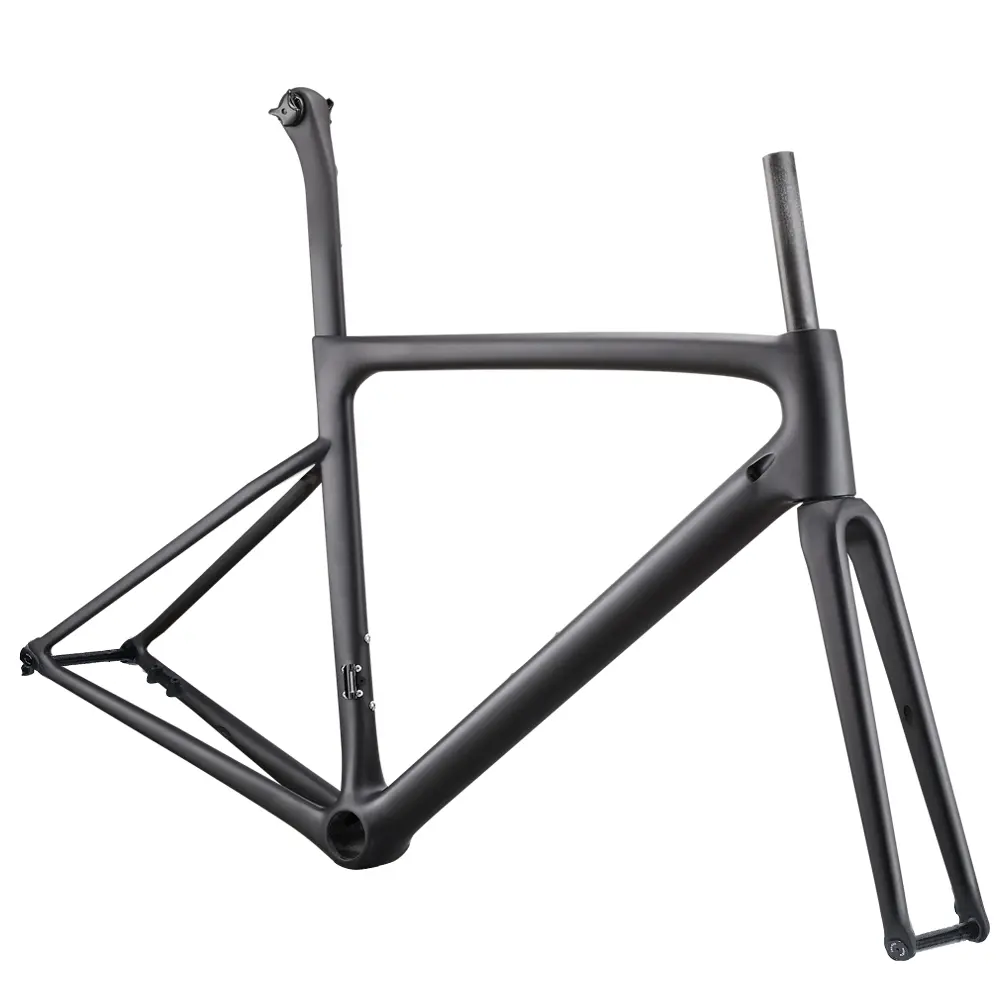
What is OEM and ODM Bicycle Development?
OEM and ODM bicycle development are two different product-development models used by bicycle brands and manufacturers to bring new frames, bicycles, and components to market. In an OEM (Original Equipment Manufacturer) project, the brand usually owns or controls the product concept, geometry, specifications, design requirements, branding direction, and performance targets, while the manufacturer provides engineering support, prototyping, testing, mold production, manufacturing, quality control, and mass-production capability. In contrast, an ODM (Original Design Manufacturer) project starts from an existing manufacturer-developed platform, where the factory already owns the frame design, engineering data, molds, testing records, and production process, allowing brands to customize geometry, paint, branding, specifications, or selected features without developing an entirely new product from scratch.
The choice between OEM and ODM depends on factors such as development budget, launch timeline, intellectual property ownership, mold investment, engineering resources, customization requirements, target market, minimum order quantity, and long-term brand strategy. OEM projects offer greater product differentiation and proprietary design control but require higher development cost and longer lead times, while ODM projects reduce risk, accelerate product launches, and lower tooling investment by leveraging proven manufacturing platforms.
| Development Area | OEM Development | ODM Development |
| Full Name | Original Equipment Manufacturer | Original Design Manufacturer |
| Product Concept | Brand defines concept | Manufacturer provides concept |
| Geometry Development | Fully customized | Existing platform or minor modification |
| Frame Design Ownership | Usually brand-owned | Usually manufacturer-owned |
| Mold Ownership | Typically customer-funded and owned | Typically manufacturer-owned |
| Development Cost | Higher | Lower |
| Tooling Investment | High mold investment required | Minimal or no mold investment |
| Development Timeline | Longer | Faster |
| Engineering Involvement | Extensive collaboration | Limited customization required |
| Product Differentiation | Very high | Moderate |
| Intellectual Property | Customer-controlled | Manufacturer-controlled |
| Structural Design Freedom | Complete | Limited by existing platform |
| Carbon Layup Development | Fully customized | Existing layup with optional tuning |
| Geometry Flexibility | Unlimited within engineering limits | Moderate |
| Testing Program | New validation required | Existing validation often available |
| Prototype Development | Multiple development stages | Reduced prototype requirement |
| Branding Customization | Full customization | Full customization possible |
| Paint Customization | Full customization | Full customization possible |
| Market Positioning | Unique flagship or proprietary products | Fast market entry products |
| Typical Project Goal | Product differentiation and innovation | Speed, efficiency, and cost control |
| Risk Level | Higher development risk | Lower development risk |
| Time to Market | Longer | Faster |
| MOQ Requirement | Often higher for new projects | Often lower and more flexible |
| Suitable For | Established brands and unique projects | New brands and rapid expansion projects |

In practice, many successful bicycle brands use a combination of both approaches. OEM development is often used for flagship platforms, race bikes, and proprietary technologies where brand differentiation is critical, while ODM development is commonly used for gravel bikes, road bikes, MTB platforms, e-bikes, and market-expansion projects where speed, cost efficiency, and proven manufacturing performance are higher priorities.
OEM carbon bike manufacturing explained
OEM carbon bike manufacturing is a development model where the bicycle brand defines the product vision and performance requirements while the manufacturer provides engineering, prototyping, testing, tooling, and production expertise to turn the concept into a production-ready bicycle. The process typically includes product concept definition, target rider analysis, market positioning, 2D geometry development, 3D CAD design, FEA(Finite Element Analysis) structural simulation, aerodynamic evaluation, carbon layup engineering, 3D-printed fit verification, mold development, prototype frame production, laboratory testing, ride validation, design optimization, paint and branding development, pilot production, quality-control validation, and mass production. Key requirements include clear performance targets, frame weight goals, stiffness objectives, tire clearance specifications, component compatibility standards, testing criteria, certification requirements, mold investment planning, production-volume forecasting, and intellectual property management. Unlike ODM projects, OEM development focuses on creating a unique and proprietary product platform with customized geometry, ride characteristics, structural design, and brand identity, allowing the final bicycle to achieve stronger market differentiation, higher technical exclusivity, and long-term product ownership while meeting targets for durability, safety, manufacturability, production consistency, and real-world riding performance.
ODM carbon bike development explained
ODM carbon bike development is a faster product-development model where the manufacturer provides an existing, tested carbon frame platform and the brand customizes it through paint, logo, specification, component setup, geometry options, layup tuning, packaging, and market positioning instead of building a completely new frame from zero. The process usually includes platform selection, target market review, frame size and geometry confirmation, component compatibility check, carbon layup or stiffness option selection, sample ordering, paint and branding design, prototype or pre-production sample approval, testing report review, final specification confirmation, pilot order, QC approval, and mass production. Key requirements include clear frame category, target price, MOQ, lead time, colorway, logo files, drivetrain standard, tire clearance, headset system, bottom bracket type, axle standard, brake mount, seatpost design, packaging standard, warranty requirement, and QC inspection criteria. Compared with OEM development, ODM reduces mold cost, engineering risk, development time, and testing burden because the frame platform is already developed by the factory, but customization freedom is more limited, making it suitable for brands that want faster market entry, lower investment, proven production stability, and reliable carbon bike products with professional branding and specification differentiation.
Choosing the right development approach
Choosing the right development approach depends on the brand’s business goals, budget, development timeline, product differentiation strategy, engineering resources, expected sales volume, intellectual property requirements, and long-term growth plan. There is no universally better option between OEM and ODM; the best choice depends on what the brand is trying to achieve in the market.
ODM development is usually the best solution for brands that need fast market entry, lower investment, proven frame platforms, reduced development risk, and shorter lead times. It is particularly suitable for new bicycle brands, distributors, importers, online retailers, local bike shops launching private-label products, regional brands testing new categories, and companies with limited engineering resources. Because the frame platform, mold system, testing validation, and production process already exist, the brand can focus on branding, paint design, component specification, sales strategy, and market expansion rather than spending time and money on engineering development.
OEM development is more suitable for brands that require unique geometry, proprietary technology, exclusive molds, custom ride characteristics, category-specific engineering, and long-term product differentiation. It is commonly chosen by established bicycle brands, performance-focused companies, race-oriented projects, high-volume programs, premium product lines, and businesses building long-term intellectual property value. OEM development allows complete control over frame geometry, carbon layup, aerodynamic design, stiffness targets, tire clearance, integration features, and manufacturing specifications, but requires greater investment in engineering, tooling, testing, and development time.
In practice, many successful bicycle companies use both approaches at different stages of growth. New brands often begin with ODM platforms to establish market presence and generate sales, then transition to OEM development as they gain market experience, increase order volume, and develop clearer product requirements. Larger brands frequently reserve OEM development for flagship road, gravel, MTB, triathlon, and racing platforms while using ODM projects for complementary products, secondary categories, or market-expansion opportunities. The key is matching the development model to the brand’s actual resources, business objectives, timeline expectations, and competitive positioning rather than selecting OEM or ODM based solely on cost or perceived prestige.
Stage 1: Product Planning and Market Positioning
Product planning and market positioning is the foundation of a carbon bike OEM/ODM development project, where the manufacturer and brand define the target rider, riding use case, bike category, performance objectives, specification level, budget range, and project feasibility before any geometry or mold design begins. This stage determines whether the project should become a road, gravel, MTB, e-bike, aero, endurance, all-road, or lightweight platform, and clarifies key targets such as frame weight, stiffness-to-weight ratio, tire clearance, drivetrain compatibility, brake standard, headset system, cockpit integration, cargo/load requirements, testing standards, price positioning, MOQ, tooling investment, and expected production volume. A professional factory uses this information to evaluate whether the product can be developed through an existing ODM platform or requires a new OEM mold, while also checking engineering risks, cost structure, timeline, certification needs, and long-term production scalability. Strong planning at this stage prevents expensive redesign later and ensures the final carbon frameset matches real market demand, rider expectations, brand positioning, and manufacturing capability.
Target rider and use case
Target rider and use case are the starting points of every successful carbon bike development project because they determine nearly every engineering decision that follows, including geometry design, carbon layup schedule, frame stiffness targets, tire clearance, tube shaping, component compatibility, testing requirements, and final product positioning. Before developing a frame, manufacturers must understand who will ride the bike, how it will be used, what terrain it will encounter, how long typical rides will be, what performance level is expected, and what compromises between speed, comfort, durability, handling, weight, aerodynamics, and versatility are acceptable.
For example, a competitive road racer may require an aggressive geometry with high bottom bracket stiffness, torsional rigidity, aerodynamic integration, and lightweight construction, while a gravel rider may prioritize stability, vibration damping, impact resistance, wider tire clearance, and long-distance comfort. Similarly, an endurance rider, bikepacking user, XC racer, urban commuter, or e-bike customer each generates a completely different set of engineering requirements. Professional manufacturers therefore evaluate factors such as rider weight range, flexibility, power output, riding intensity, terrain profile, expected mileage, cargo requirements, wheel and tire configuration, and market segment expectations before starting geometry development or carbon layup engineering.
A clearly defined target rider and use case help optimize ride feel, durability, product differentiation, testing standards, warranty performance, and manufacturing efficiency, while reducing the risk of creating a bike that performs well in theory but fails to meet real-world customer expectations. This is why experienced carbon bike manufacturers treat rider analysis as an engineering requirement rather than a marketing exercise, using it to guide every stage of development from concept to mass production.
Road, gravel, MTB, or e-bike platform selection
Road, gravel, MTB, or e-bike platform selection is one of the most important decisions during the early development stage because each category requires a completely different approach to geometry, carbon layup design, structural reinforcement, tire clearance, component compatibility, testing standards, and manufacturing targets. Before any frame design work begins, manufacturers must determine the primary riding application because the intended platform defines the frame’s load cases, durability requirements, ride characteristics, and long-term market positioning.
A road bike platform typically prioritizes lightweight construction, aerodynamic efficiency, high pedaling stiffness, responsive handling, and race-oriented performance, while a gravel platform requires greater emphasis on stability, vibration damping, wider tire clearance, impact resistance, accessory compatibility, and mixed-surface versatility. An MTB platform must withstand significantly higher impact loads, torsional forces, and fatigue cycles, requiring stronger reinforcement zones, larger tire clearance, suspension compatibility, and more aggressive durability testing. An e-bike platform introduces additional engineering requirements related to motor integration, battery packaging, higher system weight, increased torque loads, thermal management, reinforced frame interfaces, and category-specific certification standards.
Professional carbon bike manufacturers evaluate factors such as target rider profile, terrain conditions, tire volume, drivetrain standards, suspension requirements, weight targets, stiffness objectives, ISO testing categories, impact loads, expected mileage, and market pricing before selecting the platform. This decision affects nearly every downstream development activity, including 2D geometry creation, 3D CAD design, mold architecture, carbon layup strategy, prototype testing, assembly compatibility, and production planning. Choosing the correct platform at the beginning helps ensure that the final product delivers the intended ride feel, durability level, market differentiation, and long-term manufacturing success.
Performance objectives and specifications
Performance objectives and specifications define the measurable engineering targets that the carbon frame must achieve throughout development and production. Once the target rider and platform have been identified, manufacturers establish key specifications such as frame weight, fork weight, stiffness targets, stiffness-to-weight ratio, fatigue life, impact resistance, aerodynamic performance, tire clearance, maximum rider weight, component compatibility, frame size range, geometry parameters, system integration level, and testing requirements. These objectives become the engineering benchmarks used during FEA simulation, carbon layup development, prototype evaluation, laboratory testing, and production validation, ensuring that every design decision supports the intended performance outcome.
For example, a lightweight climbing frame may target a specific frameset weight, bottom bracket stiffness, and acceleration efficiency, while an endurance or gravel platform may prioritize vertical compliance, vibration damping, tire clearance, durability, and long-distance comfort. Manufacturers also define technical specifications such as headset standard, bottom bracket system, axle format, brake mount type, seatpost design, cable-routing configuration, maximum tire size, drivetrain compatibility, and bearing interfaces, because these details directly affect assembly compatibility, production complexity, and market acceptance. Well-defined performance objectives help balance weight, stiffness, comfort, durability, aerodynamics, manufacturability, cost control, and warranty reliability, allowing the development team to make data-driven engineering decisions rather than relying on assumptions throughout the OEM/ODM development process.
Budget and project feasibility
Budget and project feasibility determine whether a carbon bike development project can realistically achieve its technical goals, production targets, timeline requirements, and commercial objectives before significant engineering resources are invested. From a manufacturer’s perspective, this stage evaluates factors such as mold investment, prototype cost, engineering hours, testing expenses, paint development, certification requirements, tooling amortization, MOQ expectations, production volume forecasts, material cost, and expected retail positioning. Even the best product concept must be aligned with practical considerations such as development budget, target selling price, break-even volume, manufacturing complexity, supply-chain capability, and production scalability.
A professional carbon bike manufacturer will assess whether the project requires a completely new OEM platform or can be developed from an existing ODM platform, because this decision has a major impact on tooling cost, lead time, engineering risk, and return on investment. Additional considerations include carbon material selection, mold architecture, size range, integration level, paint complexity, testing program scope, quality-control requirements, and long-term production planning. For example, highly integrated aero frames with proprietary cockpit systems, hidden cable routing, custom seatposts, and category-specific layups require substantially greater investment than adapting an existing platform. Strong feasibility analysis helps ensure that the project’s performance targets, manufacturing requirements, pricing strategy, and expected sales volume are aligned, reducing development risk while improving production efficiency, profitability, and long-term market success.
Stage 2: Geometry and Frame Engineering Development
Geometry and frame engineering development is where the product concept becomes a technical frame platform through 2D geometry design, frame size grading, stack and reach targets, handling behavior, rider-position planning, tire clearance, and component compatibility definition. At this stage, the manufacturer translates the target rider and use case into measurable engineering data such as head tube angle, seat tube angle, wheelbase, chainstay length, bottom bracket drop, fork rake, trail, front-center length, standover height, headset standard, bottom bracket type, axle format, brake mount, seatpost design, cockpit routing, drivetrain compatibility, and maximum tire size. These decisions define how the bike will feel in real riding conditions, including stability, responsiveness, comfort, power transfer, cornering confidence, climbing efficiency, and long-distance fit consistency across all frame sizes. A professional carbon bike manufacturer must balance geometry with manufacturing feasibility, mold structure, carbon layup strategy, assembly standards, and future mass-production tolerance control, because poor geometry planning can lead to unstable handling, poor fit, tire clearance issues, component interference, or costly mold redesign later in development.
2D geometry design
2D geometry design is the first technical drawing stage where the frame’s key dimensions are defined before 3D CAD modeling, mold design, and prototype development. From a manufacturer’s perspective, this stage converts the product concept into measurable geometry data such as stack, reach, head tube angle, seat tube angle, top tube length, wheelbase, chainstay length, bottom bracket drop, fork rake, trail, front-center, standover height, seatpost length, tire clearance, and frame size range. These numbers determine the bike’s real ride behavior, including rider position, handling speed, high-speed stability, cornering confidence, climbing posture, toe overlap risk, wheel tracking, and long-distance comfort. A professional 2D geometry design must also consider drivetrain standard, brake mount, axle format, headset system, bottom bracket type, fork compatibility, tire size, mud clearance, and cockpit integration, because geometry is not only about fit but also about component packaging and manufacturing feasibility. Good 2D geometry planning helps prevent expensive mold changes later and ensures the frame can move smoothly into 3D CAD design, carbon layup engineering, prototype validation, and mass production.
Frame sizing strategy
Frame sizing strategy is the process of developing a complete size range that maintains consistent fit, handling characteristics, ride feel, weight distribution, and component compatibility across all frame sizes rather than simply scaling every tube dimension proportionally. From a professional carbon bike manufacturer’s perspective, sizing strategy involves determining the optimal range of XXS, XS, S, M, L, XL, and larger sizes, while carefully adjusting parameters such as stack, reach, wheelbase, front-center, head tube length, seat tube length, standover height, chainstay length, fork offset, and trail to suit different rider body proportions and riding styles.
A well-developed sizing strategy considers factors such as rider height, inseam length, torso-to-leg ratio, flexibility, riding position, tire clearance, component fit, and handling consistency. Larger frames often require different engineering solutions than smaller frames because they experience different load distributions, longer tube spans, and greater torsional forces. Manufacturers may therefore adjust carbon layup schedules, tube diameters, reinforcement zones, wall thickness, and stiffness targets between sizes to maintain consistent ride quality rather than allowing larger sizes to become too flexible or smaller sizes to become excessively stiff.
Good frame sizing strategy improves bike fit accuracy, rider comfort, steering behavior, power transfer, weight balance, market coverage, and customer satisfaction, while reducing the risk of poor fit, unstable handling, toe overlap, excessive toe clearance, sizing confusion, and inconsistent ride characteristics across the product line. This stage is particularly important because a successful frame platform must perform equally well for riders at both ends of the intended size range while maintaining the same design philosophy, handling identity, and performance objectives.
Stack, reach, and handling targets
Stack, reach, and handling targets define how the rider sits on the bike and how the frame responds to steering input, speed changes, climbing, descending, and cornering. From a professional carbon bike manufacturer’s perspective, stack controls front-end height and rider comfort, reach controls cockpit length and rider extension, while handling targets are shaped by head tube angle, fork rake, trail, wheelbase, front-center, chainstay length, and bottom bracket drop. A lower stack and longer reach usually create a more aggressive, aerodynamic, race-oriented position, while a higher stack and shorter reach improve comfort, control, and long-distance fit. Handling targets must match the platform: an aero road frame needs quick response and high-speed precision, an endurance frame needs stability and fatigue reduction, a gravel frame needs predictable steering and traction on loose surfaces, and an MTB or e-bike platform needs stronger stability under higher loads. Good stack, reach, and handling development improves bike fit accuracy, steering confidence, weight distribution, cornering behavior, braking stability, rider efficiency, and market acceptance, while poor targets can cause nervous handling, poor front-wheel grip, toe overlap, excessive rider fatigue, unstable descending, and inconsistent ride feel across frame sizes.
Component compatibility planning
Component compatibility planning defines whether the carbon frame can correctly fit and function with the intended drivetrain, wheelset, tire size, brake system, headset, bottom bracket, seatpost, cockpit, thru-axles, derailleur hanger, cable routing, electronic shifting, bottle cages, storage systems, and accessories before 3D CAD design and mold development begin. From a professional carbon bike manufacturer’s perspective, this stage is critical because every standard affects the frame structure, interface tolerances, assembly process, and end-user reliability, including BB standard, headset bearing size, flat mount or post mount brake design, UDH or standard hanger, axle spacing, maximum tire clearance, chainline, fork steerer system, internal cable-routing path, Di2 battery position, and cockpit integration. Good compatibility planning improves assembly efficiency, drivetrain accuracy, brake alignment, wheel tracking, tire clearance, serviceability, and market acceptance, while poor planning can cause component interference, brake rub, cable friction, poor shifting, headset play, creaking, warranty claims, and expensive mold redesign.
Stage 3: 3D CAD Design and Engineering Validation
3D CAD design and engineering validation is where the approved 2D geometry is converted into a complete manufacturable carbon frame model, including tube profiles, junction shapes, wall-thickness strategy, internal routing paths, insert locations, tire clearance, cockpit integration, fork interface, bottom bracket structure, brake mount position, dropout design, and mold-splitting logic. At this stage, the manufacturer uses 3D frame modeling, structural engineering analysis, component clearance verification, and 3D printed prototype evaluation to check whether the frame can meet targets for strength, stiffness, aerodynamics, weight, assembly compatibility, rider fit, tire clearance, and production feasibility before investing in expensive mold development. Professional validation may include FEA stress analysis, load-path review, carbon layup planning, CFD-related tube shaping, bearing-seat design, cable-routing simulation, drivetrain clearance checking, and full-size 3D printed sample testing, helping identify problems such as component interference, weak junctions, poor mold release, difficult layup areas, insufficient tire clearance, or assembly conflicts early in the development process. This stage adds major value because correcting design issues in CAD or a 3D printed sample is far faster and cheaper than modifying finished molds, while also improving prototype success rate, production repeatability, and long-term frame reliability.
3D frame modeling
3D frame modeling is the stage where the approved 2D geometry is converted into a complete digital carbon frameset structure, including tube profiles, aerodynamic shapes, junction transitions, bottom bracket structure, head tube area, fork interface, dropout design, disc brake mount, seatpost system, internal cable routing, tire clearance, bearing seats, inserts, and mold-splitting surfaces. From a professional carbon bike manufacturer’s perspective, this stage is critical because the 3D model must not only look correct, but also be structurally reliable, moldable, layup-friendly, assembly-compatible, and production-ready. Good 3D modeling helps control frame weight, stiffness target, wall-thickness strategy, fiber layup space, component clearance, surface quality, paint area, aerodynamic efficiency, and final QC tolerance, while poor 3D modeling can cause weak junctions, difficult mold release, cable-routing problems, tire interference, brake mount misalignment, poor bearing fit, and expensive mold modification later.
Structural engineering analysis
Structural engineering analysis is the process of evaluating whether the carbon frame can safely and efficiently handle the loads it will experience during real-world riding before any molds or prototypes are produced. From a professional carbon bike manufacturer’s perspective, this stage uses FEA (Finite Element Analysis), load-path analysis, stiffness simulation, stress mapping, deformation analysis, fatigue prediction, impact simulation, and reinforcement optimization to study how forces travel through critical areas such as the head tube, downtube, bottom bracket shell, chainstays, seatstays, fork crown, dropouts, brake mounts, and seat cluster. Engineers analyze loads generated by pedaling torque, rider weight, sprinting, cornering, braking, impacts, road vibration, and fatigue cycles to identify potential stress concentrations, excessive flex, or overbuilt sections. The results help optimize carbon layup schedules, tube wall thickness, reinforcement placement, material distribution, stiffness-to-weight ratio, impact resistance, and long-term durability, ensuring the frame meets targets for power transfer, handling precision, comfort, fatigue life, ISO testing requirements, and production reliability before moving into prototype manufacturing.
Component clearance verification
Component clearance verification is the engineering process of confirming that all intended bicycle components can fit, move, and function correctly within the frame design before mold development and prototype production begin. From a professional carbon bike manufacturer’s perspective, this stage evaluates critical interfaces such as tire clearance, wheel clearance, chainring clearance, crank-arm clearance, front derailleur space, rear derailleur movement, cassette envelope, brake caliper positioning, rotor clearance, fork crown spacing, handlebar rotation, cable-routing paths, electronic wire routing, battery placement, seatpost insertion depth, bottle cage space, frame storage compartments, and suspension movement where applicable. Engineers use 3D CAD assemblies, kinematic simulations, tolerance analysis, digital mockups, and virtual assembly testing to ensure compatibility with the intended drivetrain, wheelset, tire size, braking system, cockpit, and accessory standards. Proper clearance verification improves assembly efficiency, shifting performance, braking reliability, tire compatibility, serviceability, manufacturing repeatability, and future component flexibility, while poor clearance planning can lead to component interference, tire rub, cable friction, restricted steering angle, drivetrain conflicts, assembly difficulties, warranty issues, and costly mold revisions later in development.
3D printed prototype evaluation
3D printed prototype evaluation is the pre-mold verification stage where the digital frame design is turned into a physical full-size or partial-scale sample to check shape, proportion, tube transitions, component fit, cable-routing paths, tire clearance, cockpit integration, bottle cage position, seatpost interface, dropout design, brake mount location, and overall assembly logic before expensive mold machining begins. From a professional carbon bike manufacturer’s perspective, this stage is not used to test final carbon strength, but to confirm whether the design is practical, manufacturable, and visually correct in real space. Engineers and clients can install reference components such as fork, headset, bottom bracket, crankset, wheelset, brake caliper, thru-axle, derailleur hanger, seatpost, handlebar, and internal routing cables to identify interference, awkward assembly areas, poor tube transitions, insufficient clearance, or styling issues early. A good 3D printed evaluation reduces mold-revision risk, shortens development time, improves communication between design and production teams, and helps ensure the final carbon prototype has better assembly compatibility, geometry accuracy, aerodynamic form, brand design approval, and production feasibility before moving into mold development.
Stage 4: Mold Development and Tooling
Mold development and tooling is the stage where the validated 3D frame design is transformed into a production-ready manufacturing system capable of producing consistent carbon frames at scale. From a professional carbon bike manufacturer’s perspective, this stage includes mold design process, internal EPS mold development, tooling production, and mold validation and inspection, all of which directly influence frame quality, dimensional accuracy, production efficiency, surface finish, weight consistency, and long-term manufacturing stability. Engineers must design not only the external mold cavities but also the complete internal molding architecture, including EPS core systems, mold split lines, layup access areas, compaction zones, venting paths, insert positioning features, alignment mechanisms, and demolding strategies. Once the tooling is machined, manufacturers perform detailed inspections covering dimensional tolerance, cavity accuracy, surface quality, alignment precision, thermal behavior, assembly repeatability, and production readiness before any carbon prototype is produced. Because molds represent one of the largest investments in a carbon bike development project, successful tooling development helps ensure consistent frame geometry, wall-thickness control, layup repeatability, cosmetic quality, production yield, and mass-production scalability, while poor mold engineering can lead to dimensional variation, assembly problems, excessive frame weight, surface defects, higher rejection rates, and costly redesign later in the project.
Mold design process
The mold design process is one of the most important stages in carbon bike OEM/ODM development because the mold determines whether the approved 3D frame design can be produced accurately, repeatedly, and efficiently in real manufacturing. A professional mold design is not only the negative shape of the frame; it includes the full tooling architecture, mold split lines, cavity design, alignment pins, clamping system, insert positioning, EPS/core compatibility, venting channels, layup access, compaction zones, heating behavior, and demolding direction, all of which directly affect frame geometry, surface quality, wall-thickness consistency, and production yield.
During mold design, engineers must evaluate every complex area of the frame, including the head tube junction, bottom bracket shell, chainstay bridge, seat cluster, dropout area, fork crown, tire-clearance zones, disc brake mount, internal cable-routing channels, and aerodynamic tube transitions. These areas need enough space for accurate carbon layup, stable EPS or bladder positioning, smooth resin flow, correct pressure distribution, and safe frame removal after curing. If the mold split line, venting path, or internal support design is poor, the factory may face defects such as fiber wrinkles, bridging, internal voids, resin pooling, flash marks, demolding damage, dimensional variation, or excessive finishing work.
A well-designed mold improves layup efficiency, molding repeatability, curing stability, tolerance control, surface finish, frame alignment, weight consistency, and mass-production scalability. For clients, strong mold design means fewer prototype revisions, lower rejection rates, better assembly compatibility, more stable QC results, and a smoother transition from prototype frame to mass production.
Internal EPS mold development
Internal EPS mold development is the process of designing the expandable polystyrene core system that supports the carbon layup from inside the frame during molding and curing. In modern carbon frame production, the external steel or aluminum mold controls the outside shape, while the EPS internal mold helps control the inner wall quality, compaction pressure, tube thickness, resin flow, junction consolidation, and internal surface smoothness, especially in difficult areas such as the head tube, bottom bracket shell, chainstay bridge, seat cluster, fork crown, dropout zones, and internal cable-routing sections.
The EPS core must be designed together with the 3D frame model and external mold, not added later as a simple filler. Engineers need to define the core shape, wall clearance, expansion behavior, venting path, core positioning, removal method, pressure distribution, and compatibility with the layup schedule, because poor EPS design can cause wrinkles, bridging, voids, resin pooling, uneven wall thickness, weak junctions, and internal delamination. A well-designed EPS system allows carbon plies to press evenly against the mold surface during curing, improving fiber consolidation, laminate density, fatigue resistance, impact strength, stiffness consistency, and ride-feel repeatability.
For clients, strong EPS mold development means the factory has deeper control over hidden internal quality, not only the outside appearance of the frame. It improves production consistency, reduces internal defects, supports cleaner tube interiors, improves QC results in ultrasonic inspection, borescope inspection, and destructive section analysis, and helps the prototype frame move more reliably into stable mass production.
Tooling production
Tooling production is the stage where the approved mold design is manufactured into real production tools, usually through CNC machining, precision grinding, cavity polishing, insert fixture machining, alignment-pin installation, clamping-system setup, and mold surface treatment. From a professional carbon bike manufacturer’s perspective, tooling production must control cavity accuracy, mold surface finish, split-line precision, thermal stability, venting channels, EPS/core fit, insert positioning, and mold closure repeatability, because these details directly affect the final frame’s geometry accuracy, wall-thickness consistency, laminate compaction, surface quality, alignment, and production yield.
High-quality tooling is normally produced from durable steel or aluminum alloy mold materials depending on production volume, frame complexity, cost target, and thermal requirements. Critical areas such as the head tube, bottom bracket shell, dropout zones, disc brake mounts, seatpost interface, fork crown, tire-clearance area, and aerodynamic tube transitions require very tight machining tolerance because even small tooling errors can create assembly problems, frame misalignment, poor bearing fit, brake rub, resin pooling, flash marks, or inconsistent wall thickness.
After machining, the mold is inspected through CMM measurement, trial assembly, surface roughness checks, mold closure testing, alignment verification, and first-article validation before it is released for prototype production. Good tooling production reduces rework, improves prototype success rate, stabilizes mass production, and ensures the frame can meet the approved CAD geometry, layup requirements, curing process, cosmetic standard, and final QC tolerance across repeated production batches.
Mold validation and inspection
Mold validation and inspection are the final verification processes performed before prototype frame production begins, ensuring that the completed tooling accurately matches the approved engineering design and can consistently produce carbon frames within the required quality standards. From a professional carbon bike manufacturer’s perspective, this stage verifies mold geometry, cavity dimensions, split-line accuracy, alignment-pin positioning, mold closure precision, EPS/core compatibility, venting effectiveness, insert location accuracy, thermal stability, and surface finish quality before the tooling is released to manufacturing.
During validation, engineers use CMM measurement systems, laser scanning, 3D surface comparison, alignment gauges, cavity inspection tools, mold assembly testing, thermal-expansion evaluation, and first-article verification procedures to compare the physical tooling against the original CAD model. Critical areas such as the head tube, bottom bracket shell, chainstay junction, seat cluster, dropout interface, brake mounts, tire-clearance zones, and aerodynamic tube transitions receive special attention because dimensional variation in these regions can affect assembly compatibility, frame alignment, ride quality, and production consistency.
A properly validated mold improves geometry accuracy, wall-thickness control, layup repeatability, internal compaction quality, surface finish consistency, assembly precision, and production yield, while reducing risks such as frame misalignment, bearing-fit issues, brake-mount deviation, tire-clearance problems, excessive finishing work, and costly tooling modifications later in production. For clients, mold validation is a critical milestone because it confirms that the engineering design has successfully transitioned into a reliable manufacturing system capable of supporting prototype testing, certification programs, and eventual mass production with consistent quality and repeatable performance.
Stage 5: Prototype Frame Manufacturing
Prototype frame manufacturing is the first stage where the engineering concept becomes a real carbon bicycle frame, allowing the development team to verify whether the geometry, carbon structure, manufacturing process, assembly interfaces, and performance targets work as intended outside the digital environment. From a professional carbon bike manufacturer’s perspective, this stage includes initial frame production, carbon layup development, assembly compatibility testing, and prototype evaluation, using the newly validated molds and production processes to manufacture the first functional frames. Unlike mass production, prototype manufacturing focuses on collecting engineering data and identifying potential improvements related to frame weight, stiffness, fatigue durability, impact resistance, ride feel, alignment accuracy, component fit, tire clearance, cable routing, and production feasibility.
During this stage, engineers closely monitor every aspect of production, including prepreg cutting, ply placement, layup sequence, EPS/core positioning, molding pressure, curing behavior, insert installation, frame alignment, surface quality, and dimensional consistency. The prototype frames are then assembled with real components and evaluated through fit verification, structural testing, ride testing, fatigue analysis, impact assessment, and assembly validation to confirm that the frame meets its intended performance objectives. Any issues discovered—such as excessive weight, insufficient stiffness, clearance conflicts, assembly difficulties, cosmetic concerns, or manufacturing inefficiencies—are documented and fed back into the development process.
For clients, prototype manufacturing is one of the most important milestones because it provides the first opportunity to physically evaluate the product before committing to mass production tooling, certification programs, paint development, and production planning. A successful prototype stage helps validate the complete engineering concept, reduces future development risk, improves production readiness, and creates a solid foundation for design optimization, testing certification, and eventual large-scale manufacturing.
Initial frame production
Initial frame production is the first physical build using the validated mold, EPS/internal forming system, approved prepreg materials, and first-version layup schedule to confirm whether the frame can be manufactured according to the engineering design. At this stage, the factory carefully records carbon cutting accuracy, ply placement, mold loading, EPS positioning, bladder or pressure control, curing temperature, dwell time, demolding result, frame weight, surface condition, and dimensional tolerance, because the first prototype is used to verify both the frame structure and the production method.
Unlike mass production, the purpose of initial frame production is not speed or volume, but process learning and engineering confirmation. Engineers check whether the carbon plies fit the mold correctly, whether the layup is too difficult for operators, whether the frame has wrinkles, voids, resin pooling, flashing, weak compaction, misalignment, or surface defects, and whether critical interfaces such as the bottom bracket shell, head tube, dropouts, brake mounts, seatpost area, cable routing, and tire clearance match the CAD and drawing requirements. A successful initial production frame gives the team real data for layup adjustment, mold improvement, weight control, QC standards, assembly testing, and prototype validation, reducing risk before testing and mass production.
Carbon layup development
Carbon layup development is the process of creating and refining the complete ply schedule, fiber orientation strategy, laminate thickness distribution, reinforcement placement, carbon modulus selection, overlap design, and structural load-path architecture that will determine how the frame performs in real-world riding conditions. From a professional carbon bike manufacturer’s perspective, this is one of the most important engineering activities in the entire development process because the same mold can produce completely different ride characteristics depending on how the carbon is laid up.
During layup development, engineers define the placement of 0°, 90°, +45°, and -45° fiber orientations, determine where to use high-modulus, intermediate-modulus, or standard-modulus carbon materials, and optimize reinforcement around critical areas such as the head tube, downtube, bottom bracket shell, chainstays, seat cluster, fork crown, dropouts, brake mounts, and seatpost interface. The goal is to achieve the target balance between frame weight, bottom bracket stiffness, torsional rigidity, impact resistance, fatigue durability, vibration damping, compliance, and manufacturing repeatability while avoiding unnecessary material that adds weight without improving performance.
The first prototype stage often requires multiple layup iterations because simulation results do not always perfectly match real-world behavior. Engineers compare actual data such as frame weight, stiffness testing, fatigue performance, impact results, ride feedback, wall-thickness measurements, and destructive section analysis against the original targets. Based on these findings, the ply schedule may be adjusted by changing fiber orientation, reinforcement size, laminate sequence, carbon grade, or local thickness to improve power transfer, handling precision, comfort, durability, or production consistency. A well-developed layup not only improves performance but also increases production stability, reduces quality variation, and ensures that every frame leaving the factory delivers the intended ride feel and structural reliability.
Assembly compatibility testing
Assembly compatibility testing is the process of verifying that the prototype carbon frame can be assembled correctly with all intended bicycle components and industry-standard interfaces before the project moves into large-scale testing or production. From a professional carbon bike manufacturer’s perspective, this stage evaluates critical areas such as the headset system, fork assembly, bottom bracket installation, crankset clearance, wheel fitment, tire clearance, thru-axle engagement, derailleur hanger alignment, brake caliper positioning, rotor clearance, seatpost insertion, cockpit integration, internal cable routing, electronic shifting compatibility, battery placement, bottle cage installation, and accessory mounting interfaces.
During testing, engineers build complete prototype bicycles using real production components and check dimensional accuracy, installation torque, interface fit, cable-routing efficiency, bearing preload, shifting performance, brake alignment, wheel tracking, steering clearance, and serviceability. Particular attention is given to high-precision interfaces such as the bottom bracket shell, headset bearing seats, disc brake mounts, dropouts, UDH hanger system, integrated cockpit routing channels, and seatpost clamping mechanism, because small dimensional deviations can create assembly difficulties, creaking, poor shifting, brake rub, bearing wear, or long-term reliability issues.
A successful assembly compatibility test confirms that the frame works correctly with the intended standards and components while meeting targets for ease of assembly, maintenance accessibility, production repeatability, aftermarket compatibility, and user experience. The results are used to validate engineering tolerances, identify design improvements, refine QC specifications, and reduce future warranty risks before the frame enters certification testing, paint development, pilot production, and mass manufacturing.
Prototype evaluation
Prototype evaluation is the engineering review stage where the first carbon frame samples are checked against the original geometry, weight, stiffness, durability, assembly, ride feel, and manufacturing feasibility targets before the design is approved for further testing or optimization. From a professional carbon bike manufacturer’s perspective, this stage combines dimensional inspection, frame weight measurement, alignment checking, component assembly review, stiffness testing, visual inspection, ride testing, and production-process feedback to confirm whether the prototype matches the approved CAD design and real-world performance expectations.
A complete prototype evaluation focuses on critical areas such as the bottom bracket shell, head tube, fork interface, rear triangle, dropouts, disc brake mounts, seatpost system, internal cable routing, tire clearance, cockpit integration, and paint-ready surface quality. Engineers check whether the frame has issues such as excessive weight, low BB stiffness, weak head tube torsional rigidity, poor compliance balance, clearance conflicts, cable-routing difficulty, brake rub, headset fit problems, dropout misalignment, surface defects, wrinkles, voids, or unstable molding results. The evaluation results are then used to refine the layup schedule, mold details, EPS/core design, insert position, machining tolerances, carbon reinforcement zones, and assembly standards, helping the project move toward testing validation, design optimization, and stable mass production with lower risk and better product consistency.
Stage 6: Testing and Design Refinement
Testing and design refinement is where the prototype carbon frame is verified, stressed, ridden, measured, and improved before it can move toward final approval and mass production. From a professional carbon bike manufacturer’s perspective, this stage includes strength testing, fatigue testing, impact testing, stiffness testing, ride testing, rider feedback collection, geometry review, assembly feedback, and engineering improvement, because a prototype must prove not only that it looks correct, but also that it meets real targets for structural safety, ISO/EN compliance, frame weight, BB stiffness, head tube rigidity, vibration damping, tire clearance, handling stability, component compatibility, and long-term durability. Laboratory tests reveal structural risks such as cracking, delamination, weak reinforcement, excessive flex, poor impact resistance, or fatigue failure, while ride testing identifies practical issues such as harshness, unstable handling, poor cornering confidence, cable noise, brake rub, or uncomfortable rider positioning. Based on these results, engineers refine the carbon layup schedule, fiber orientation, reinforcement zones, wall thickness, EPS/core design, mold details, geometry dimensions, tolerance standards, and assembly interfaces, ensuring the final frame achieves reliable performance, consistent ride feel, lower warranty risk, and stable production repeatability before branding, paint development, pilot production, and mass manufacturing.
Strength and fatigue testing
Strength and fatigue testing are critical validation stages used to confirm that a prototype carbon frame can safely withstand both maximum structural loads and repeated long-term riding stress before the design is approved for production. From a professional carbon bike manufacturer’s perspective, strength testing checks the frame’s ability to resist high-load events such as sprinting force, braking load, rider weight transfer, fork impact, seatpost loading, BB torsion, dropout stress, and frontal impact, while fatigue testing simulates repeated use through controlled cyclic loading on areas such as the bottom bracket shell, head tube junction, fork crown, seat cluster, chainstays, dropouts, and brake mounts.
Testing is normally based on ISO 4210, EN safety requirements, internal engineering standards, and category-specific load cases for road, gravel, MTB, e-bike, or endurance platforms. Engineers use equipment such as servo-hydraulic fatigue rigs, static load fixtures, impact test machines, BB fatigue fixtures, head tube loading rigs, fork test fixtures, strain gauges, displacement sensors, load cells, and digital data logging systems to monitor deformation, crack initiation, stiffness loss, delamination, permanent set, and structural failure behavior. After testing, frames are often inspected again through visual inspection, tap testing, ultrasonic inspection, alignment checks, and section analysis if needed.
The value of strength and fatigue testing is that it turns a prototype from a design sample into a validated engineering product. If the frame passes, it confirms that the carbon layup schedule, reinforcement zones, curing quality, wall-thickness distribution, insert bonding, and mold accuracy are suitable for real-world use; if it fails, the results guide improvements such as adding reinforcement, changing fiber orientation, adjusting laminate thickness, improving EPS compaction, or modifying tube geometry. This process reduces warranty risk, improves rider safety, supports certification approval, and gives clients confidence that the frame is ready for pilot production and eventual mass production.
Ride testing and feedback
Ride testing and feedback are the real-world validation stage where prototype frames are built into complete bikes and evaluated by test riders to confirm whether the frame delivers the intended ride feel, handling behavior, stiffness balance, comfort, vibration damping, braking stability, climbing response, cornering confidence, and overall rider experience. From a professional carbon bike manufacturer’s perspective, laboratory testing can prove structural safety, but ride testing shows how the frame actually performs with real components, tires, wheels, cockpit setup, rider weight, road surfaces, gravel terrain, climbing loads, sprinting forces, and descending conditions.
During ride testing, engineers collect feedback on areas such as bottom bracket stiffness, head tube rigidity, rear-triangle compliance, fork comfort, steering precision, high-speed stability, tire clearance, cable noise, brake rub, drivetrain feel, seatpost comfort, and rider position. This feedback is compared with design targets and test data from stiffness testing, vibration analysis, FEA simulation, geometry settings, and prototype assembly inspection, helping the team decide whether the frame needs layup adjustment, geometry refinement, reinforcement changes, cockpit revision, tire-clearance improvement, or assembly-interface optimization. Good ride testing helps turn a structurally qualified prototype into a market-ready carbon bike with better real-world performance, rider confidence, product differentiation, and long-term customer satisfaction.
Geometry adjustments
Geometry adjustments are the refinement process where engineers modify the prototype frame’s dimensions and handling characteristics based on results from ride testing, fit evaluation, assembly feedback, laboratory testing, and rider input. From a professional carbon bike manufacturer’s perspective, even a well-designed geometry on paper may require optimization once the bike is ridden in real conditions, because small changes to stack, reach, head tube angle, seat tube angle, wheelbase, chainstay length, bottom bracket drop, fork rake, trail, front-center length, and tire clearance can significantly affect handling, comfort, climbing efficiency, descending stability, cornering confidence, and rider positioning.
During this stage, engineers compare the original design targets with actual rider feedback and test data. For example, if the prototype feels too nervous at high speed, the team may adjust head tube angle, trail, wheelbase, or front-center dimensions to improve stability. If riders report excessive front-wheel load or an uncomfortable cockpit position, modifications to stack, reach, head tube length, or seat tube geometry may be required. Gravel, endurance, MTB, and e-bike platforms often require additional geometry refinement because factors such as tire volume, suspension interaction, load carrying, rider posture, and terrain variability have a greater influence on ride behavior.
The goal of geometry adjustment is not simply to change dimensions, but to optimize the overall balance between fit, handling, weight distribution, power transfer, comfort, traction, and category-specific ride characteristics. Once the revised geometry achieves the intended performance targets, the updated dimensions become the foundation for final CAD release, layup optimization, certification testing, and mass-production tooling, ensuring that the finished frame delivers consistent ride quality across all sizes and production batches.
Engineering improvements
Engineering improvements are the final technical refinements made after prototype testing, ride evaluation, laboratory validation, and assembly verification to ensure the carbon frame meets all performance, durability, manufacturability, and production targets before moving into final approval. From a professional carbon bike manufacturer’s perspective, this stage uses data collected from strength testing, fatigue testing, impact testing, ride feedback, stiffness measurements, weight analysis, assembly compatibility checks, QC inspection, and manufacturing trials to identify areas that can be further optimized.
These improvements may involve adjusting the carbon layup schedule, fiber orientation, reinforcement placement, laminate thickness, tube profile, junction design, EPS/core structure, insert bonding method, mold details, cable-routing layout, dropout interface, brake mount structure, seatpost system, or assembly tolerances. For example, engineers may add reinforcement around the bottom bracket shell, head tube, chainstay junction, or brake mount if testing reveals excessive stress concentration, or reduce material in low-load areas to improve frame weight without compromising durability. Ride testing may also lead to changes in compliance tuning, stiffness balance, vibration damping characteristics, or handling response to better match the intended rider experience.
The goal of engineering improvement is to create a frame that not only passes testing but also achieves the desired balance between weight, stiffness, comfort, impact resistance, fatigue life, manufacturability, assembly efficiency, cosmetic quality, and long-term reliability. This stage often provides the greatest return on development investment because relatively small engineering adjustments can significantly improve performance, reduce production variation, lower warranty risk, simplify manufacturing processes, and increase customer satisfaction before the project enters paint development, pilot production, and mass manufacturing.
Stage 7: Final Design Approval and Production Readiness
Final design approval and production readiness is the stage where the optimized carbon frame design is frozen and converted into a controlled mass-production program, including final mold modifications, production documentation, quality control planning, and production sample approval. From a professional carbon bike manufacturer’s perspective, this stage confirms that all previous feedback from prototype manufacturing, fatigue testing, impact testing, ride validation, geometry review, assembly compatibility checks, and engineering improvements has been applied before production begins. Final mold modifications may refine insert positions, cable-routing channels, tire clearance, brake mount accuracy, layup access, EPS/core fit, or surface details, while production documentation defines the approved CAD drawings, ply books, layup schedule, curing parameters, inspection standards, tolerance specifications, paint references, BOM, SOPs, and traceability records. At the same time, the factory prepares the QC plan for incoming material inspection, layup verification, molding inspection, alignment checks, NDT inspection, cosmetic QC, assembly compatibility inspection, and final packaging review. Production sample approval is the final checkpoint to confirm that the frame is ready for stable mass production with consistent weight, stiffness, durability, fit accuracy, finish quality, assembly reliability, and long-term warranty performance.
Final mold modifications
Final mold modifications are the last controlled tooling adjustments made after prototype testing, assembly verification, ride feedback, and engineering review, before the frame design is officially released for mass production. From a professional carbon bike manufacturer’s perspective, this may include refining mold split lines, insert positions, EPS/core fit, cable-routing channels, brake mount areas, dropout interfaces, tire-clearance zones, seatpost system details, surface transitions, venting paths, and demolding features to improve manufacturability, dimensional accuracy, and production repeatability. These changes are not random design changes; they are based on confirmed issues from prototype frames, CMM measurement, assembly compatibility testing, fatigue testing, impact testing, layup feedback, curing results, and QC inspection records. Good final mold modification improves frame alignment, wall-thickness consistency, compaction quality, component fit, surface finish, production yield, and long-term warranty reliability, while poor or skipped mold refinement can lead to repeated problems such as brake rub, headset fit issues, cable-routing difficulty, resin pooling, demolding damage, poor tire clearance, dimensional variation, and higher rejection rates during mass production.
Production documentation
Production documentation is the controlled technical package that converts the approved carbon frame design into a repeatable manufacturing standard for mass production. From a professional carbon bike manufacturer’s perspective, it includes the final CAD drawings, 2D geometry chart, tolerance specifications, ply book, carbon layup schedule, fiber orientation map, prepreg material list, cutting files, EPS/core drawings, mold setup instructions, curing parameters, insert bonding requirements, machining standards, paint references, BOM, QC checklist, SOPs, testing requirements, packaging standard, and traceability records.
Good production documentation ensures every department follows the same approved specification, from carbon cutting and layup to molding, curing, trimming, painting, inspection, assembly compatibility checks, and shipment. It improves production consistency, weight control, stiffness repeatability, dimensional accuracy, cosmetic quality, defect prevention, operator training, batch traceability, warranty analysis, and long-term quality stability, while poor documentation can lead to wrong ply placement, inconsistent curing, tolerance drift, assembly issues, color mismatch, higher rejection rates, and unstable mass-production quality.
Quality control planning
Quality control planning is the process of establishing a complete inspection and verification system before mass production begins, ensuring that every carbon frame meets the approved standards for weight, geometry, stiffness, durability, cosmetic quality, assembly compatibility, and safety performance. From a professional carbon bike manufacturer’s perspective, QC planning defines what will be inspected, when it will be inspected, how it will be measured, what tolerance is acceptable, and what corrective action is required if a defect is found. This includes control plans for incoming carbon prepreg materials, resin systems, aluminum inserts, EPS cores, mold condition, layup accuracy, curing parameters, trimming operations, machining quality, paint finish, alignment checks, and final assembly interfaces.
A complete QC plan typically includes incoming material inspection (IQC), in-process quality control (IPQC), final quality control (FQC), outgoing quality inspection (OQC), first-article inspection, statistical process control, traceability management, and corrective-action procedures. Critical checkpoints focus on areas such as the head tube, bottom bracket shell, dropouts, brake mounts, seatpost interface, bearing seats, tire-clearance zones, carbon reinforcement areas, and paint surface quality, because these directly influence performance, assembly, and long-term durability. Factories may use tools such as CMM systems, alignment fixtures, weight verification, ultrasonic inspection, borescopes, torque testing, adhesion testing, gloss meters, and dimensional gauges to verify compliance.
The value of quality control planning is that it creates consistency before problems occur. A well-designed QC system improves production yield, dimensional accuracy, layup repeatability, cosmetic consistency, warranty reliability, customer satisfaction, and long-term brand reputation, while reducing risks such as voids, wrinkles, misalignment, weight variation, poor component fit, paint defects, assembly issues, and field failures. For carbon bike manufacturing, strong QC planning is often the difference between a prototype that performs well and a mass-production product that can maintain the same performance across thousands of frames.
Production sample approval
Production sample approval is the final confirmation stage before mass production, where the manufacturer produces sample frames using the approved mold, layup schedule, prepreg materials, curing cycle, machining process, paint standard, QC checklist, and packaging method to verify that the complete production system can repeatedly deliver the required quality. From a professional carbon bike manufacturer’s perspective, this sample is checked for frame weight, geometry accuracy, alignment, BB and headset tolerance, dropout spacing, brake mount position, tire clearance, cable routing, component compatibility, surface finish, paint color, decal placement, clear-coat quality, and final assembly fit. Once the sample matches the approved CAD drawing, production documentation, cosmetic standard, testing requirement, and customer specification, it becomes the reference standard for mass production, helping control batch consistency, production yield, warranty reliability, assembly efficiency, and long-term product quality.
Stage 8: Branding and Product Customization
Branding and product customization is where the approved carbon frameset becomes a market-ready brand product through custom paint development, logo and graphic design, packaging customization, and product positioning support. From a professional carbon bike manufacturer’s perspective, this stage connects engineering quality with commercial value, because the frame must not only meet targets for weight, stiffness, durability, assembly compatibility, and QC consistency, but also communicate the brand’s identity through Pantone color matching, matte or gloss finish selection, metallic or raw carbon effects, water-transfer decals, logo placement, model naming, serial labels, user manuals, frame protection, packaging structure, and retail presentation. Good branding customization improves product differentiation, perceived value, market recognition, customer confidence, and sales conversion, while poor execution can reduce the value of an otherwise well-engineered frame through color mismatch, weak graphics, low-quality packaging, unclear positioning, or inconsistent visual identity.
Custom paint development
Custom paint development is the process of creating a production-ready finish system for the approved carbon frameset, including Pantone color matching, primer selection, base coat design, matte or gloss clear coat, metallic or pearl effects, raw carbon windows, gradient transitions, masking layout, decal integration, coating thickness control, and final curing standard. From a professional carbon bike manufacturer’s perspective, paint development is not only cosmetic; it must balance brand identity, surface protection, UV resistance, scratch resistance, chemical resistance, paint weight, adhesion strength, weather durability, and production repeatability. A good factory will first prepare spray-out samples, color reference panels, finish samples, decal proofs, and clear-coat test pieces, then confirm the final result under controlled lighting before applying it to production frames. Strong custom paint development improves premium appearance, retail presentation, brand recognition, long-term cosmetic durability, and batch-to-batch consistency, while poor paint development can cause color mismatch, orange peel, dust contamination, weak adhesion, decal lifting, clear-coat peeling, excessive paint weight, and higher cosmetic warranty risk.
Logo and graphic design
Logo and graphic design is the branding engineering stage where the approved frameset receives its brand name, model identity, logo placement, decal layout, color blocking, team graphics, serial markings, and visual design language before mass production. From a professional carbon bike manufacturer’s perspective, this work must consider not only appearance, but also frame tube shape, cable-routing areas, bottle cage positions, tire clearance zones, paint masking lines, clear-coat coverage, decal adhesion, Pantone color matching, graphic symmetry, size-specific scaling, and final cosmetic QC standards. Good logo and graphic design improves brand recognition, retail presentation, product differentiation, social-media value, premium perception, and customer trust, while poor design can lead to misaligned logos, distorted graphics, color mismatch, visible decal edges, bubbling, weak clear-coat integration, and inconsistent brand identity across frame sizes or production batches.
Packaging customization
Packaging customization is the process of designing the frame’s shipping protection, box structure, foam layout, accessory packing, label system, manual set, barcode tracking, and branded unboxing experience according to the customer’s product positioning and logistics requirements. From a professional carbon bike manufacturer’s perspective, packaging is not only a carton box; it must protect sensitive areas such as the head tube, bottom bracket shell, fork crown, dropouts, seatpost, paint surface, derailleur hanger, thru-axles, and cable ports from compression, vibration, abrasion, moisture, and impact during international transport. Good packaging customization improves damage prevention, warehouse efficiency, retail presentation, brand value, traceability, customer experience, and warranty control, while poor packaging can cause paint scratches, cracked tubes, bent hangers, missing hardware, moisture damage, and unnecessary after-sales claims.
Product positioning support
Product positioning support is the process of helping a bicycle brand align the frame’s engineering characteristics, specifications, pricing strategy, visual identity, target rider profile, and market category into a clear and competitive product offering. From a professional carbon bike manufacturer’s perspective, this goes beyond frame production and includes advising on factors such as frame weight targets, stiffness characteristics, tire clearance, geometry philosophy, carbon layup strategy, component specification level, paint options, feature set, and category positioning for road, gravel, endurance, aero, MTB, all-road, or e-bike markets. The goal is to ensure that the final product delivers a consistent message between what the bike is engineered to do and how it is presented to customers.
A manufacturer with extensive development experience can help identify whether the product should focus on lightweight climbing performance, aerodynamic efficiency, long-distance comfort, gravel versatility, adventure capability, racing performance, value-oriented pricing, or premium flagship positioning, while also evaluating competitors, market expectations, production cost structure, and long-term scalability. This support helps brands avoid mismatches such as a comfort-oriented geometry paired with aggressive marketing claims, or a premium price point without sufficient technical differentiation.
Good product positioning support improves market differentiation, pricing confidence, sales efficiency, brand consistency, customer satisfaction, and long-term product success, while reducing the risk of unclear product identity, overlapping product lines, unrealistic performance claims, poor market fit, and inefficient inventory planning. For OEM and ODM projects, strong positioning support ensures that the final carbon bike is not only well-engineered and well-manufactured, but also properly targeted to the riders and market segments it is intended to serve.
Stage 9: Mass Production and Delivery
Mass production and delivery is the final execution stage where the approved carbon bike project moves from validated samples into controlled batch manufacturing, including production scheduling, material planning, carbon cutting, layup, molding, curing, trimming, painting, QC inspection, packaging, logistics, and after-sales support. From a professional carbon bike manufacturer’s perspective, this stage focuses on maintaining the same standards confirmed during prototype and production sample approval, including frame weight control, layup consistency, curing parameters, alignment tolerance, assembly compatibility, paint quality, serial-number traceability, defect classification, and final outgoing inspection. Strong mass-production management ensures stable production yield, delivery reliability, batch consistency, warranty control, and customer confidence, while poor production control can cause delays, quality variation, cosmetic rejection, missing accessories, shipping damage, and after-sales claims.
Production scheduling
Production scheduling is the planning process that converts the approved order into a controlled manufacturing timeline, covering prepreg material preparation, carbon cutting, layup capacity, mold availability, curing oven schedule, trimming, machining, painting, QC inspection, packaging, and shipment booking. From a professional carbon bike manufacturer’s perspective, scheduling is critical because carbon frame production is not a single-line process; it depends on coordinated resources such as material freezer inventory, mold sets, trained layup operators, EPS cores, curing cycles, paint booth capacity, testing workload, and final inspection timing. Good production scheduling improves lead-time accuracy, batch consistency, production yield, on-time delivery, cost control, and customer planning, while poor scheduling can cause bottlenecks, material out-time risk, mold idle time, paint delays, QC congestion, incomplete accessories, shipment postponement, and unstable production quality.
Quality control inspections
Quality control inspections are the systematic verification processes used throughout mass production to ensure every carbon frame meets the approved standards for weight, geometry, structural integrity, cosmetic quality, assembly compatibility, and production consistency. From a professional carbon bike manufacturer’s perspective, quality inspections are performed at multiple stages, including incoming material inspection, prepreg verification, layup inspection, molding inspection, curing verification, trimming and machining inspection, paint inspection, alignment checking, assembly compatibility testing, and final outgoing quality control. Critical areas such as the head tube, bottom bracket shell, dropouts, brake mounts, seatpost interface, bearing seats, tire-clearance zones, and reinforcement areas receive special attention because they directly affect safety, ride quality, and long-term durability.
Modern carbon frame factories use a combination of CMM measurement systems, alignment fixtures, go/no-go gauges, weight verification, ultrasonic inspection, borescope inspection, paint-thickness measurement, gloss testing, torque verification, and visual QC standards to detect issues such as voids, wrinkles, delamination, dimensional variation, misalignment, insert problems, paint defects, and assembly interference before the frame reaches the customer. Each inspection point is tied to documented tolerance specifications, acceptance criteria, traceability records, corrective-action procedures, and production control plans to ensure consistent quality across every production batch.
Strong quality control inspections improve production yield, warranty reliability, assembly efficiency, cosmetic consistency, rider safety, customer satisfaction, and brand reputation, while reducing the risk of structural defects, brake alignment issues, bearing-fit problems, weight variation, paint rejection, field failures, and costly after-sales claims. For a professional carbon bike manufacturer, quality control is not a final checkpoint but a continuous process that ensures the same performance and reliability achieved during prototype validation are maintained throughout mass production.
Packaging and logistics
Packaging and logistics are the final operational stages that ensure the completed carbon frameset reaches the customer in the same condition in which it passed final quality inspection. From a professional carbon bike manufacturer’s perspective, packaging must protect critical areas such as the head tube, fork crown, bottom bracket shell, seatpost area, dropouts, derailleur hanger, brake mounts, paint surface, and cable-routing ports from impact, vibration, compression, abrasion, moisture, and handling damage during transportation and warehousing. A complete packaging system may include protective foam, molded inserts, fork spacers, dropout protectors, TPU surface guards, accessory bags, moisture control materials, cartons, pallet systems, serial-number labels, barcodes, and shipment traceability records.
Logistics planning involves coordinating production completion, inventory control, export documentation, container loading, shipment scheduling, customs requirements, warehouse handling, and delivery timelines while maintaining product protection throughout the supply chain. Professional manufacturers also consider factors such as carton strength, stacking load, transport vibration, humidity exposure, shipping method, package dimensions, freight efficiency, and damage-prevention testing to reduce transit-related risks.
Well-executed packaging and logistics improve delivery reliability, product protection, inventory accuracy, customer experience, retail readiness, and warranty performance, while reducing the likelihood of paint scratches, frame damage, bent hangers, missing accessories, moisture-related issues, shipment delays, and transportation claims. For carbon bike projects, strong packaging and logistics management are essential because even a perfectly manufactured frame can lose value if it arrives damaged or incomplete.
After-sales support
After-sales support is the service system that helps customers resolve issues after the carbon frameset has been delivered, including warranty evaluation, spare parts supply, technical documentation, assembly guidance, defect analysis, replacement handling, and production traceability review. From a professional carbon bike manufacturer’s perspective, after-sales support is not separate from manufacturing quality; it depends on accurate serial-number tracking, batch records, QC reports, material traceability, paint records, layup documentation, testing data, and shipment records to identify whether a problem is related to production, assembly, transport, misuse, or normal wear. Strong after-sales support improves customer trust, warranty efficiency, brand reputation, long-term cooperation, product improvement, and future development accuracy, while weak support can lead to slow claims, unclear responsibility, repeated defects, poor market feedback, and higher long-term business risk.
Common Challenges in Carbon Bike Development
Common challenges in carbon bike development usually come from balancing performance targets, project cost, development timeline, manufacturing feasibility, and redesign risk within one controlled OEM/ODM workflow. A frame may look simple from the outside, but every decision around geometry, carbon layup, mold structure, EPS system, internal routing, tire clearance, stiffness target, paint design, testing standard, and component compatibility affects cost, lead time, production difficulty, and long-term quality; for example, an aggressive lightweight aero frame may require higher mold investment, more complex layup work, stricter QC, longer validation, and higher rejection risk than a proven ODM platform.
A professional manufacturer must manage these challenges early through clear product planning, feasibility review, 2D geometry confirmation, 3D CAD validation, prototype testing, assembly compatibility checks, and production documentation before mass production begins. If performance goals are unrealistic, timelines are too short, or manufacturing constraints are ignored, the project may face mold modification, failed fatigue testing, poor tire clearance, assembly interference, paint delays, unstable frame weight, or repeated prototype revisions, all of which increase cost and delay launch. Strong development control helps reduce engineering risk, improve production yield, protect budget, shorten time to market, and ensure the final carbon frameset is not only high-performance, but also manufacturable, testable, scalable, and reliable in real-world use.
Balancing performance and cost
Balancing performance and cost means selecting the right level of carbon material, layup complexity, mold design, integration features, testing scope, paint process, and QC standard so the frame meets the target market without becoming commercially unrealistic. From a professional carbon bike manufacturer’s perspective, every performance upgrade has a cost impact: higher-modulus carbon may reduce weight but increases material cost, complex aerodynamic tube shapes improve speed but raise mold and layup difficulty, fully integrated cable routing improves appearance but adds assembly and tolerance challenges, and advanced paint or low-weight finishes improve branding but increase labor time and rejection risk. The key is to define the product’s real purpose first—such as aero road, lightweight climbing, endurance, gravel, MTB, or e-bike—then allocate cost only where it improves measurable value, such as bottom bracket stiffness, head tube rigidity, fatigue durability, impact resistance, tire clearance, ride comfort, assembly compatibility, or brand differentiation. A good manufacturer does not simply choose the most expensive material or the lightest design; it optimizes the full system for stiffness-to-weight ratio, production yield, warranty reliability, tooling investment, MOQ, lead time, and retail price positioning, ensuring the final carbon frameset is both technically competitive and commercially sustainable.
Managing development timelines
Managing development timelines is one of the most critical aspects of carbon bike OEM/ODM projects because every stage of development is interconnected, from product planning, geometry design, 3D CAD modeling, mold development, prototype production, testing, design refinement, paint approval, production sample validation, and mass production preparation. From a professional carbon bike manufacturer’s perspective, delays in one stage often affect every subsequent stage, particularly when mold machining, prototype testing, component sourcing, paint development, or certification programs depend on the completion of earlier engineering milestones. Effective timeline management requires clear project planning, defined approval checkpoints, realistic lead-time expectations, and close coordination between engineering, tooling, production, QC, paint, procurement, and logistics teams.
A typical development schedule must account for factors such as mold manufacturing lead time, carbon material procurement, prototype iterations, fatigue testing duration, impact testing, paint sample approval, assembly validation, and production-capacity planning. Rushing these processes can create risks such as failed testing, mold revisions, assembly incompatibility, quality variation, delayed shipments, and increased development costs, while excessive delays can result in missed sales seasons, market opportunities, and inventory planning issues. Strong timeline management improves project predictability, engineering efficiency, production readiness, resource utilization, launch timing, and customer confidence, helping ensure that the final carbon frame reaches mass production with the intended quality, performance, and reliability while meeting commercial deadlines.
Manufacturing constraints
Manufacturing constraints are the practical limitations that influence what can realistically be produced in a carbon bike frame, regardless of what is possible in CAD software or engineering simulations. From a professional carbon bike manufacturer’s perspective, factors such as mold architecture, carbon layup accessibility, EPS/core design, curing behavior, compaction pressure, demolding direction, insert installation, machining tolerance, paint process capability, production yield, and operator repeatability all place limits on frame design. A shape that looks ideal in a 3D model may become difficult to manufacture if it creates inaccessible layup areas, excessive carbon bridging, poor compaction zones, complex mold splits, difficult EPS removal, or unstable curing results.
Common manufacturing constraints affect areas such as aerodynamic tube profiles, integrated cockpits, internal cable-routing systems, large tire clearances, ultra-lightweight layups, complex junctions, hidden seatpost clamps, storage compartments, and highly integrated frame features. Engineers must balance these design ambitions against realities such as minimum laminate thickness, compaction quality, mold durability, dimensional tolerance, labor requirements, production cycle time, and quality-control capability. Ignoring manufacturing constraints can lead to wrinkles, voids, resin pooling, inconsistent wall thickness, difficult assembly, low production yield, excessive frame weight, high rejection rates, and increased warranty risk.
The goal of professional carbon frame engineering is to create a design that is not only high-performing but also manufacturable at scale with consistent quality. By considering manufacturing constraints early in the development process, manufacturers can improve production efficiency, dimensional accuracy, structural consistency, cosmetic quality, cost control, and delivery reliability, ensuring that the frame performs in mass production exactly as intended during prototype development.
Avoiding expensive redesigns
Avoiding expensive redesigns is one of the primary objectives of a professional carbon bike development process because design changes become dramatically more costly as a project moves from concept to geometry design, CAD engineering, mold production, prototype testing, and mass production. From a carbon bike manufacturer’s perspective, a modification made during product planning or 2D geometry development may take only a few hours, while the same change discovered after mold machining can require new tooling inserts, mold rework, additional prototypes, repeated testing, paint re-approval, updated documentation, production delays, and increased engineering costs. For this reason, successful projects invest heavily in early-stage validation through geometry reviews, 3D CAD verification, FEA analysis, component clearance checks, assembly simulations, 3D printed prototypes, mold reviews, and prototype testing before committing to production tooling.
Common causes of expensive redesigns include insufficient tire clearance, poor component compatibility, unstable handling geometry, inadequate stiffness targets, weak reinforcement zones, internal routing conflicts, assembly difficulties, mold-release problems, incorrect insert locations, brake mount misalignment, and unrealistic manufacturing requirements. A professional development process identifies these risks before tooling investment by using structured validation gates at each stage. The value of avoiding redesigns extends beyond cost savings—it improves development efficiency, production readiness, launch timing, quality consistency, tooling utilization, warranty performance, and customer confidence. In practice, the most successful carbon bike projects are not necessarily those with the most advanced features, but those that move from concept to mass production with minimal engineering changes because the critical decisions were validated correctly from the beginning.
How to Choose an OEM/ODM Carbon Bike Partner?
Choosing the right OEM/ODM carbon bike partner requires evaluating far more than manufacturing price alone. A reliable partner should possess strong capabilities in engineering and product development, carbon frame manufacturing experience, mold development, carbon layup engineering, testing and validation, production capacity, quality control, customization flexibility, material sourcing, paint and branding, supply chain management, communication and project management, lead-time control, certification support, after-sales service, intellectual property protection, and long-term partnership development. These factors directly influence the project’s development speed, product quality, ride performance, manufacturing consistency, warranty reliability, scalability, market competitiveness, and overall commercial success, making partner selection one of the most important decisions in the entire carbon bike development process.
Each of these factors directly affects the success of the project. For example, strong engineering capability reduces development risk, advanced layup expertise improves ride quality and durability, mold-development experience shortens development cycles, and a robust QC system improves production consistency. Likewise, poor communication, weak testing capability, or unstable production capacity can create delays, quality issues, and higher long-term costs even if the initial quotation appears attractive.
| Evaluation Area | Why It Matters | Related Terms & Value |
| Engineering & Development Capability | Determines ability to transform concepts into production-ready products | CAD, FEA, CFD, geometry design, product development, engineering validation |
| Carbon Frame Manufacturing Experience | Improves process stability and problem-solving capability | Road, gravel, MTB, e-bike development experience |
| Mold Development Expertise | Directly affects frame quality and production consistency | Tooling design, EPS development, mold validation, cavity accuracy |
| Carbon Layup Engineering | Determines ride feel, stiffness, durability, and weight | Ply schedule, fiber orientation, laminate design, reinforcement strategy |
| Testing & Validation Capability | Confirms safety and performance before production | ISO 4210, fatigue testing, impact testing, stiffness testing |
| Production Capacity & Scalability | Supports future growth and stable supply | Monthly output, production lines, automation level, expansion capability |
| Quality Control System | Ensures repeatable quality across all batches | IQC, IPQC, FQC, OQC, CMM inspection, traceability |
| Customization Flexibility | Allows brand differentiation and market positioning | OEM, ODM, geometry customization, paint development |
| Material Sourcing Capability | Affects performance, consistency, and lead times | Prepreg supply, resin systems, inserts, hardware sourcing |
| Paint & Branding Capability | Impacts perceived product value and brand identity | Pantone matching, decals, matte/gloss finish, custom graphics |
| Supply Chain Management | Reduces delays and inventory risk | Procurement, production planning, logistics coordination |
| Communication & Project Management | Keeps development on schedule and reduces misunderstandings | Milestone tracking, engineering review, approval workflow |
| Lead Time Performance | Critical for product launch timing | Prototype lead time, mold lead time, production lead time |
| Certification & Compliance Support | Required for many global markets | ISO standards, EN standards, testing documentation |
| After-Sales & Warranty Support | Protects long-term customer satisfaction | Traceability, spare parts, warranty handling, technical support |
| Intellectual Property Protection | Protects proprietary products and investments | NDA, mold ownership, design ownership, engineering confidentiality |
| Long-Term Partnership Potential | Supports future product development and growth | Platform expansion, new projects, continuous improvement |

The best OEM/ODM partner is not necessarily the factory with the lowest price, but the one that can consistently balance engineering expertise, manufacturing capability, quality control, communication, scalability, and long-term reliability. A strong manufacturing partner becomes an extension of the brand’s development team, helping transform ideas into successful products while reducing technical risk, controlling costs, and supporting future growth.
Conclusion
Carbon bike OEM/ODM development is a comprehensive engineering process that transforms an initial concept into a production-ready bicycle through structured stages including product planning, geometry development, 3D engineering, mold creation, prototype manufacturing, testing, design optimization, branding, and mass production preparation. Success depends on balancing performance targets, manufacturing feasibility, carbon layup engineering, testing validation, quality control, cost management, and market positioning while maintaining consistency throughout the entire development cycle. By following a disciplined development process and working with an experienced manufacturing partner, brands can reduce engineering risk, shorten development time, improve production efficiency, and deliver carbon bicycles that achieve the intended balance of weight, stiffness, durability, ride quality, reliability, and long-term commercial success.